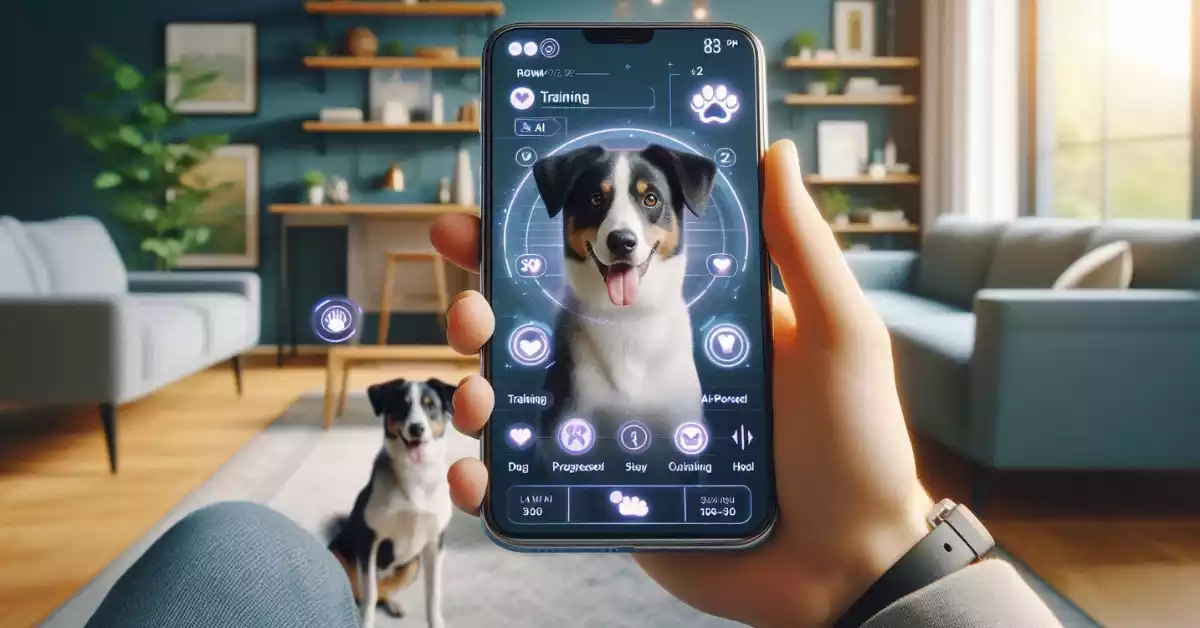
Imagine your dog learning new tricks like a pro, even when you’re away. This dream is coming true with AI tools for dog training.
AI is changing dog care, making training smarter and easier. Now, we have AI tools and apps that make training more effective. These tools help dogs learn new things and play in fun ways, making training a breeze for dog owners.
Key Takeaways
- AI-powered dog training tools offer personalised learning programs and consistent training cues
- Interactive gameplay and positive reinforcement techniques help dogs develop important skills
- AI-enabled devices provide convenience and accessibility for busy dog owners
- AI algorithms can support service dog training and shelter dog adoption
- Ethical considerations around data privacy and the irreplaceable human-dog bond must be addressed
Understanding the Revolution of AI in Dog Training
The world of dog training is changing fast, thanks to AI. These new tools are making training better and more personal for pet owners. They use machine learning and data to improve old training methods.
How Machine Learning Enhances Training Methods
Machine learning helps with tasks like recognising when a dog obeys. This makes training more consistent and precise. It helps dogs learn faster and better.
The Science Behind AI-Powered Dog Training
AI training devices use advanced image and behaviour recognition. They learn from huge datasets of dog images and sounds. A University of Michigan study found AI can understand dog sounds with 70% accuracy.
Benefits of Modern Training Technology
AI in dog training offers many benefits. It includes smart collars and devices that monitor health and enhance learning. These technologies are changing how we train and interact with dogs. Since 85% of dog owners see their dogs as family, AI is making these bonds stronger.
The future of dog training looks bright with AI and machine learning. These technologies give pet owners personalised tools and insights. As AI in dog training grows, so do the chances for better understanding and stronger bonds between humans and dogs.
AI Tools for Dog Training: A Comprehensive Overview
The world of dog training has changed a lot with new AI tools. Now, we have smart treat dispensers, virtual assistants, and more. These tools are making dog training better and easier for everyone.
Smart treat dispensers and automated reward systems use AI to reward good behaviour right away. They offer personalised plans and track progress, making training easier for pet owners.
Advanced behaviour analysis software uses AI to watch a dog’s movements and sounds. It gives insights into their training and health. This helps owners and trainers make their training better and more effective.
AI-powered virtual assistants give personalised advice and feedback to dogs. They offer real-time help and track progress. This makes training sessions more fun and productive.
Smart collars and wearable devices with AI sensors track a dog’s activity and health. They help owners understand their dog’s needs better. This information supports their training and care.
The future of dog training will mix old methods with new AI technology. As these tools get better, training will become more fun and effective. This will help dogs reach their full potential.
| AI Tool | Key Features | Benefits |
|---|---|---|
| Smart Treat Dispensers | – Accessible and convenient training – Consistent training approach – Accelerated learning and behaviour modification | – Increased training efficiency – Consistent positive reinforcement – Enhanced dog-owner engagement |
| – Personalised training guidance – Real-time feedback and corrections – Progress tracking and goal-setting | Behaviour Analysis Software | – Advanced movement and body language tracking – Detailed progress reports – Customised training recommendations |
| AI-Powered Virtual Assistants | – Deeper understanding of dog behaviour – Optimised training approaches – Improved training outcomes | – Accessible and convenient training – Consistent training approach – Accelerated learning and behavior modification |
As more people use AI tools for dog training, the future looks bright. These tools will make training more efficient and effective for everyone.
Smart Treat Dispensers and Automated Reward Systems
AI-powered dog training devices are changing how we train our dogs. Smart treat dispensers with real-time behaviour recognition are leading this change. They use machine learning to reward dogs for good behaviour, making training better and more consistent.
Real-time Behaviour Recognition Technology
Researchers at Colorado State University created an AI-powered treat dispenser. It can tell when a dog follows a command. The device uses Nvidia’s Jetson Nano AI platform and can process images at 40 frames per second. It’s 92% accurate in recognizing behaviors9.
This technology rewards dogs right away. It helps them learn faster and builds a stronger bond with their owners.
Treat Dispensing Mechanisms and Timing
The smart treat dispenser also knows when to give rewards. It uses advanced algorithms to time the treat release perfectly. This makes training more effective and builds a stronger bond between dog and owner.
Integration with Training Programs
These AI-powered treat dispensers work well with training programs. They use real-time behaviour recognition and automated rewards. This helps pet owners and trainers get great results.
By combining AI with traditional training, we can improve dog well-being. It also strengthens the bond between humans and dogs.
“The combination of AI-powered behavior recognition and automated reward systems has the potential to revolutionize the way we train our canine companions, making the process more efficient and rewarding for both the dog and the owner.”
Advanced Dog Behaviour Analysis Software
In the world of dog training, AI-powered software is changing how we understand our dogs. These tools use machine learning to read a dog’s body language and emotions. They give insights that help with training each dog differently.
The top behaviour analysis software uses computer vision and natural language processing. It looks at video and finds patterns in a dog’s actions and sounds. It spots stress and aggression signs, helping to find the right training methods.
| Software Feature | Benefit |
|---|---|
| Suggest customised training approaches based on a dog’s unique personality and needs | Behaviour Monitoring and Analytics |
| Personalized Training Recommendations | Suggest customized training approaches based on a dog’s unique personality and needs |
| Progress Tracking and Reporting | Monitor a dog’s training progress and adjust strategies |
| Integration with Smart Devices | Seamless syncing with wearables, treat dispensers, and other AI-powered training tools |
Dog behaviour analysis software and AI-assisted dog obedience training help us understand our dogs better. This leads to stronger bonds and better training results.
“The ability to analyze dog behavior in real-time and provide personalized training recommendations is a game-changer in the field of dog training. These AI-powered tools are empowering pet owners to address behavioral challenges with greater precision and efficiency.”
AI-Powered Virtual Training Assistants
The era of AI in dog training has changed how we teach our pets. Tools like Woofz give personalised advice on dog care and training. They offer step-by-step tips and suggest natural treats for rewards.
These AI tools use clear language to help owners understand and support their dogs. This builds a strong bond between dogs and their owners.
Personalized Training Plans
AI analyses data to give dogs personalised training plans. Canine Coach, for example, creates plans based on a dog’s behaviour and learning speed. This ensures changes are lasting and effective.
This personal touch is a big improvement, meeting each dog’s unique needs and those of their owners.
Progress Tracking Features
Wearable devices give real-time feedback on a dog’s stress or discomfort. AI tools adjust training based on this feedback. They track a dog’s progress, helping owners see their pup’s successes.
Remote Training Capabilities
AI-powered virtual assistants guide training without needing in-person sessions. This is great for busy owners or those far from trainers. The AI ensures training is consistent and effective, right from home.

“The ultimate goal of AI in canine training is to deepen the bond between humans and dogs by providing effective, personalized, and humane training methods.”
As AI gets better, dog training will become even more tailored and easy to access. Future virtual assistants will recognize behaviors better and interact more. This will change how we train and care for our dogs.
Smart Collars and Wearable Training Devices
The world of dog training has changed a lot with smart dog collars and wearable tech. These devices use AI and machine learning to give us deep insights into our dogs’ behaviour, health, and happiness.
Now, pet owners get real-time data on their dog’s activity, sleep, and heart rate. This info helps us understand our dogs better. We can then tailor training and care to meet their needs.
These AI-powered devices have also changed virtual training. Owners can join online training sessions that adjust to their dog’s behaviour and progress. This makes learning fun and effective.
Smart collars are also key to keeping an eye on our dogs’ health. They can spot health problems, send alerts, and track important signs like heart rate. This is a big help for older dogs or those with ongoing health issues.
The pet industry is really getting into AI and technology. Smart collars and training devices are now a big part of caring for pets. They help us give our dogs the best care and support.

Whether you’re new to dog ownership or have been around for a while, these AI-driven training tools open up new ways to care for your dog. They help us understand our dogs better, improve their training, and keep them healthy.
“Smart collars have been a game-changer for monitoring my senior dog’s health. The real-time alerts and data insights have given me peace of mind and allowed me to make more informed decisions about his care.”
Mobile Apps and Digital Training Platforms
The world of dog training has changed a lot, thanks to mobile apps and digital platforms. These tools use AI technology to help pet owners and trainers. They offer a detailed and personal way to teach dogs.
User Interface and Accessibility
These apps are easy to use, no matter your experience. They have simple interfaces and video tutorials. This makes learning fun and easy for everyone.
Training Progress Analytics
These platforms track and analyse a dog’s progress. They use advanced algorithms to give personalised advice. This helps owners tailor training to their dog’s needs.
Community Features and Support
Many apps have community features. They let users connect with others who love dogs. This helps with sharing tips, solving problems, and getting advice from experts.
AI and advanced tech have changed dog training forever. These tools offer customised plans, track progress, and support from a community. They help dog owners train their pets better than ever.
Combining Traditional Methods with AI Technology
Using AI tools for dog training is becoming more popular. It’s important to know how to mix these new technologies with old training methods. AI helps with consistency and data, but humans are key for emotional connections and solving tough problems.
By using both, dog owners and trainers can give a better training experience. This experience meets both the physical and emotional needs of dogs. Tools like the PetSafe Treat & Train Remote Reward Dog Trainer show how technology and positive training can work together.
AI has made training better with real-time behaviour recognition and personalised plans. Researchers like Clara Muñiz-Diez and Ignacio Loy have helped make these tools better.
To start using AI for dog training, look at all the options. This includes smart collars, apps, and digital platforms. The Traini AI-based pet training app, for example, has seen huge growth, showing more people want these tools.
When mixing old and new training methods, always think about your dog’s safety and health. Find good trainers and resources to help you use these tools well.
By combining traditional and AI methods, you can improve your dog’s behaviour and your bond with them. The future of dog training is here. With the right approach, you can use AI to train your dog better.
Safety Considerations and Best Practices
When you start using AI for dog training, safety and privacy are top priorities. Make sure the devices you choose have strong security to keep your data and your dog’s safe. It’s also important to find tools that monitor your dog’s health to avoid overdoing it during training.
Keeping your and your pet’s data private is another big deal. Pick providers who really care about protecting your information. Being open and in control of your dog’s data helps build trust in this new tech.
Device Security Features

Make sure the AI tools you pick have good security to stop unauthorised access and data leaks. Look for things like:
- Encryption of user and dog data
- Two-factor authentication for secure login
- Regular software updates to address vulnerabilities
- Secure communication protocols between devices and cloud servers
Health Monitoring Integration
Adding health monitoring to your AI tools can change the game. These features let you keep an eye on your dog’s health and make sure they’re not overworked during training. Look for tools that track things like:
- Heart rate and respiratory patterns
- Body temperature and hydration levels
- Stress and anxiety indicators
- Fatigue and recovery time
Data Privacy Concerns
When using AI for dog training, remember to think about data privacy. Choose providers with strong data protection, like:
- Transparent data collection and usage policies
- Secure data storage and encryption protocols
- The ability to access, download, or delete your dog’s data
- Compliance with relevant data privacy regulations
By focusing on these safety and privacy issues, you can safely use AI tools in your dog training. This way, you and your dog can enjoy the benefits while staying safe and secure.
Implementing AI Training Tools in Your Daily Routine
To start using AI tools in your dog’s training, first figure out what your dog needs and what you want to achieve. Choosing the right AI tool for your dog is key to getting great results. Knowing your dog’s personality and what you want to work on helps pick the best AI tools. These tools should fit with your current training methods and help your dog learn best.
After picking the right AI tools, slowly add them to your dog’s daily routine. Consistency is key when adding new tech, so set a regular time for it. Start by adding AI training a little at a time, so your dog gets used to it. Watch how your dog does and change how you use the AI tools if needed to keep learning fun and rewarding.
- Begin with one AI tool and see how your dog reacts. Gradually use it more often and for longer as your dog gets used to it.
- Use the AI tool with your usual training, like positive reinforcement and repetition.
- Always celebrate your dog’s small wins and progress. This creates a positive learning environment.
- Be patient and flexible. Every dog is different. Adjust your approach to find what works best for your dog.
By following the tips for integrating AI tools into your training routine, you can unlock the full power of these advanced technologies. They can make your dog’s training better and strengthen your bond.
“The integration of AI tools into dog training can revolutionize the way we interact with our canine companions, fostering deeper connections and more effective learning experiences.”
🧠 Want to Train Your Dog Smarter—Not Harder?
AI tools are great… but the most powerful training system is already inside your dog’s brain.
Brain Training for Dogs is a proven, science-backed program created by CPDT-KA certified professional dog trainer Adrienne Farricelli that unlocks your dog’s hidden intelligence to eliminate bad behaviour fast—without force or punishment. sales page dog training
🚀 Why Dog Owners Are Switching to Brain Training:
- ✅ Develops your dog’s natural intelligence (the real key to obedience)
- ✅ Fixes behaviour at the root cause, not with temporary tricks
- ✅ 100% force-free, positive reinforcement
- ✅ Step-by-step brain games that dogs love to play
- ✅ Works for puppies, adult, stubborn, or reactive dogs
- ✅ Covers barking, chewing, jumping, leash pulling, anxiety & more
👉 Ready to Upgrade Your Dog’s Training Beyond AI?
Give your dog the same system used by professional trainers worldwide—and see real behaviour change in days, not months.
🔥 [Unlock Your Dog’s Hidden Intelligence with Brain Training for Dogs] 🔥
Conclusion
AI tools have changed dog training, making it better and faster. They can handle lots of data, understand a dog’s behaviour, and make plans just for them. Tools like smart treat dispensers and virtual assistants help a lot.
But, AI tools are not a full replacement for humans in training. The bond between humans and dogs is key. Using AI and human trainers together helps dogs reach their best.
As AI gets better, it will be even more helpful in dog training. By using AI and human help, owners can strengthen their bond with their dogs.
FAQ
What are the key benefits of using AI tools for dog training?
AI tools make dog training better by being consistent and personal. They offer automated rewards and analyze behavior. This helps dog owners reach their training goals more efficiently.
How do AI-powered dog training devices work?
These devices use AI to see when a dog does something right. They then reward the dog. This makes sure the dog gets positive feedback every time.
What types of AI tools are available for dog training?
There are many AI tools for dog training. These include smart treat dispensers and virtual assistants. They also include behaviour analysis software and wearable devices. These tools help with personalised training and tracking progress.
How can AI-powered behaviour analysis software help with dog training?
This software uses AI to understand a dog’s body language and feelings. It gives insights that help spot health or behaviour problems. It also suggests training plans that fit the dog’s needs.
What are the key considerations when using AI tools for dog training?
When using AI tools, think about safety and privacy. Make sure the tools work well with traditional training methods. Also, check that the devices are safe and don’t harm your dog.
How can I effectively implement AI tools into my dog’s training routine?
First, figure out what your dog needs and what you want to achieve. Pick tools that fit with what you’re already doing. Start slow and keep using the AI tools regularly. Watch how your dog does to make sure they’re learning well.





Sur [url=https://vegasplus-casino-101.fr]vegasplus-casino-101.fr[/url], je fais attention a la presentation des sections et a la fluidite generale. J’aime quand les categories sont claires et bien separees. La navigation doit rester intuitive. Une interface bien pensee est toujours plus agreable.
https://northcarerx.shop/# safe online pharmacies in canada
best india pharmacy: best online pharmacy india – mexican pharmacies online drugs
http://bordercarerx.com/# BorderCareRX
top online pharmacy india [url=http://primeindiameds.com/#]best online pharmacy india[/url] good pill pharmacy
https://primeindiameds.com/# pharmacy discount card
wholesale pharmacy: Prime India Meds – safe canadian pharmacy
pharmacy wholesalers canada: NorthCareRx – NorthCareRx
http://primeindiameds.com/# my canadian pharmacy review
buy drugs from canada [url=https://primeindiameds.shop/#]Prime India Meds[/url] economy pharmacy
trustworthy canadian pharmacy: online canadian pharmacy reviews – NorthCareRx
https://northcarerx.com/# canada pharmacy online
https://northcarerx.com/otc.php# canadian pharmacy scam
online pharmacy prescription: online shopping pharmacy india – online pharmacy pain relief
https://primeindiameds.com/# pharmacy discount coupons
reddit canadian pharmacy [url=http://primeindiameds.com/#]Prime India Meds[/url] pharmacy com
legitimate canadian online pharmacies: reddit canadian pharmacy – NorthCareRx
reputable pharmacies in mexico: reputable pharmacies in mexico – online pharmacy in mexico
http://northcarerx.com/# canadian pharmacy ltd
http://primeindiameds.com/# pharmacy coupons
NorthCareRx: cheap canadian pharmacy online – canadian pharmacy online
pharmacies in mexico: mexico pharmacies online – can i buy meds from mexico online
BorderCareRX [url=https://bordercarerx.com/#]mexico pharmacy[/url] BorderCare RX
https://northcarerx.shop/# NorthCareRx
reputable online pharmacy: Prime India Meds – pharmacy websites
mexico pharmacies online: mexican pharmacies no prescription – reputable pharmacies in mexico
http://northcarerx.com/# NorthCareRx
legit mexican pharmacy without prescription [url=http://bordercarerx.com/#]BorderCare RX[/url] mexican pharmacies no prescription
mexico pharmacies online: BorderCareRX – reliable mexican pharmacies
https://northcarerx.com/# NorthCareRx
online pharmacy australia: Prime India Meds – prices pharmacy
certified canadian international pharmacy: NorthCareRx – NorthCareRx
NorthCareRx: canadian drugs pharmacy – legitimate canadian mail order pharmacy
reliable canadian online pharmacy [url=https://northcarerx.shop/#]NorthCareRx[/url] NorthCareRx
http://bordercarerx.com/# reliable mexican pharmacies
canadian king pharmacy: Prime India Meds – canadian mail order pharmacy
NorthCareRx: NorthCareRx – canadian pharmacy victoza
https://primeindiameds.com/# safe canadian pharmacy