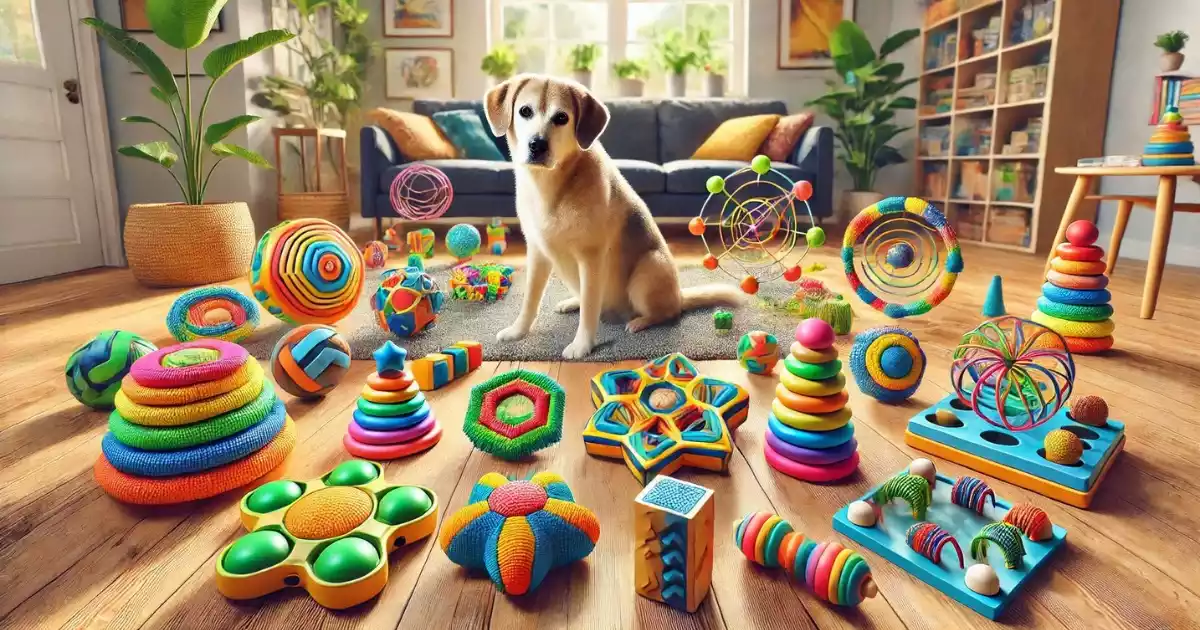
A surprising fact is that mental stimulation can tire a dog out and improve their brain development. It also strengthens the bond between dogs and their owners. Dog owners can give their pets brain games to challenge their minds. This is key for dog mental stimulation and cognitive enrichment.
By adding brain games to a dog’s daily routine, owners can boost their dog’s mental health. This is vital for a dog’s overall well-being.
Mental stimulation is good for dogs of all ages, but it’s crucial for older dogs. The average domestic dog can learn about 150 words, with some learning up to 250 words. Brain games are a great way to keep dogs mentally sharp and reduce anxiety.
Key Takeaways
- Brain games for dogs can improve behaviour and reduce anxiety
- Mental stimulation is crucial for a dog’s well-being and can be achieved through brain games for dogs and dog mental stimulation
- Canine cognitive enrichment is essential for dogs of all ages, but it’s vital for older dogs
- Different exercises, such as puzzle toys, obstacle courses, and nose work, can help make dogs smarter
- Senior dogs can learn new tricks and mental exercises, but their responses may not be as quick as those of younger dogs
- Regular walks can be mentally stimulating for dogs and provide an opportunity for dog mental stimulation and canine cognitive enrichment
- Hide-and-seek can provide mental stimulation for dogs and require critical thinking skills and a good nose for the dogs to find the person hiding
Understanding the Link Between Mental Stimulation and Canine Behaviour
Mental stimulation is key to dogs’ happiness and health. It stops them from getting bored and acting out. Dogs need a mix of routine and variety to keep their minds sharp. Games and puzzles are great for their brains, coming in all sorts of challenges.
Interactive toys keep dogs busy and active, both physically and mentally. Some toys include:
- Puzzle toys that challenge dogs’ problem-solving skills
- Interactive dog toys that encourage independent play
- Dog puzzle games that provide mental stimulation
Regular brain games can slow down ageing in dogs. They also help with dementia, anxiety, and depression in older dogs. A mix of mental and physical activities keeps dogs in top shape. A set routine for brain games helps dogs feel secure and less anxious.
Here are some ways to keep dogs’ minds active:
- Teaching dogs fun tricks to keep their minds sharp and bodies active
- Playing brain games like hide and seek or the muffin tin challenge to challenge dogs’ cognitive abilities
- Providing dog puzzle games and interactive dog toys to encourage independent play
Knowing how important mental stimulation is helps owners keep their dogs happy and calm. Without it, dogs might bark too much or chew things they shouldn’t.
Case Study Methodology and Participant Profiles
Understanding the need for cognitive challenges for dogs is key. It helps reduce anxiety and improves their behaviour. A study found 191 dog owners in the UK who walked their dogs 7 times a week on average. This shows how important it is to keep dogs active and mentally sharp.
Using a solid case study method is vital. It helps us see how challenges and activities affect dogs. By looking at who participated, we learn the best ways to keep dogs engaged. For example, those who walked their dogs more often saw better behaviour in their pets.
Important factors for regular walks include being in a relationship and enjoying the walk. These can help us understand what works best for dogs. By focusing on mental and physical challenges, owners can help their dogs reach their full potential.
Popular Brain Games for Dogs and Their Impact
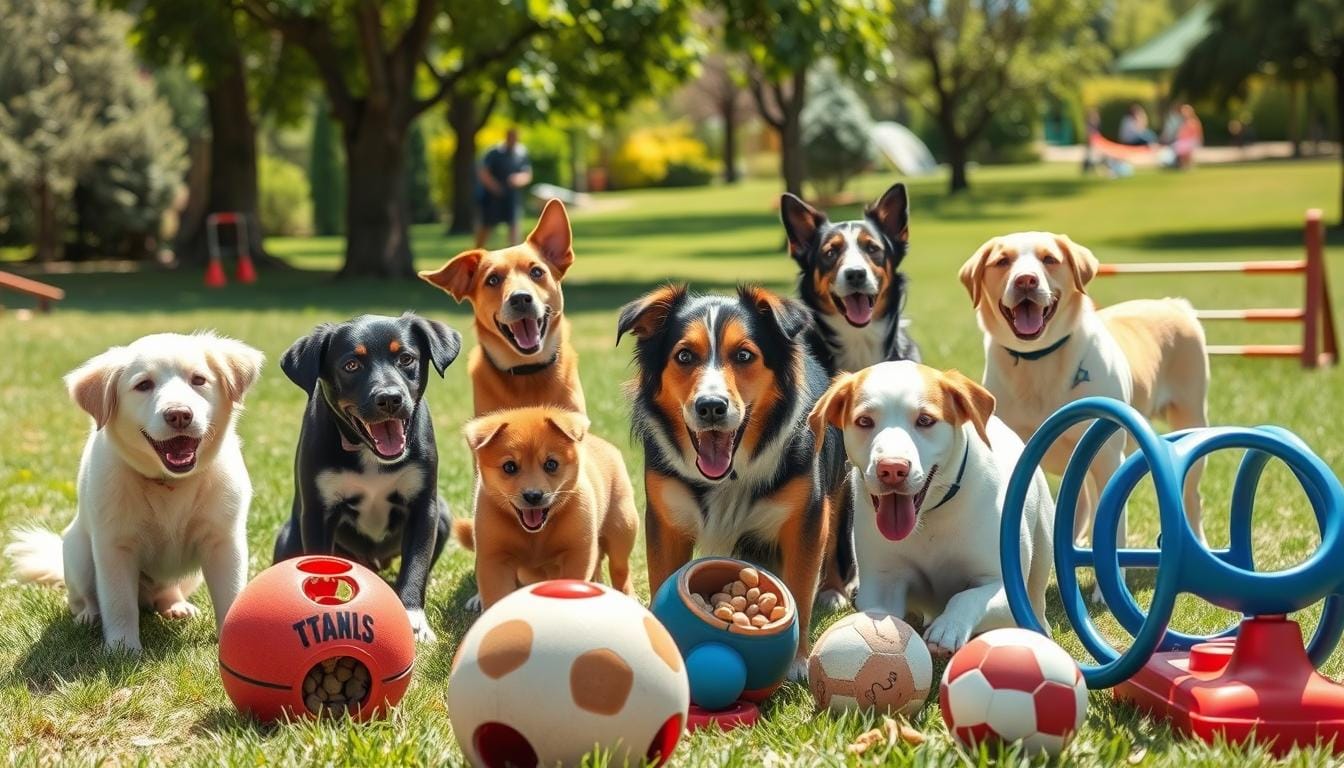
Playing brain games with your dog can greatly improve their mental and emotional health. Games like puzzle toys and scent work keep their minds sharp. They help reduce anxiety and make their behaviour better. These activities are fun and a great way to challenge your dog’s mind.
Some popular brain games for dogs include:
- Puzzle toys that challenge problem-solving skills
- Scent work and detection games that utilise a dog’s sense of smell
- Memory and recognition exercises that improve memory and focus
These games can enhance your dog’s cognitive abilities. They also make spending time together more enjoyable.
Adding brain games to your dog’s daily routine can make them happier and healthier. With many options available, you can find the perfect games for your dog. This will help you see the benefits of mental stimulation and cognitive enrichment.
| Brain Game | Benefits |
|---|---|
| Puzzle Toys | Improves memory and focus, reduces anxiety |
| Scent Work | Utilises sense of smell, improves memory and focus |
| Memory and Recognition Exercises | Utilises the sense of smell, improves memory and focus |
Measuring Behavioural Changes Through Mental Stimulation
dog-behavior-improvement-through-brain-games
Adding interactive dog toys and mental exercises to your daily routine is key. It helps you see how your dog is changing. This way, you can tweak your plan to better meet their needs. Dog sports are great for their mind and body.
Games like puzzle toys and brain games can help older dogs. Dogs that play with people and other animals adjust better to new things. Some benefits include:
- Less anxiety and stress
- Better thinking skills
- More physical fitness
- Adapting more easily to new situations
Playing with your dog strengthens your bond. It teaches them about boundaries and helps with training. Dogs need rest to process what they learned, ensuring they behave well and grow. Giving your dog various toys and games can reduce bad behaviour and boost their happiness.
Popular toys and games include puzzle toys, scent work, and memory games. These keep your dog’s mind active and entertained. Adding these to your routine can make your dog’s behaviour better and lower stress.
Implementation Strategy and Daily Routine
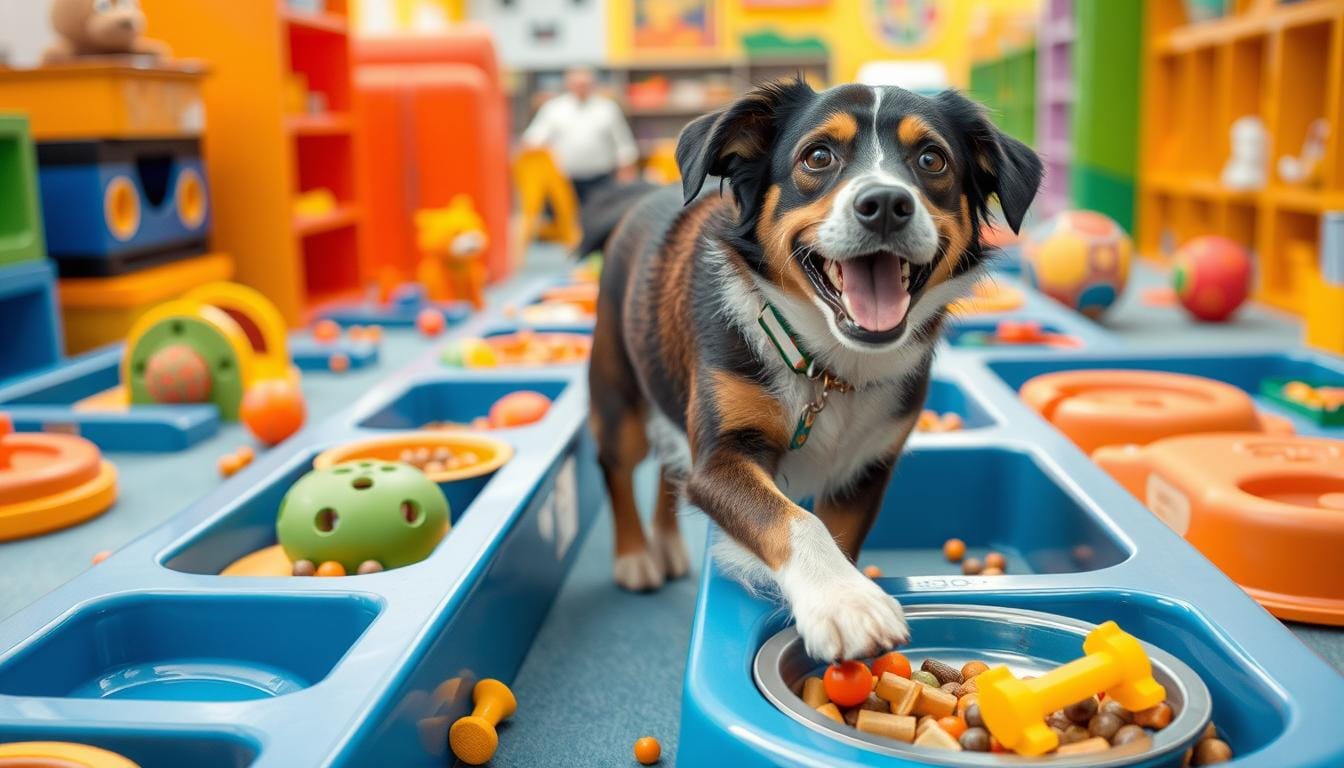
To keep your dog’s mind sharp, set up a gaming schedule. Include puzzle toys and scent work to lower anxiety and better behavior. These activities prevent boredom and bad behaviour.
Start with a short walk, then a puzzle toy with treats, and scent work. This mix of physical and mental exercises is key.
As your dog gets better, make the challenges harder. Try new puzzle toys or more complex scent work. This keeps your dog engaged and interested.
Some fun activities for dogs are: * Hide-and-seek with treats * Cup games * Scent work activities * Interactive toys, like food dispensers and puzzle boards
| Activity | Duration | Frequency |
|---|---|---|
| Puzzle toys | 10-15 minutes | 2-3 times a day |
| Scent work activities | 10-15 minutes | 2-3 times a day |
| Interactive toys | 10-15 minutes | 2-3 times a day |
By sticking to this plan, you’ll give your dog the mental challenges they need. This helps lower anxiety and improve their behaviour.
Observed Changes in Anxiety Levels
Engaging your dog in brain games can lead to noticeable changes in their anxiety levels. Studies show that mental stimulation can reduce anxiety in dogs. Activities that challenge their minds can make them happier and healthier.
Dogs with anxiety often have stronger connections in their brain’s anxiety network. This can affect how they react to fear and strangers. But brain games can help reduce their anxiety and improve their well-being.
Brain games for dogs offer several benefits:
- Reduced anxiety and stress levels
- Improved mental stimulation and cognitive function
- Increased confidence and calmness
- Stronger bond between dog and owner
Remember, every dog is unique, and what works for one may not work for another. But with patience and the right approach, you can help your dog overcome anxiety. As Stanley Coren’s research shows, dogs are mentally similar to 2.5-year-old children. The right mental stimulation can help them thrive.
By adding brain games to your daily routine, you can give your dog the mental stimulation they need. This can help reduce their anxiety and improve their overall well-being. With the right approach, you can help your dog live a happier, healthier life.
Long-term Benefits of Cognitive Training
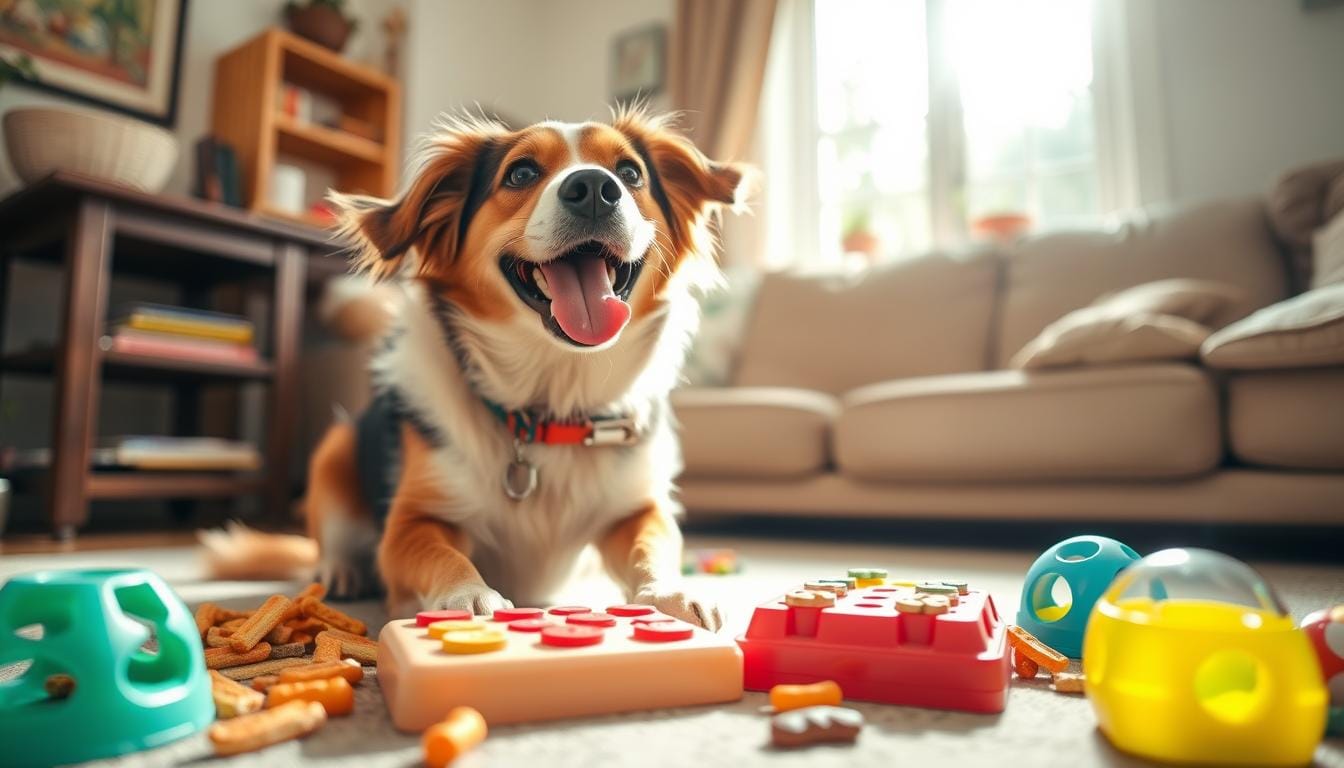
Investing in your dog’s cognitive training brings big improvements in their life. Activities like canine cognitive enrichment, interactive dog toys, and mental exercises are key. They help dogs live happier, healthier lives. These activities can also lower stress and anxiety, reducing bad behaviours like chewing and barking.
They also boost brain health over time.
Training offers many benefits. It can improve physical health, social behaviour, and overall life quality. Enrichment activities help dogs stay fit, manage weight, and avoid obesity and joint issues. Games and activities also strengthen the bond between dogs and their owners, building trust and friendship.
A study found that pets who played mental games were 30% happier than those without.
Here are some key benefits of cognitive training:
- Reduces stress and anxiety in dogs
- Improves physical fitness and reduces the risk of obesity
- Enhances cognitive performance and long-term brain health
- Strengthens the bond between dogs and their owners
Adding canine cognitive enrichment, interactive dog toys, and mental exercises to your dog’s day can make them happier and healthier. Cognitive training cuts behavioural issues by 45% and anxiety by 25%, showing its clear benefits. As a caring dog owner, cognitive training is a loving way to show your dog you care.
Common Challenges and Solutions
When you try to keep your dog’s mind sharp, you might face some hurdles. One big issue is when your dog doesn’t seem interested. To fix this, try adding different brain games and puzzle toys. For example, KONGs and puzzle feeders make dogs think and solve problems. Also, scatter feeding lets dogs use their natural foraging skills, keeping them mentally active.
Another problem is when your dog can’t move on to harder levels. To solve this, mix up the stuffing with fruits, veggies, and fresh meat to keep them interested. Always watch your dog when they play with puzzle toys to prevent choking hazards. Playing games like tug-of-war, hide and seek, and fetch also helps their mind. Plus, taking them on errands helps with physical exercise and learning new things.
Here are some ways to tackle common issues:
- Change up the toys and activities to keep things fresh
- Make the challenges harder as your dog gets better
- Try different activities like scent work and detection games
- Get advice from experts to keep improving
Knowing the common problems and how to solve them helps make your dog’s mental stimulation fun and effective.
| Challenge | Solution |
|---|---|
| Lack of engagement | Vary the stuffing mix and increase difficulty levels |
| Difficulty progressing through levels | Vary stuffing mix and increase difficulty levels |
| Supervision | Monitor dogs when using puzzle toys or interactive feeders |
Conclusion: The Transformative Power of Mental Exercise for Dogs
As you’ve seen, brain games and mental exercises can change your dog’s life for the better. These activities are designed to match each dog’s strengths and weaknesses. They help solve behavioural problems and lower anxiety.
Studies show that mental games strengthen the bond between dogs and their owners. They also cut down stress hormones and boost good behaviours. Plus, they improve your dog’s thinking skills.
Every dog is different, so try various brain games to see what works best for them. With patience and regular practice, you can help your dog reach their full potential. This will make them happier and healthier.
🧠 Want a Calmer, Smarter & Better-Behaved Dog—Starting Today?
If brain games helped your dog already, imagine what a complete, science-backed mental training system can do.
Brain Training for Dogs by Adrienne Farricelli (CPDT-KA Certified Trainer) shows you exactly how to unlock your dog’s hidden intelligence to reduce anxiety, stop bad behaviours, and build real obedience—without force or punishment.
Inside the program, you’ll discover how to:
- 🐾 Eliminate anxiety, barking, chewing & hyperactivity at the root
- 🧠 Use simple brain games that mentally tire your dog (fast!)
- ❤️ Build a stronger bond using gentle, force-free methods
- 🎯 Improve focus, impulse control & obedience—step by step
- 🏡 Turn daily playtime into powerful behaviour correction
👉 Click here to get instant access to Brain Training for Dogs
✔️ Created by a certified professional
✔️ Works for puppies & adult dogs
✔️ Backed by a 60-day risk-free guarantee
Your dog doesn’t need more discipline—just the right mental stimulation. Start today. 🐶✨
FAQ
What are brain games for dogs, and how can they improve behaviour and reduce anxiety?
Brain games for dogs challenge their minds and provide mental stimulation. This can help reduce anxiety and improve behaviour. By adding brain games to a dog’s daily routine, owners can boost their dog’s mental health and well-being.
How does mental stimulation impact canine behaviour and anxiety levels?
Mental exercise is key for dogs. Boredom can lead to bad behaviour, while mental enrichment helps reduce anxiety. Interactive toys and exercises keep dogs engaged and calm.
What are the key findings from the case study on cognitive challenges and stimulating activities for dogs?
The study showed that cognitive challenges and activities can lower anxiety and improve behaviour in dogs. It offers valuable insights for dog owners.
What are some examples of popular brain games for dogs, and how do they impact behaviour and anxiety?
Popular games include puzzle toys, scent work, and memory exercises. These games stimulate a dog’s mind, reduce anxiety, and improve behaviour.
How can dog owners measure the effectiveness of brain games and mental stimulation in reducing anxiety?
Dog owners can track behavioural changes to see if mental stimulation is working. This helps them adjust their plan to keep their dog calm and happy.
What is the recommended implementation strategy for incorporating brain games into a dog’s daily routine?
Create a gaming schedule, increase difficulty levels, and keep your dog interested. This strategy ensures your dog gets the mental stimulation they need to feel calm and behave well.
How can brain games and cognitive training help reduce anxiety in dogs?
Brain games and training keep dogs engaged and content. This can significantly reduce their anxiety.
What are the long-term benefits of cognitive training for dogs?
Cognitive training can improve physical health, social behaviour, and overall quality of life for dogs.
What are some common challenges and solutions when implementing brain games and cognitive training for dogs?
Challenges include a lack of engagement or difficulty progressing. Solutions include adjusting difficulty, introducing new games, or offering rewards and encouragement.