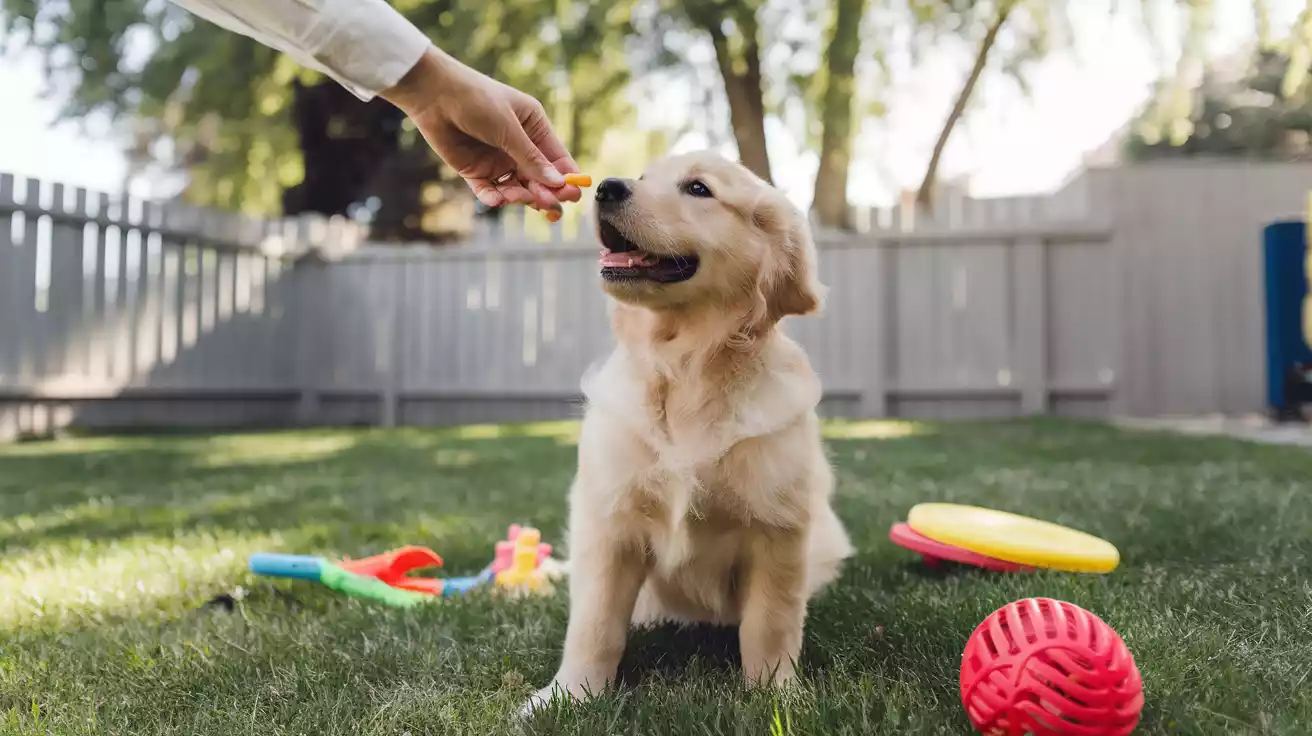
Did you know puppies can learn basic commands as early as eight weeks old? Commands like “sit,” “stay,” “down,” and “come” are key to a well-behaved puppy. Teaching these commands is vital for obedience and behaviour training. About 70% of dog owners think basic commands are crucial for a well-behaved pet.
Positive reinforcement training is best. It encourages good behaviour without fear or punishment. This method strengthens your bond with your puppy. The first five commands to teach are “Sit,” “Stay,” “Lay Down,” “Come,” and “Heel”.
Key Takeaways
- Start teaching essential puppy training commands at eight weeks old for optimal results.
- Use positive reinforcement training methods for a healthier bond.
- Teach the first five essential commands: “Sit,” “Stay,” “Lay Down,” “Come,” and “Heel”.
- Approximately 70% of dog owners believe that teaching basic commands is essential for a well-behaved pet.
- Consistent command usage among family members can reduce confusion in puppies by up to 60%.
Why Your Puppy Needs to Learn Essential Training Commands
Teaching your puppy basic dog commands is key to their growth and your bond. Essential dog training cues like “sit,” “stay,” and “come” are vital. They help manage your puppy’s actions and keep them safe. Studies show that puppies learning these commands tend to behave better and bond well with their owners.
A well-trained puppy makes life safer for both the dog and the owner. Training with positive reinforcement techniques and patience lowers stress for dogs and owners. About 70% of dog owners see basic obedience training as essential for their dog’s safety and behaviour.
Here are some benefits of teaching your puppy essential training commands:
- Improved behaviour and reduced anxiety
- Increased safety for both the dog and the owner
- Strengthened the bond between the puppy andthe owner
By dedicating time to teach your puppy essential dog training cues, you foster a well-behaved and loyal friend. Use positive reinforcement techniques and patience. This will reward you with a strong and lasting bond.
| Command | Benefits |
|---|---|
| Sit | Strengthened the bond between the puppy and owner |
| Stay | Increased safety for both the dog and the owner |
| Come | Strengthened the bond between the puppy and the owner |
Preparing for Successful Training Sessions
Preparation is crucial for puppy training tips and tricks. As a dog owner, you want your training sessions to be effective and fun for your puppy. It’s important to start training early, as puppies can learn basic commands at 8 weeks old. Starting early helps prevent bad habits from forming.
To prepare for successful training, create a distraction-free area and stick to a schedule. This makes your puppy feel secure and focused. Positive reinforcement, like treats and praise, encourages good behaviour. As a dog training for beginners, being patient and consistent is key. Puppies can start training at 8 weeks, and sessions should last 5 to 10 minutes.
Here are some additional tips to keep in mind:
- Use high-value food rewards to maximise training effectiveness
- Keep training sessions short and fun to prevent boredom and frustration
- Be consistent in your use of commands and hand signals
By following these tips and considering your puppy’s needs, you can set yourself up for success. Consistent practice helps your puppy learn and grow, building on their skills.
The “Sit” Command: Your Foundation for Success
The “sit” command is a key starting point in puppy training. It’s important for teaching other commands and helps with impulse control. Using treats and praise can make your dog more likely to listen by 70%.
To teach the “sit” command, start by having your dog stand in front of you. Hold a treat above their head and move it back towards their tail. As they follow the treat, they will naturally sit. Give them the treat and praise them when they sit correctly. Training sessions of 5 to 10 minutes are best for success.
Step-by-Step Teaching Method
Most trainers recommend using treats to teach the “sit” command. Training in a calm place without distractions works best. Repeated training and rewarding sitting can make it a default behaviour.
Common Mistakes to Avoid
Many owners struggle with keeping their dogs in a sit position. Use treats and praise to keep them sitting. Avoid negative reinforcement, as it can slow learning by 50%.
Reinforcement Techniques
Positive reinforcement includes treats and fun activities like tug-of-war or fetch. Consistent praise and rewards help your dog remember to sit. By following these steps and using positive reinforcement, you can teach your dog to sit.
| Command | Technique | Effectiveness |
|---|---|---|
| Sit | Positive Reinforcement | 70% increase in correct response8 |
| Stay | Consistent Practice | 60% longer retention |
Teaching the “Stay” Command

Start by teaching your dog to stay from a short distance. Then, slowly move further away. Always use positive reinforcement and be patient. This command is key for basic dog training and helps with daily tasks like grooming and answering the door.
Begin with short stays, aiming for at least 30 seconds before adding distractions and distance. Use the same word to release your dog, like “Okay,” “Free,” or “Release,” to avoid confusion. Choose any word for the stay cue, but keep it consistent to avoid confusion.
Here are some tips for teaching the “stay” command:
- Practice in short sessions, 15 to 30 minutes, to keep your dog focused.
- Start with rewards after 3 to 5 seconds of staying.
- Use treats as positive reinforcement to help your dog stay.
Be patient and consistent when teaching your dog to stay. It may take time for them to learn. With regular practice and positive rewards, your dog will learn this important command and become a well-behaved family member.
Mastering the “Come” Command
Teaching your puppy the “come” command is crucial for their safety, whether they’re on or off a leash. To get this command right, you must focus on building a strong recall. This is done through regular training and positive feedback.
Having a reliable recall is key to your dog’s safety. It’s important to train them in various settings to ensure they always listen. Begin in a quiet spot with few distractions. Then, move to busier places. Positive rewards like treats and praise can make the command 70% more effective.
Here are some tips to help you master the “come” command:
- Start with short training sessions, 15-20 minutes, and gradually increase the duration
- Use positive reinforcement techniques, such as treats and praise, to motivate your dog
- Train your dog in different environments to ensure they respond to the command consistently
Remember, consistency and patience are key in puppy training. With regular practice and positive feedback, you can teach your dog the “come” command. This will keep them safe.
| Training Tip | Effectiveness |
|---|---|
| Positive Reinforcement | 70% increase in command effectiveness |
| Consistent Training | 50% increase in reliability of commands |
Essential Puppy Training Commands for Daily Life
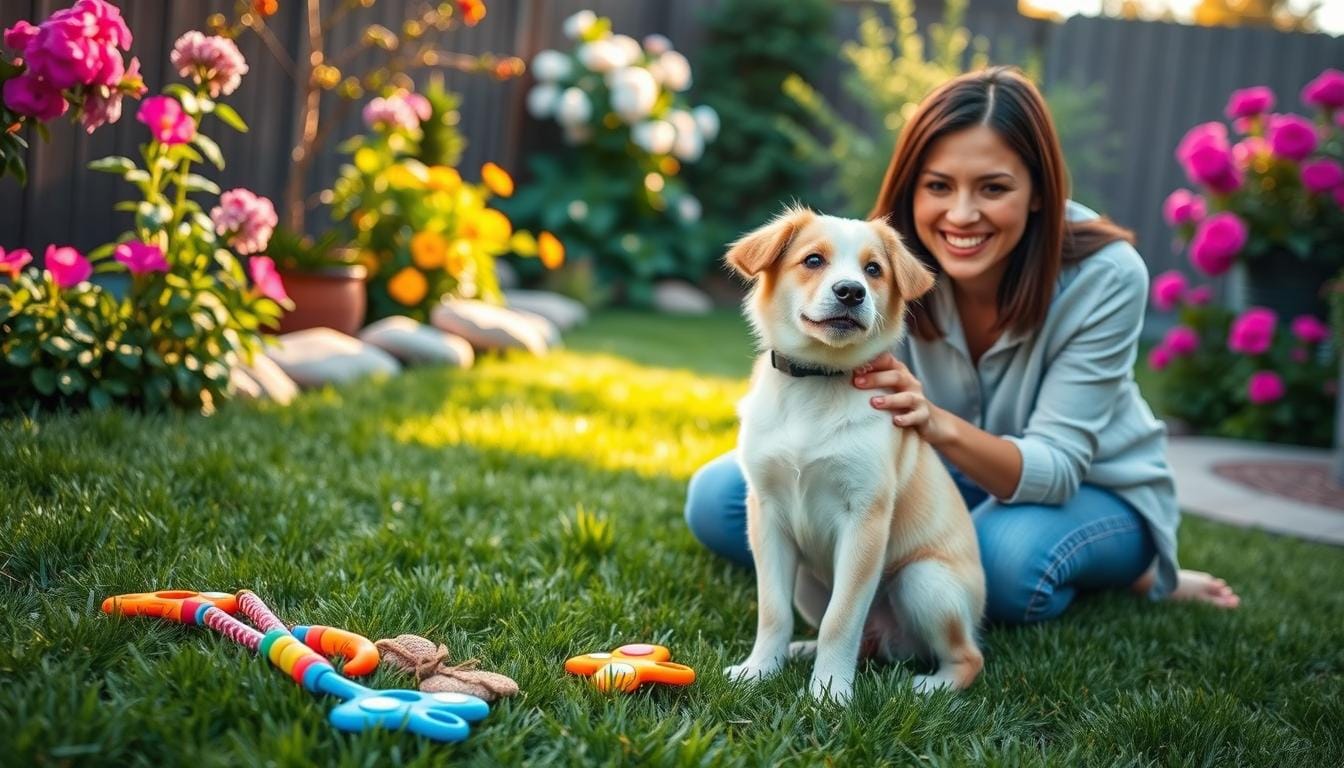
As a dog owner, you want your puppy to be well-behaved and obedient. Dog training for beginners might seem tough, but it’s doable. About 90% of dog owners think obedience training is key for a good pet15.
Teaching your puppy the “leave it” command is crucial. It stops them from picking up trash or harmful things. Begin by placing a treat in front of them and saying, “Leave it.” If they try to take it, say “no” and cover it with your hand. Keep doing this until they learn to ignore the treat.
Teaching the “Drop It” Command
The “drop it” command is vital for daily life. It helps you get back items your puppy has picked up, like toys or shoes. Start by offering a treat for the item they’re holding. When they drop it, say “drop it” and give them the treat.

Teaching the “Wait” Command
The “wait” command is useful, like during meals or when you leave them alone. Begin by having your puppy sit or lie down, then say “wait” and step back. If they get up, start again. With time and effort, they’ll learn to wait calmly. Puppy training tips and tricks like these strengthen your bond and ensure they behave well.
Consistency and positive reinforcement are crucial for puppy training. These essential commands help your puppy become a well-behaved friend. Most new puppy owners bring home their puppy around 8-10 weeks old, starting their training journey.
Teaching Your Puppy to Walk Nicely on Leash
Teaching your puppy to walk nicely on a leash is key to puppy obedience training. About 70% of puppy owners struggle with leash pulling early on. Start with short walks and gradually get longer, using positive rewards and patience.
Here are some tips to help you teach your puppy to walk nicely on a leash:
- Begin with short walks and reward your puppy for walking by your side.
- Use positive reinforcement, such as treats and praise, to encourage good behaviour.
- Be patient and consistent, as leash training can take time.
Consistent leash training can cut pulling behaviours by up to 50% in a few weeks. By following these tips and using essential puppy training commands, your puppy will become a well-behaved walking buddy. This is a big part of puppy obedience training.
| Tips for Leash Training | Benefits |
|---|---|
| Start with short walks | Helps prevent overwhelming your puppy |
| Use positive reinforcement | Helps your puppy learn to walk nicely ona leash |
| Be patient and consistent | Helps your puppy learn to walk nicely on leash |
The “Down” Command and Its Variations
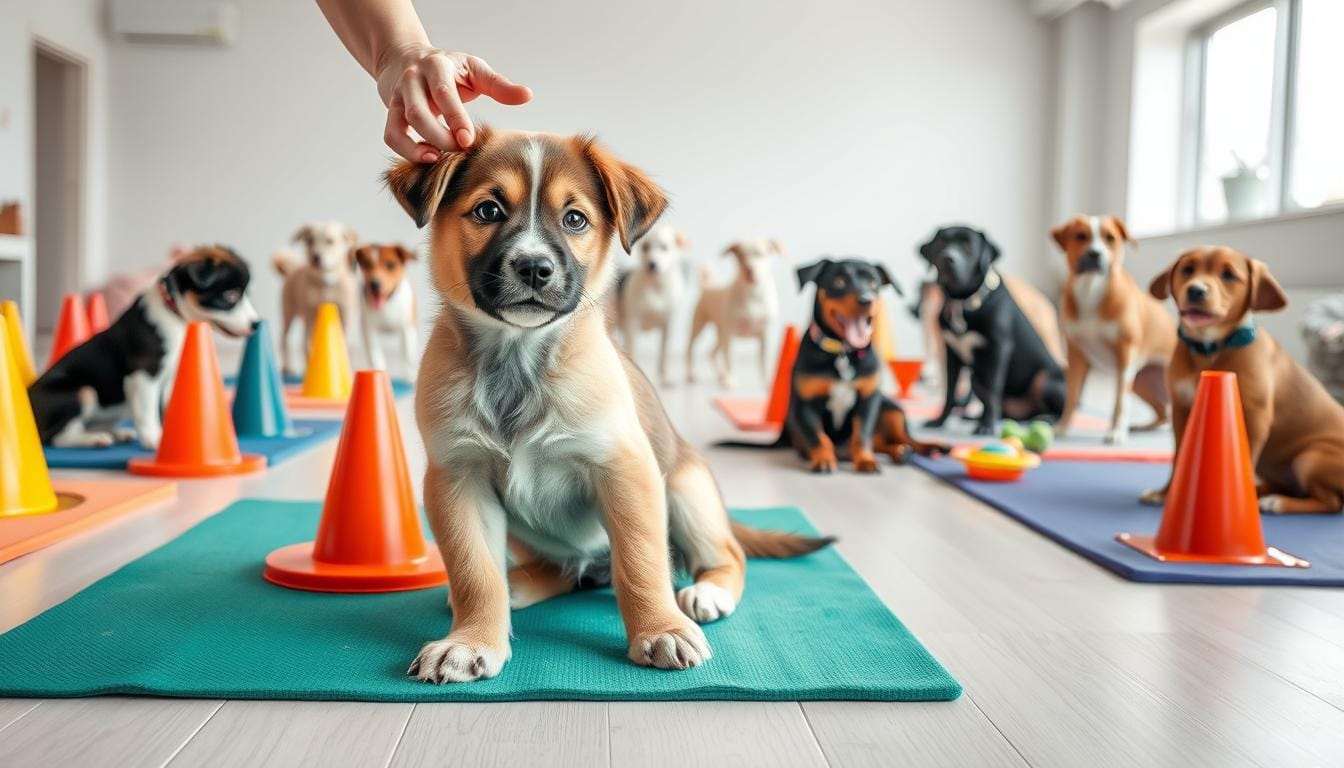
Teaching your dog basic dog commands is key, and the “down” command is a must. Begin by having your dog sit, then lure them down with a treat. As they get better, stop using treats and praise them instead.
Teaching the “down” command takes time and patience. It might take days or weeks for your dog to learn. Use high-value treats to help them understand the command better. Here are some tips:
- Keep training sessions short, 5 to 10 minutes, to keep your dog focused.
- Speak calmly and gently when giving commands.
- Always praise and reward your dog when they do it right.
Once your dog gets the hang of the “down” command, try the “down-stay” command. This makes them understand the command better and improves their obedience.
Basic “Down” Position
To teach the basic “down” position, start by having your dog sit. Then, use a treat to lure them down18. As they get more comfortable, stop using treats and just praise them.
Advanced “Down-Stay”
When your dog knows the basic “down” command, try the “down-stay” command. This command helps them understand the command better and improves their obedience.
| Command | Description |
|---|---|
| Down | Have your dog lie down on command |
| Down-Stay | Have your dog remain in the down position until released |
Incorporating Hand Signals with Verbal Commands
Using hand signals with verbal commands is very effective in training puppies. Studies show dogs understand body language faster than voice commands. Hand signals help you communicate better with your puppy, even in noisy places or when voice commands aren’t enough.
A simple guide for hand signals includes “sit,” “stay,” and “come”. For “sit,” move your hands up to your shoulders. For “stay,” hold your palm-out hand at waist height. It’s important to use the same hand signals every time to be clear.
Hand signals make training better and help you communicate with your puppy. They’re also great for deaf puppies, teaching them to follow visual cues. Adding hand signals to your training strengthens your bond and improves your puppy’s response to important commands.
Be patient and consistent when teaching hand signals to your puppy. Use positive rewards to encourage good behaviour. With practice, your puppy will learn to follow both hand signals and voice commands, making training fun and effective.
Training Sessions: Duration and Frequency
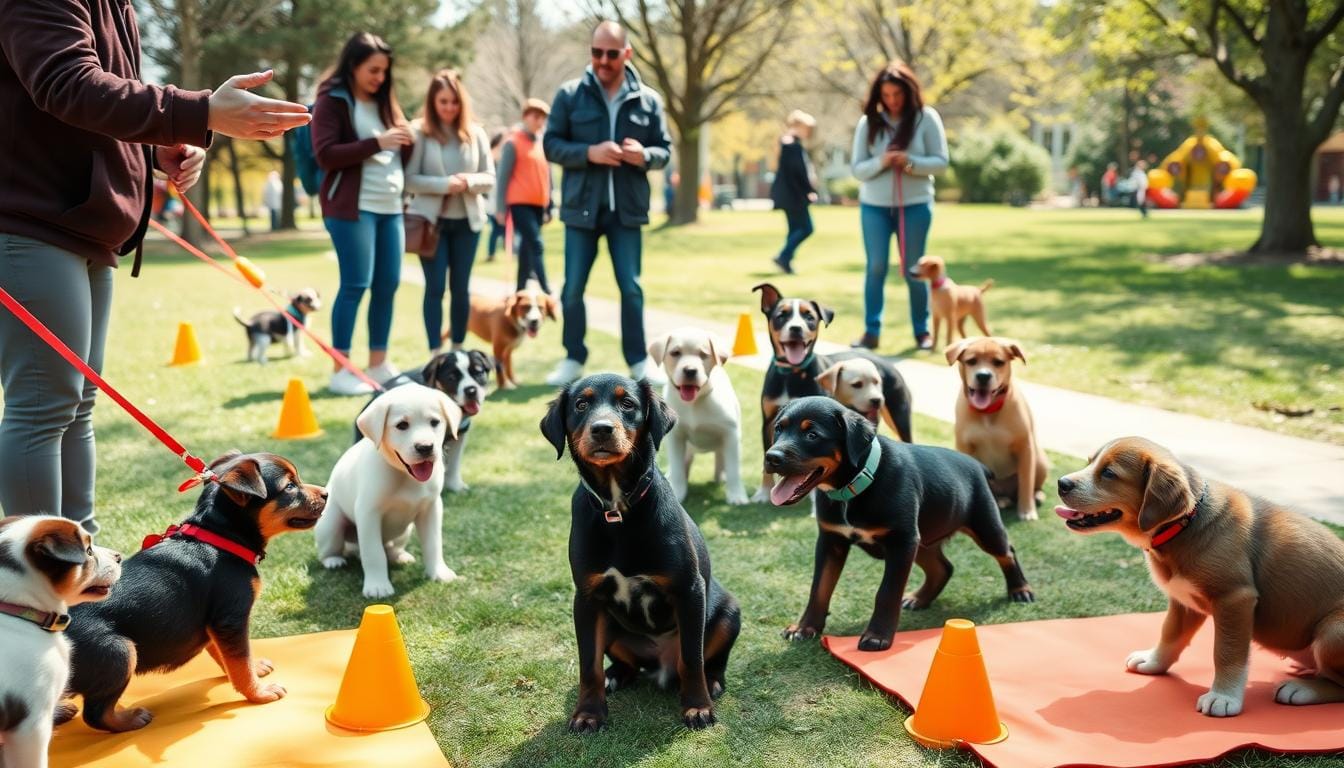
When starting dog training, figuring out how long and how often to train is key. Puppy training tips suggest starting with short sessions, 5-10 minutes, and then increasing as your dog gets more focused. For puppies and young dogs, keep sessions even shorter, 3-5 minutes, to keep their attention.
It’s important to keep training sessions brief and focused, training 2-3 times a day. This way, you end each session positively, making your dog look forward to the next one. Also, mixing play with training keeps your dog interested and prevents boredom.
As you get better at training, remember that being consistent is crucial. Try to train your dog every day, even if it’s just for a few minutes. With patience and positive reinforcement, your dog will learn good habits and a strong foundation for future training. Studies show puppies can start training at 8 weeks old, and consistent potty breaks and leash training are key for their growth.
Here are some tips for setting the right duration and frequency for your training sessions:
- Start with short sessions and gradually increase the duration
- Keep sessions focused and engaging
- End each session on a positive note
- Intersperse play breaks with training sessions
- Aim to train your dog every day
By following these tips and adding puppy training tips to your daily routine, you can make your dog a well-behaved and loyal friend. Always use positive reinforcement and patience when training. If you need help, don’t hesitate to seek professional guidance.
| Age | Session Duration | Frequency |
|---|---|---|
| Puppies (8-12 weeks) | 3-5 minutes | 2-3 times per day |
| Younger dogs (3-6 months) | 5-10 minutes | 2-3 times per day |
| Adult dogs | 10-15 minutes | 1-2 times per day |
Positive Reinforcement Techniques That Work
Positive reinforcement is a top choice for teaching puppy commands. It makes good behaviour stronger and brings pets and owners closer. To use it right, pick small treats and reward them quickly, within 1-3 seconds.
Choosing the right rewards is key for each dog. Rewards should be given right after the good behaviour to help dogs learn. Being consistent is also important to avoid confusing your dog.
Here are some tips for positive reinforcement:
- Use small treats to train faster and more efficiently
- Vary rewards like food, praise, and toys to keep learning fun
- Ignore bad behaviour to stop it and focus on the good
By following these tips, you can teach your puppy important commands like “sit,” “stay,” and “come”. Be patient, consistent, and positive. This will help you raise a well-behaved and obedient puppy.
Turn Basic Commands Into Lifetime Obedience
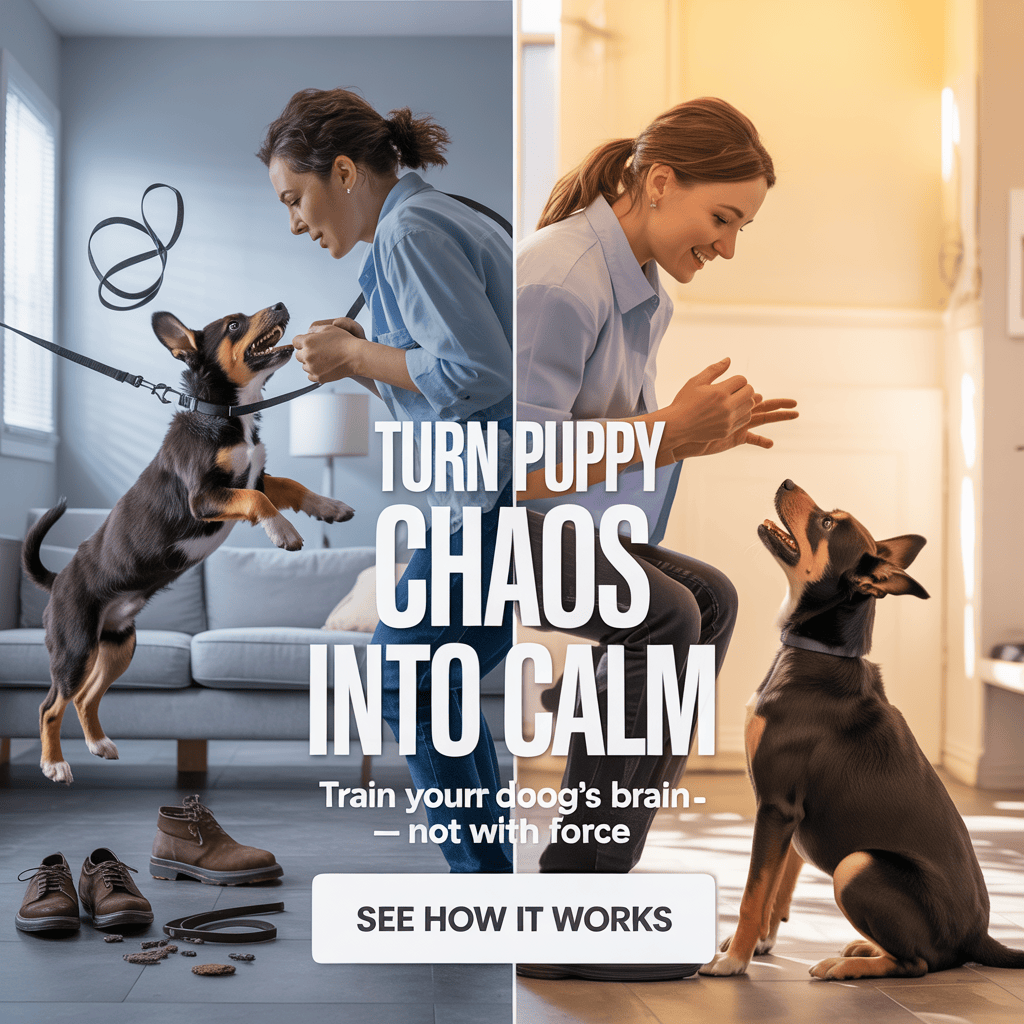
Teaching sit, stay, and come is just the beginning.
If you want your puppy to listen faster, behave better, and stay mentally calm, you need to train their brain, not just their body.
That’s exactly what Brain Training for Dogs does, sales page dog training
Why Thousands of Puppy Owners Love This Program:
- 🧠 Unlocks your puppy’s hidden intelligence so commands stick faster
- 🐶 Force-free, science-based methods by a CPDT-KA certified dog trainer
- 🎯 Fixes the root cause of bad behaviour—not just temporary symptoms
- 🧩 21+ fun brain games that reduce biting, barking, jumping & hyperactivity
- 🏡 Step-by-step system that works for puppies of any breed or age
- 💯 Includes puppy training, obedience, impulse control & focus
- 🔒 Backed by a 60-day risk-free money-back guarantee
👉 Want a Puppy That Listens the First Time?
Stop repeating commands. Stop feeling frustrated.
Start using the same brain-based training system professional trainers rely on.
Click below to get instant access to Brain Training for Dogs and raise a calm, obedient, happy puppy—starting today.
👉 Train Smarter. Not Harder. Get Brain Training for Dogs Now
Conclusion: Building a Strong Foundation Through Command Training
Starting your puppy’s training is key to their growth and your bond. Teaching them commands like “sit,” “stay,” and “come” is vital. It helps them learn important life skills and prepares them for the world. The first few weeks at home are the best time to begin.
Being consistent in training is crucial. It helps your puppy develop good habits and understand what’s expected. Positive reinforcement, like treats or praise, makes learning better. Dogs learn more from encouragement than punishment. Mastering the “sit” command is the first step to more advanced training.
Keep being patient and flexible as you train your puppy. Every puppy learns at their own speed. With regular practice, you’ll see their amazing progress. Investing in their training builds a strong foundation for a lifetime of confidence and a great relationship with you.
FAQ
Why is it important to teach essential puppy training commands?
Teaching your puppy basic commands improves their behaviour and safety. It also strengthens your bond. These commands are the foundation for a well-behaved dog.
What is the perfect age to start training my puppy?
Start training your puppy early, around 8-12 weeks. This is a key time for socialisation and learning good habits.
How can I set realistic expectations for my puppy’s training?
When training, set realistic goals. Puppies have short attention spans and learn slowly. Be patient, use positive reinforcement, and celebrate small wins.
What are the essential puppy training commands I should teach first?
First, teach your puppy “sit,” “stay,” “come,” “leave it,” “drop it,” “wait,” and how to walk nicely on a leash.
How do I prepare for successful training sessions with my puppy?
For successful training, choose the right rewards and set a consistent schedule. Create a distraction-free area. Remember, patience, consistency, and positive reinforcement are key.
How do I teach the “sit” command to my puppy?
To teach “sit,” use a step-by-step method and avoid common mistakes. Always reward your puppy positively. Be patient and consistent.
How do I teach the “stay” command to my puppy?
Start “stay” with short distances and increase it as your puppy gets better. Use positive reinforcement and be patient.
How do I teach the “come” command to my puppy?
To teach “come,” focus on building a reliable recall. Train in different places and solve any recall issues. Positive reinforcement and patience are crucial.
What other essential puppy training commands should I teach?
Teach your puppy “leave it,” “drop it,” and “wait” commands. These help with their daily life and behaviour.
How do I teach my puppy to walk nicely on a leash?
Start with short walks and increase the distance as your puppy gets better. Use positive reinforcement and be patient.
How do I teach the “down” command to my puppy?
Start with the basic “down” position and then the “down-stay” command. Use positive reinforcement and be patient.
How can I incorporate hand signals with verbal commands?
Use hand signals with verbal commands for better training. Teach the basic hand signal guide and reward your puppy positively. This helps solidify commands and provides extra cues.
How do I determine the duration and frequency of my puppy’s training sessions?
Start with short training sessions and increase the time as your puppy improves. Consistency and positive reinforcement are key to a good training schedule.
What positive reinforcement techniques should I use when training my puppy?
Use positive reinforcement, like choosing the right rewards and timing them well. Gradually stop using treats as your puppy learns. Consistent positive reinforcement is essential for successful training.




Feeling lucky today! I’m thinking of checking out lottery66 to see if my numbers pay off. Hope I win the lottery!
Heard about pito777slot from a friend and decided to give it a whirl. Not gonna lie, I’m hooked. The slots are fun, and I even managed to score a few wins. Give it a shot, you might get lucky.
Seriously, if you’re looking for a no-fuss login experience, wolf777login is where it’s at. Quick, easy, and I haven’t had any issues. Plus, the wolf theme is kinda cool.