Starting your journey as a puppy parent can be exciting, but potty training a stubborn puppy is tough. Accidents, frustration, and feeling stuck are common. But, with the right approach, even the toughest puppies can learn to go potty outside.
This guide will give you expert tips and a simple plan to potty train your puppy in 7 days. Say goodbye to cleaning up accidents and hello to a well-trained pup. Let’s start and learn how to potty train your puppy successfully!
Key Takeaways
- Puppies can hold their bladder for as many hours as they are months old.
- Smaller dog breeds like French Bulldogs may be more challenging to potty train.
- Positive reinforcement and consistent training are essential for stubborn puppies.
- Proper crate training can help prevent indoor accidents during the training period.
- Maintaining a regular feeding and water schedule is crucial for successful potty training.
Understanding Puppy Potty Training
Effective potty training for your puppy needs you to know their special behaviours and needs. Puppies have small bladders and less control, so they need to go out often. They might need to go every 1-2 hours.
Learning to spot your puppy’s potty cues is key. Look for sniffing, circling, or whining. Quick reactions can stop accidents.
The Secret to Potty Training Success: Frequent Potty Breaks
Puppies can hold their bladder for about an hour for each month of age. A 2-month-old puppy can hold it for two hours. It’s best to take them outside every two hours to keep a routine.
Feeding puppies two or three times a day is common. So, timing their potty breaks is very important.
Signs Your Puppy Needs to Go
Knowing when your puppy needs to go is crucial. Look for sniffing, circling, or whining. These signs mean they’re about to go. Taking them outside quickly helps them learn good habits.
React Quickly to Prevent Accidents
Act fast when you see your puppy showing potty signals. Quick and consistent responses teach them to go outside correctly. One mistake can slow down training, but with patience, you can overcome it.
Using Positive Reinforcement
Using treats and praise when your puppy goes potty in the right place is key. Dogs learn better with positive feedback, not yelling or hitting. Crate training, though it takes weeks, is beneficial for a lifetime, helping them hold it until they’re let out.
“Effective potty training is all about understanding your puppy’s unique needs and behaviors. With patience, consistency, and positive reinforcement, you can set your furry friend up for success.”
The 7-Day Potty Training Plan
Potty training your puppy in just 7 days is possible with the right steps. You need to prepare well, stick to a daily routine, and use positive methods. This approach helps your puppy learn good habits and succeed in the long run.
Preparation
Start by preparing for success. Choose a specific spot outside for your puppy to go to the bathroom. Get the necessary items, like treats, an odour remover, and a crate or pen.
Setting a Routine
Being consistent is vital in potty training. Create a routine that includes taking your puppy out at set times. This includes after meals, naps, and play, and before bed. Puppies usually need to go 15-30 minutes after eating, so match your schedule to theirs.
Take your puppy out every 45 minutes when they’re awake to avoid accidents.
Positive Reinforcement Techniques
Positive rewards are key to successful potty training. Praise and treat your puppy immediately when they use the right spot. This teaches them that good behaviour is rewarded, helping them learn quickly.
Stick to this 7-day plan and keep up the good work. With patience, dedication, and a solid routine, even the toughest puppies can learn in just a week.
Nighttime Potty Training
Potty training a puppy can be tough, but nighttime is the hardest part. To avoid accidents, you need a consistent routine and crate training. Follow these steps to help your puppy learn to go potty at night.
Managing your puppy’s food and water is crucial. Cut off water a few hours before bed and feed them their last meal 2-3 hours before bedtime. This reduces bathroom breaks at night. Crate training and a specific sleeping area help your puppy understand it’s for sleep, not play.
Consistency is key for potty training day and night. Increase the time between potty breaks by 15 minutes each night. Have a set routine for the last potty call before bed. Be patient as your puppy learns to hold it through the night.

Training a stubborn puppy needs a firm but positive approach. Don’t use harsh words or punishments. Reward good behaviour with treats and praise. With a structured environment and patience, you’ll have a house-trained puppy soon.
How to Potty Train a Stubborn Puppy
Potty training a stubborn puppy can be tough, but it’s doable. Focus on the basics and use methods that fit your pup’s personality.
Use high-value treats to reward your puppy for going potty in the right spot. This positive feedback encourages them to keep doing it.
Also, take your puppy out more often, every hour. This frequent practice helps them learn faster. Keep them in just one or two rooms to prevent accidents.
Being consistent and patient is crucial with a stubborn puppy. Some breeds, like terriers and Chihuahuas, can be more challenging. Stick to a routine and use positive rewards to help them.
Every puppy is different, so you might need to try various methods. With persistence and a positive mindset, you can potty train even the most stubborn puppy.
“Lavish praise upon the dog after successful potty behavior has been shown to reinforce good habits according to the Humane Society.”
Essential Toilet Training Tips
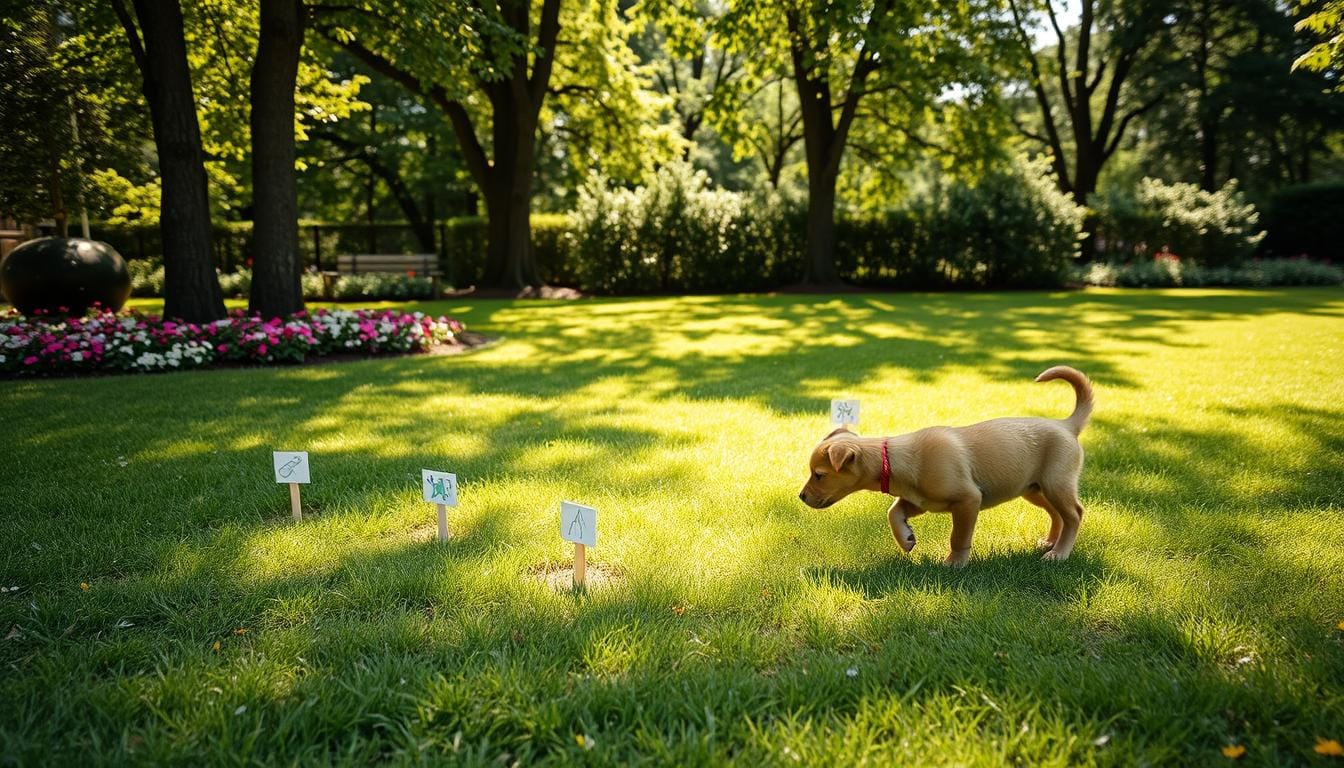
Teaching a stubborn puppy to use the potty can be tough. But with the right steps and consistency, you can do it. First, pick a good spot for your puppy to go. Choose a place with solid ground, like grass or soil. Puppies find these surfaces more appealing.
Setting a regular feeding schedule helps with potty training. Puppies need to eat three times a day, and older dogs two. Take your puppy out at the same times every day. This helps them learn when it’s time to go.
Watching your puppy closely is key during training. They shouldn’t stay in their crate for more than a few hours or six at night. Keeping an eye on them and taking them out often stops accidents. It also teaches them the right behaviour.
Cleaning up accidents right away is also important. It’s crucial to clean up messes quickly to avoid bad habits. The right cleaning products can get rid of smells that might attract your puppy.
By using these tips, you can teach your stubborn puppy to use the potty.
Potty Training Tools and Aids
Training a puppy to use the potty can be tough. But the right tools make it easier. Crate training and puppy potty pads are key to success.
Crate Training
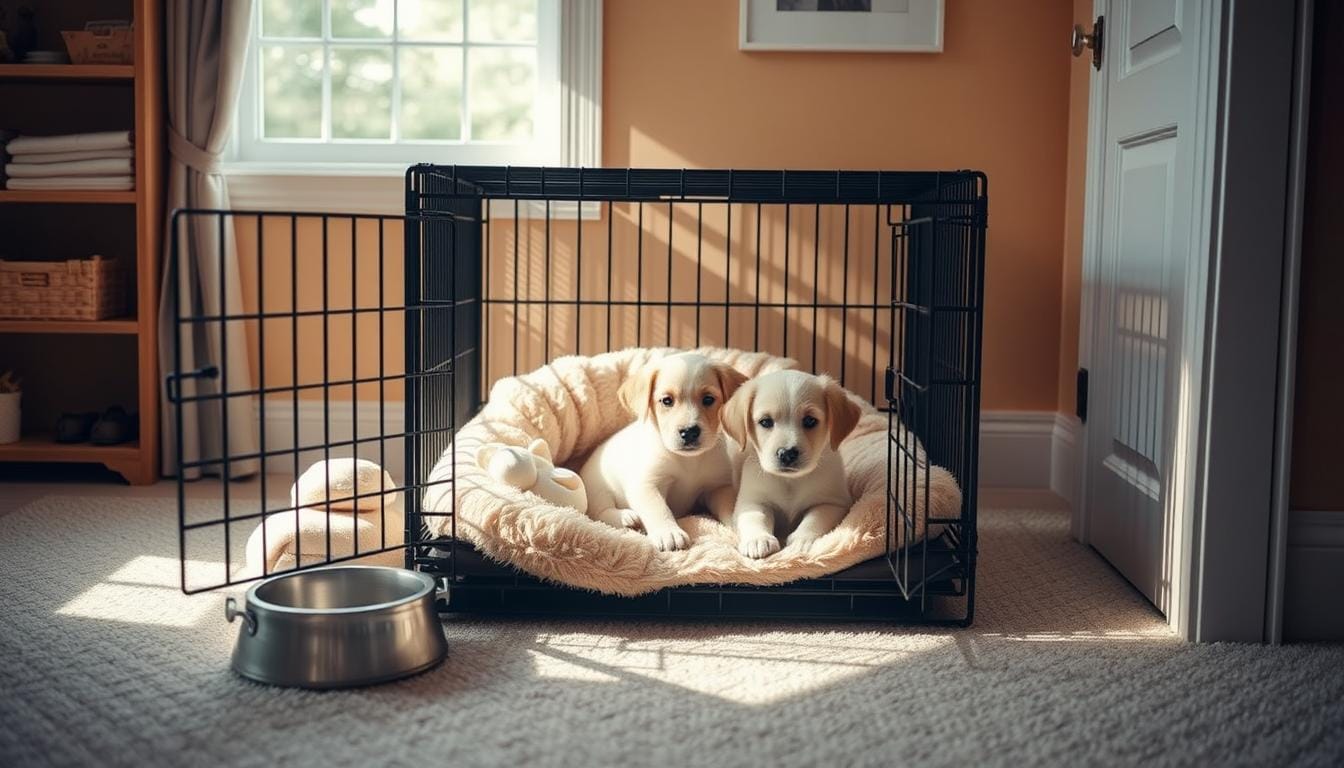
Crate training helps your puppy hold their bladder and learn good habits. Dogs naturally keep their sleeping areas clean. This makes the crate a good place for them to learn.
But it’s important to balance crate time with freedom. Let your puppy get used to the crate slowly. Make sure they see it as a positive place.
Puppy Potty Pads
Puppy potty pads are great when you can’t take your puppy outside right away. They let your puppy go in a special indoor spot. This is helpful when you’re busy or can’t take them out as often.
Remember to switch to outdoor potty breaks when your puppy is fully trained.
Using crate training and puppy potty pads helps your puppy learn to go potty outside.

Common Challenges and Solutions
Potty training can face some hurdles, even with the best intentions. Dealing with stubborn puppies and regression is common. But with the right strategy, you can help your dog get back on track.
Stubborn Puppy
Some puppies are more resistant to potty training. If your puppy is stubborn, try using more rewards, taking them out more often, and keeping them away from certain areas until they learn. Big puppies usually train faster than small ones, with small breeds taking longer and having more accidents.
Periods of Regression
It’s normal for puppies to have temporary setbacks in potty training. They might forget what they’ve learned. If this happens, just go back to your usual routine and cleaning without scolding your pup. Being consistent can lead to successful potty training in just 7 days.
Overcoming potty training challenges needs patience, persistence, and flexibility. By staying positive and consistent, even the most stubborn puppy can learn to use the potty correctly.
“There is no one-size-fits-all solution to all potty training problems; supervision and consistency are key for effective training.”
Every puppy is different, and what works for one might not work for another. The important thing is to stay alert, adjust your methods as needed, and celebrate small victories. With time and patience, your stubborn pup will master potty training.
Troubleshooting Potty Training Issues
If you’re facing puppy potty training problems, don’t worry. First, make sure to clean up any puppy potty training accidents well. This removes smells that might draw your puppy back to the same spot.
Next, use a crate or exercise pen when you can’t watch your puppy. This stops accidents and teaches them the crate is their “den” where they shouldn’t go to the bathroom.
Lastly, be patient and keep training consistently. Potty training a stubborn puppy takes time, and it’s okay to have setbacks. With effort and the right methods, you can beat any training hurdles and make your pup a pro at using the potty.
Some breeds, like terriers, pointers, setters, or Chihuahuas, can be extra stubborn with housebreaking. If you’re having trouble, stay calm, keep your training consistent, and stay positive. With time and patience, you can help your pup overcome even the toughest potty training challenges.
| Potty Training Tips | Potential Challenges |
|---|---|
| Establish a consistent routine Provide frequent potty breaks, and use positive reinforcement. Properly clean any accidents Limit access when unsupervised | Establish a consistent routine Provide frequent potty breaks, and use positive reinforcement. Properly clean any accidents. Limit access when unsupervised |
By tackling puppy potty training problems head-on and staying patient, you can make your puppy a pro at using the potty quickly. With the right approach and persistence, you can conquer even the toughest puppy potty training accidents.
“Consistency and patience are key when potty training a stubborn puppy. With the right techniques, you can overcome even the most persistent challenges.”
“Potty training a stubborn puppy takes patience, but the rewards of a well-trained dog are worth the effort.”
Potty Training Tools and Resources
To make potty training your stubborn puppy easier, get some helpful tools and resources. You’ll need collars, leashes, potty training pads, crates, and bells for advanced cues. Don’t forget cleaning supplies and treats for positive reinforcement. Crates are great for house training dogs.
Take your puppy to their potty area at key times like waking up, after meals, and before bed. This helps create a routine. Books, online guides, and videos from expert trainers can offer more tips.
Successful potty training means a schedule, consistency, and cleaning up messes. Positive reinforcement is key. With the right tools and info, you’ll have a house-trained pup in no time.
Remember, patience and guidance are crucial for potty training. A firm routine is important for adult dog training. Give your dog lots of chances to go outside to learn quickly.
Struggling to Potty Train a Stubborn Puppy? This Changes Everything
If your puppy refuses to listen, keeps having accidents, or ignores commands, the problem isn’t stubbornness—it’s untapped brain power.
Brain Training For Dogs is a force-free, science-backed training system created by CPDT-KA certified dog trainer Adrienne Farricelli that fixes potty training issues at the root level.
🧠 Why This Works (Even for Stubborn Puppies):
- ✅ Targets the real cause of potty accidents using brain-engaging games
- ✅ Force-free & positive reinforcement only (no yelling, no punishment)
- ✅ Step-by-step potty training guidance designed for puppies
- ✅ Builds focus, impulse control & obedience fast
- ✅ Created by a certified professional dog trainer (not a random “guru”)
- ✅ Works for puppies that ignore traditional training methods
🐶 Once your puppy learns to think, focus, and respond, potty training becomes faster, calmer, and stress-free.
👉 Click here to access Brain Training For Dogs and finally potty train your puppy the smart way
(Instant access • 60-day money-back guarantee)
Conclusion
Potty training a stubborn puppy can be tough, but it’s doable. Stick to a routine, use positive reinforcement, and solve any problems. You can housebreak your puppy in just 7 days. Stay calm, follow your plan, and celebrate small wins. Your puppy will learn to go potty in the right spot soon.
Understanding your puppy’s needs and signals is key for new owners. Puppies need to go out often because their bladders are small and they can’t control them well. Take them to the same spot every time and reward them for going potty there. This helps them learn what’s expected.
Being patient is important when potty training a puppy. Puppies learn at different rates. Watch for signs like sniffing or circling to know when they need to go. Having the right tools, like puppy pads and treats, helps you handle any issues.
The best time to start potty training is when puppies are 12-16 weeks old. They should have full control of their bladder and bowels by 16 weeks. Training them too early can be hard because they’re still learning. Older dogs can be trained, too, but it’s harder as they get older.
By following these tips and staying committed, you can potty train your stubborn puppy. They’ll learn to live in a clean, comfortable way. With the right approach and time, your puppy will become a well-trained friend.
FAQ
How often should I take my puppy out to potty during the day?
Puppies need to go out often, every 1-2 hours. This helps prevent accidents and teaches them good habits.
How can I recognise when my puppy needs to go potty?
Look for signs like sniffing, circling, or whining. These are cues that your puppy needs to go. Quick action can help you get them outside in time.
What’s the best way to reward my puppy for going in the right spot?
Use high-value treats and praise right after they go in the right spot. This reinforces good habits.
How can I make potty training work for a stubborn puppy?
Stubborn puppies might need more rewards, more potty breaks, and less home access. Be consistent and patient with them.
How can crate training and potty pads help with the potty training process?
Crate training helps puppies hold their bladder. Potty pads are for indoor use when you can’t take them outside. Remember to switch to outdoor potty breaks once they’re fully trained.
What should I do if my puppy has a potty training regression?
It’s normal for puppies to have setbacks. If this happens, go back to your routine and cleaning without punishing them. Stay patient and consistent, and they’ll get back on track.