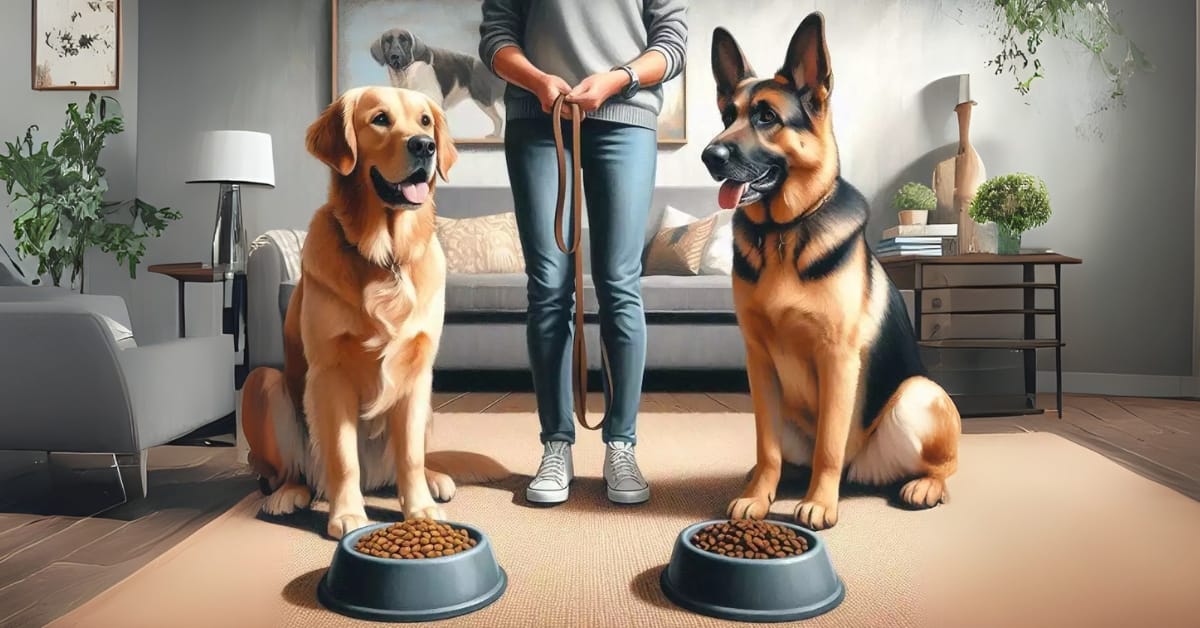
Discover effective strategies to stop food aggression in dogs and create a harmonious mealtime environment for your furry friends.
This comprehensive guide offers proven techniques to prevent conflicts between dogs during feeding, ensuring a peaceful household.
Learn how to recognise the signs of food aggression and implement positive training methods to stop this behaviour, promoting a safer and happier relationship among your canine companions.
As a devoted dog owner, I know how tough it can be when your dog gets possessive and aggressive over their food. About 20 per cent of dogs show signs of food aggression, showing it’s a common issue.
But there are steps you can take to stop this behaviour and avoid dangerous fights. By figuring out why your dog acts this way and using the right training, you can help your dog enjoy meals peacefully.
Key Takeaways
- Food aggression is a common issue affecting nearly 20% of dogs
- Certain breeds, like German Shepherds and Rottweilers, are genetically predisposed to food aggression
- Dogs that have spent time in shelters are at a higher risk of food aggression
- Food aggression can manifest in varying degrees of severity, from mild growling to severe biting
- Hormone-related factors and improper training can contribute to food aggression in dogs
Understanding Food Aggression in Dogs
Food aggression is a common issue in dogs. They act out to protect their food, treats, and other valuable items. This behaviour comes from their instinct to guard food for survival. It’s important to know the different levels and causes of food aggression to tackle it well.
What Is Food Aggression?
Food aggression is a type of resource guarding. Dogs become defensive and aggressive when they think someone is threatening their food, toys, or other items. This can be mild, like growling or showing teeth, or severe, like snapping or biting. Knowing how severe the aggression is helps in choosing the right training methods.
Signs of Food Aggression
Dogs show food aggression in four levels, each showing a different level of reaction. Level one is when a dog eats normally as the owner comes near. Level two means the dog eats fast and seems worried when the owner approaches, which is a common reaction.
Level three shows the dog stops eating, looks at the owner, and may have raised fur, showing they’re concerned. Level four is the worst, where the dog growls or nips if approached while eating. Spotting these signs helps owners deal with the problem early.
To manage food aggression in dogs, use training, manage the environment, and sometimes get professional help. Knowing the causes and signs of this behaviour lets owners prevent and fix it. This ensures a safe and peaceful relationship with their dogs.
“Dogs in the wild engage in resource guarding to ensure their survival.”
Causes of Food Aggression in Dogs
Many dog owners deal with food aggression, where dogs act defensively or confrontationally over food. This behaviour can stem from wanting to be in charge, feeling anxious about food, past scary experiences, guarding food, or competing for it. Signs of food aggression include growling, stiffening, showing teeth, lunging, snapping, and biting.
Some breeds like English Springer Spaniels, German Shepherds, or Rottweilers might naturally want to guard their food because they think like a pack. Dogs from shelters might also be more likely to show food aggression because they had to fight for food before.
Dogs that have gone through tough times, like abuse, neglect, or losing a friend, might turn to food aggression. Guarding food is a way for them to keep it safe from others. Not getting enough food can also make dogs aggressive, so it’s key to feed them right based on their size, breed, and age.
Having a set time for meals and feeding in the same spot can lessen stress and anxiety around food. If your dog keeps showing aggressive behaviour, talking to a pro in animal behaviour might help. It’s important to deal with food aggression to stop it from getting worse during meals and in other situations.
To sum up, food aggression in dogs comes from many things, like their genes, their environment, past scary events, guarding food, and not getting enough to eat. Having a regular feeding schedule and getting expert advice can help manage and stop food aggression in dogs.
how to stop food aggression in dogs towards other dogs

It’s key to stop food aggression in dogs for a peaceful home. This issue is tough, but it has solutions. Training can help your dog stop being aggressive over food.
Desensitisation: Gradual Exposure and Reward
Desensitisation is a great method. You slowly introduce your dog to others at mealtime, giving treats for calmness. This makes your dog see others as good, not threats.
Counterconditioning: Changing Perceptions
Counterconditioning also works well. It makes your dog see others at meals as positive, with yummy rewards. This changes their view, building trust and lessening aggression.
| Desensitization Technique | Counterconditioning Approach |
|---|---|
| Start by slowly bringing others near your dog during meals, from far away and then closer. | Give your dog treats when others are around, making them think it’s good. |
| Give your dog treats for staying calm with others nearby. | Make the time and closeness between your dog and others longer, if they stay calm and get treats. |
| Keep training, making the exercises harder and longer to build trust and confidence. | Be patient and consistent, as changing your dog’s behavior takes time6. |
Using these methods can stop your dog from being aggressive over food. It makes your home safer and more peaceful. Remember, be patient and consistent with your dog.
These techniques work well, but if your dog’s aggression is severe, see a pro. They can give specific training advice and help fix the root of the problem.
Manage Your Dog’s Environment
To stop food aggression, it’s key to manage your dog’s space and how you feed them. Dogs might get aggressive if another dog comes near their food. This is called resource guarding, where a dog feels threatened over something they have. They might guard food, toys, or even their personal space.
Feed your dogs in separate spots and watch them eat to stop fights. If a dog guards resources, it might growl, bite, or fight. This can happen when dogs fight over food or toys. It’s a big risk, especially with kids or older people around. Making a calm place for your dog to eat can help reduce aggression.
7 Dogs often use body language to ask for things without fighting. But showing aggression can mean they’re stressed or have bad feelings in a multi-dog home. Managing your dog’s space and eating habits can stop food aggression before it starts.
| Factors Affecting Resource Guarding Intensity | Growling, lunging, biting, chasing awa,y Freezing Subtle weight shifts, raised lips |
|---|---|
| Genetics, History of resource scarcity, Stress, Inherent value of items, Added value based on past interactions, Physical and mental needs, Underlying medical issues, Actions of people or other animals | Growling, lunging, biting, chasing away Freezing Subtle weight shifts, raised lips |
About 20% of dogs show signs of food aggression. This can range from being mildly annoying to very dangerous. Dogs might growl, snap, lunge, or bite to protect things.
Things like puppyhood rivalry, past trauma, breed traits, or shelter life can cause this. If a dog guards too much, it might bite to keep things safe. By managing your dog’s space and eating habits, you can stop food aggression and keep everyone safe.
“Properly managing your dog’s environment and feeding routine can go a long way in reducing food-related aggression.”
Addressing Dog-to-Dog Food Aggression

Food aggression between dogs can be tackled with the Constructional Aggression Treatment (CAT) method. This method involves controlling how dogs meet at mealtime and rewarding them for staying calm. By linking calmness with positive outcomes, CAT can help change aggressive behaviour over time.
Constructional Aggression Treatment
The success of Constructional Aggression Treatment comes from its step-by-step approach. First, trainers check how well a dog stays calm with another dog near during meals. Then, they slowly introduce the dogs to each other, rewarding calm behaviour. This way, dogs learn that being near another dog at mealtime is good, not bad.
Other methods can also help with dog-to-dog food aggression. Giving each dog its own toys, beds, treats, and food can prevent fighting over resources. Techniques like dropping treats into the bowl while a dog eats make humans seem positive, reducing aggression.
Combining Constructional Aggression Treatment, managing resources, and positive reinforcement works well against food aggression. With time, consistency, and expert help, dog owners can overcome this issue. This leads to a peaceful home for all dogs.
Spaying or Neutering Your Dog

Dealing with food aggression in dogs often means looking at the hormonal causes of their behaviour. About 20% of dogs show signs of food aggression, from mild growling to biting when approached at mealtime. Some breeds, such as Rottweilers and German Shepherds, might be more likely to act this way because of their nature.
Spaying or neutering your dog can help with food aggression. This surgery can lessen aggressive behaviours by changing the hormones that make dogs act out. It also makes training and changing behaviour easier.
Studies also show that neutered males, mixed breeds, and dogs prone to impulsivity and anxiety might guard their food more. Things like genetics, not having enough resources, pain, stress, and boredom can make dogs more likely to guard their food.
By spaying or neutering, pet owners can tackle the hormonal issues that affect a dog’s behaviour. But remember, this might not solve the problem on its own. You might also need to train and change your dog’s behaviour.
In summary, spaying or neutering can help with food aggression by managing the hormones that cause it. This step helps set the stage for better training and changing behaviour. It makes for a safer, more peaceful home for dogs and their owners.
Seek Professional Help

If you’re struggling to manage your dog’s food aggression, getting help from a dog behaviourist or a certified trainer is a good idea. They can offer tailored strategies and a detailed plan to fix the root of your dog’s aggression.
Handling dog aggression is tough, and getting professional help for dog aggression is key when you can’t manage it on your own. Experts like Certified Applied Animal Behaviourists (CAAB or ACAAB) or board-certified veterinary behaviourists (Dip ACVB) are great at managing dog aggression. They create specific behaviour change plans for your dog’s needs.
These pros can figure out why your dog is aggressive around food, such as if it’s in their genes or learned behaviour. Then, they’ll walk you through a step-by-step plan to make your dog less reactive to food. They’ll also teach you exercises to change how your dog feels about food.
Getting professional help for dog aggression is crucial for managing dog aggression and avoiding risky situations. With a skilled dog behaviourist, you can create a plan just for your dog’s food aggression. This way, you and your dog can live together safely together.
“Addressing food aggression in dogs requires a comprehensive, personalized approach that considers the individual dog’s behavior and underlying causes. Working with a qualified professional can make all the difference in effectively modifying the behavior and creating a safer, more positive environment for both the dog and the family.”
🐕 Stop Food Aggression at the Root—Without Force or Fear
Food aggression isn’t about dominance—it’s a lack of impulse control and mental stimulation.
That’s why punishment fails… and Brain Training for Dogs succeeds.
✅ Why This Program Works for Food Aggression:
- 🧠 Builds impulse control so dogs stay calm around food and other dogs
- 🐾 Uses mental games that naturally reduce guarding and reactivity
- 🚫 100% force-free & science-based—no intimidation or dominance methods
- 👩🏫 Created by a CPDT-KA certified professional dog trainer
- 🎯 Fixes the root cause, not just the aggressive reaction
- 🏡 Works at home for puppies, adult dogs, and multi-dog households
👉 Want Peaceful Mealtimes Again?
Stop managing fights and start rewiring your dog’s behaviour.
🔥 Click here to access Brain Training for Dogs
and turn food aggression into calm, confident behaviour—starting today.
🦴 Train the brain
🧠 Eliminate aggression naturally
❤️ Restore harmony between your dogs
Conclusion
Dealing with food aggression in dogs means using many strategies. This includes proper management, training, and sometimes getting help from experts. Knowing why dogs act this way, like how puppies fight over food or how bad food can make them act out, helps you find the right ways to stop it.
Food aggression often leads to fights and safety issues with more than one dog. But studies show it can be fixed with the right steps. For example, a study by the ASPCA showed that dogs stopped being aggressive at mealtime with training and help from owners. Using special feeding methods, like giving them food in two bowls or feeding by hand, can really help.
Knowing what makes dogs act aggressively, like new people or dogs, helps you manage it better. Things like crate training and using gates to keep dogs apart can make things safer. With time, patience, and the right methods, you can stop food aggression in dogs and reduce dog conflicts.
FAQ
What is food aggression in dogs?
Food aggression is when a dog gets upset over their food. They might growl or snap to protect it. It’s seen in about 20% of dogs.
What are the signs of food aggression in dogs?
Signs can be mild, like growling, or severe, like biting. Knowing how bad it is helps pick the right training.
What causes food aggression in dogs?
It can come from puppyhood habits, past trauma, or being a certain breed. It also happens when dogs fight over food in shelters.
How can I train my dog to stop food aggression?
Use desensitisation and counterconditioning. Slowly get your dog used to others eating nearby. Give treats for calmness. Teach them to see others as friendly.
How can I manage my dog’s environment to prevent food aggression?
Keep your dog’s eating area safe and separate. Watch them eat to stop fights. A calm place for eating can help.
How can I address food aggression between household dogs?
Try the Constructional Aggression Treatment (CAT) protocol. This means slowly getting them used to eating near each other while rewarding calmness.
How can spaying or neutering my dog help with food aggression?
Hormones can make dogs more aggressive. Spaying or neutering can lessen this. It helps with training and reduces aggression.
When should I seek professional help for my dog’s food aggression?
If home methods don’t work, get help from a vet or a dog trainer. They can give you advice on how to fix it.



Chào anh em, llwin hiện là sân chơi ổn định
với tốc độ ổn định. Kho game đa
dạng từ thể thao, nạp rút nhanh. Em thấy ổn định, ai đang tìm nhà cái thì nên thử nhé!
https://llwin.mobile/
You should take part in a contest for one of the best blogs online. I most certainly will recommend this web site!
Hi there, I do think your web site might be having web browser compatibility issues. Whenever I take a look at your web site in Safari, it looks fine however when opening in I.E., it’s got some overlapping issues. I merely wanted to give you a quick heads up! Besides that, excellent blog.