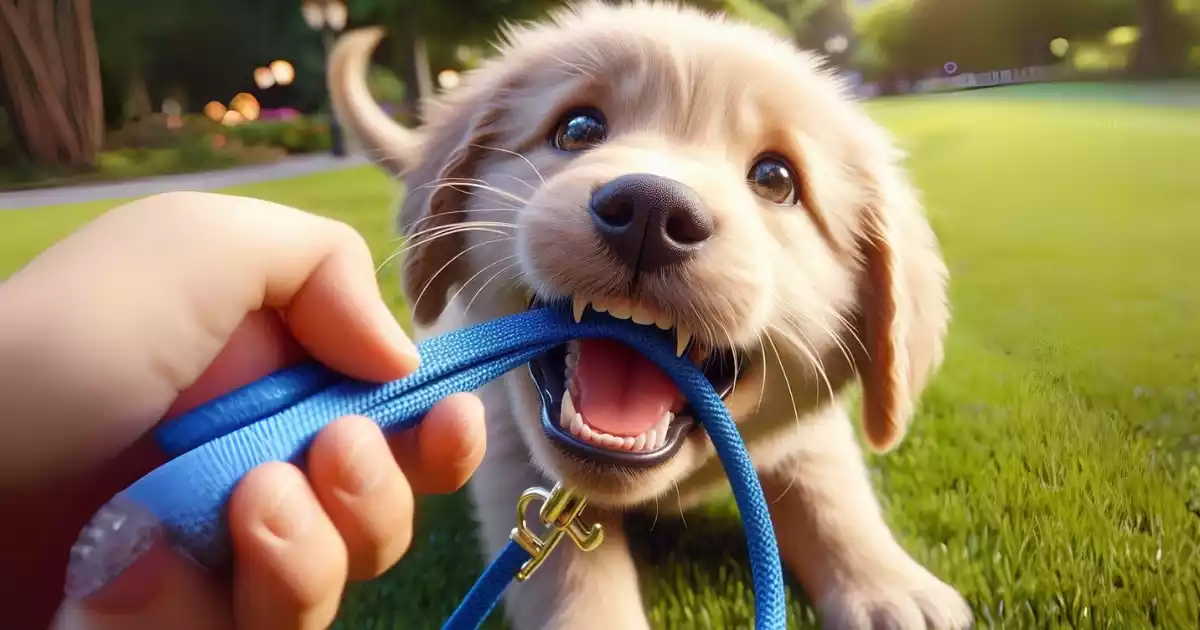
Welcome to the ultimate guide on tackling one of the most common challenges for new puppy owners: leash biting. If you’ve found yourself wondering, “How can I stop my puppy biting the leash during our walks?” you’re in the right place. At DogToysAndAccessories.com, we understand the frustration of trying to enjoy a peaceful stroll only to have it turn into a tug-of-war battle with your furry friend.
Puppy biting leash behaviour can be both annoying and potentially dangerous, but don’t worry – it’s a problem with solutions. In this comprehensive guide, we’ll delve into the reasons behind why your puppy is biting the leash and provide you with proven, effective strategies to curb this habit. Whether you’re dealing with a playful nip or a determined chewer, our expert tips will help you transform your walks from chaotic to calm.
From understanding the psychology behind puppy biting leash antics to implementing positive reinforcement techniques, we’ve got you covered. We’ll explore everything from redirection methods to training exercises that will not only stop your puppy from biting the leash but also strengthen your bond and improve overall obedience. By the end of this article, you’ll be equipped with the knowledge and tools to enjoy stress-free walks with your four-legged companion. Let’s dive in and put an end to leash-biting for good!

As a new puppy parent, I remember the first time my puppy started chewing on their leash. It was both cute and annoying. But, with the right steps, you can stop this behaviour and raise a well-behaved dog.
Puppy leash biting happens for many reasons, like frustration, not enough chew toys, and curiosity. Teaching your puppy to “Leave It” or “Drop It” when they chew the leash helps. Use treats to encourage good behaviour. Remember, teaching your puppy to let go of the leash takes time and patience. But the joy of a well-trained dog makes it all worth it.
Key Takeaways
- Puppy leash biting is a common behaviour driven by various factors like frustration, lack of chewing outlets, and curiosity.
- Training techniques like “Leave It” or “Drop It” paired with positive reinforcement can effectively stop leash biting.
- Providing suitable chew toys can help redirect a puppy’s chewing behaviour away from the leash.
- Choosing the right leash materials, such as those that are durable and chew-resistant, can discourage biting.
- Patience and consistency are key when training a puppy to stop leash biting, as it takes time and effort from the owner.
Understanding the Reasons Behind Leash Biting
As a puppy owner, you might have seen your furry friend biting and pulling on the leash. This is a common phase for young pups, but it can happen at any age. Leash biting is more common in playful, excited, and energetic dogs.
Boredom and Attention-Seeking
Some puppies bite the leash because they’re bored or want more fun during walks. They see the leash as a fun thing to chew on, showing their playful side.
Lack of Leash Training
Puppies without leash training get frustrated and bite the leash. They don’t understand the leash, leading to bad habits.
Frustration and Over-Arousal
Some situations make puppies feel overwhelmed, leading to leash biting. Bad leash handling makes this problem worse.
Knowing why your puppy bites the leash helps you train them better. You can teach them to walk nicely without biting the leash.
Reward Desired Behaviour with Positive Reinforcement
Positive reinforcement is key to stopping your puppy from biting the leash. Positive reinforcement for puppies rewards the good behaviour, not the bad. This method shapes your puppy’s leash behaviour gently and effectively.
Start by praising and giving treats when your puppy walks calmly on a loose leash. This encourages them to keep walking nicely instead of biting the leash. Always reward the good behaviour to keep it consistent.
- Praise your puppy and offer a high-value treat the moment they walk on a loose leash.
- Keep training sessions short and positive, ending on a good note.
- Practice reward-based training in a calm, distraction-free environment.
- Tailor your training approach to your individual puppy’s needs and responses.
Consistently rewarding good behaviour will help stop your puppy’s leash biting. Remember, patience and persistence are crucial for leash training tips for puppies.

Puppy Biting Leash: How to Stop It Through Alternative Behaviours
Dealing with a puppy that bites the leash can be tough. But there are ways to change this behaviour. By giving them chew toys and using tug toys as rewards, you can guide them to better actions.
Providing Appropriate Chew Toys
Puppies are teething, and their teeth are sharp. Offering them chew toys can satisfy their biting urge and keep them away from the leash. This also protects your leash and helps soothe your puppy’s teething pain.
Using Tug Toys as Rewards
Using tug toys as rewards is another smart move. Puppies love to chew and tug, so using this to your advantage can work well. Reward them with a tug toy when they walk well on the leash. This gives them a healthy outlet for their energy and reinforces good behaviour.
Consistency and patience are crucial in stopping puppy biting on the leash. With the right chew toys and tug toys as rewards, you can teach your puppy new behaviours. This will help them learn to walk nicely on a leash.
Proper Leash Handling Techniques
As a dog owner, how you handle the leash matters a lot. Keeping the leash loose and behind your dog helps prevent frustration and biting. This method helps your puppy succeed without leash conflicts.
Keeping the Leash Loose and Behind
It’s important to keep the leash loose for your puppy’s comfort and your control. A tight leash can cause tension and make your puppy want to chew on it. By keeping it loose and behind you, you create a calm space that stops leash biting.
Avoiding Dangling the Leash
Dangling the leash in front of your puppy can tempt them to bite. Hold the leash securely behind your back or to the side. This keeps it out of your puppy’s reach and prevents leash biting habits.
Proper leash handling is key to training your puppy to walk nicely on a leash. By keeping the leash loose and not dangling it, you’ll have stress-free walks.

“Consistent, positive reinforcement-based training is the key to stopping leash biting behavior in puppies. By incorporating these leash handling techniques, you’ll create an environment that discourages the urge to chew, leading to a well-behaved, happy pup.”
Reducing Conflict and Proactive Engagement
Managing your puppy’s leash biting behaviour requires a proactive approach, not just punishment. Instead of scolding or yanking the leash, try preventing the behaviour with positive reinforcement. Engage your puppy’s attention to keep them focused on you.
Identify situations that make your puppy bite the leash, like boredom or being over-aroused. Avoid these situations and keep your puppy engaged with treats, toys, and play. This approach not only stops the biting but also strengthens your bond.
Leash biting often comes from a puppy’s instinct to explore and chew. Give them chew toys and redirect their attention to better objects. This way, you can redirect their energy into positive behaviours, reducing conflict.
The key to managing leash biting is being proactive and rewarding good behavior10. This method not only stops the biting but also builds a stronger, more positive relationship with your puppy.
The Importance of Stopping Leash Biting Early
Addressing leash biting early is key in puppy behaviour. Puppies start mouthing around 7 weeks old, which may seem cute but can become a problem by 3-4 months. It’s vital to stop this behaviour early to avoid it becoming a hard habit to break.
Preventing Bad Habits
Leash biting is a common issue in puppies. It’s important to stop it early to avoid it becoming a lifelong habit. By addressing it early, you can teach your puppy proper leash manners.
Easier to Correct Early On
Correcting leash biting is easier when done early. Bite inhibition is learned during play with other puppies. Without this, correcting leash biting later can be tough.
If you’re struggling to correct leash biting, getting help from a Certified Professional Dog Trainer (CPDT) is wise. They can guide you in using the best training methods to stop the behaviour.
Gradual Training and Generalisation
Training your puppy to stop biting the leash needs a careful and patient plan. Gradual training and generalisation are essential. Start in a calm environment without distractions. Then, gradually increase the difficulty as your puppy learns.
Starting in a Calm Environment
Begin in a quiet place, like your home or a secure area. This helps your puppy learn without getting overwhelmed. As they get better, add more challenges to help them learn in different situations.
Gradually Increasing Difficulty
Make training exercises harder slowly, keeping your puppy calm and confident. Introduce new things like people and places while teaching the right behaviour. Move at a pace that lets your puppy succeed, building a strong foundation.
Consistent and patient training with positive rewards will help your puppy stop biting the leash. With time and effort, they’ll walk calmly beside you, enjoying the journey.

Puppy Biting Leash: How to Stop: Additional Tips
There are more ways to stop your puppy from chewing on the leash. Using a high-quality leash can make it less appealing for your puppy to bite down on. Keeping your puppy engaged and stimulated throughout the day can also help prevent boredom-related leash biting. If you continue to struggle with this issue, consulting a professional dog trainer may be the best course of action.
Choosing High-Quality Leashes
The type of leash you choose can make a big difference. Opting for a high-quality leash that is durable and not easily chewed through can make it less appealing for your puppy to sink their teeth into. Look for leashes made of materials like leather, nylon, or heavy-duty webbing that are designed to withstand some nibbling without easily tearing or breaking.
Engaging Your Puppy Throughout the Day
- Provide plenty of physical and mental exercises to keep your puppy stimulated and prevent boredom.
- Rotate your puppy’s toys to keep them engaged and interested.
- Freeze rubber toys to help soothe your puppy’s gums during the teething phase.
- Use high-value treats to redirect your puppy’s attention from chewing on the leash to something more positive.
By keeping your puppy’s energy levels in check and providing engaging activities throughout the day, you can help prevent the boredom and excess energy that can contribute to leash biting.
Remember, consistency and patience are key when it comes to stopping your puppy from biting the leash. If you continue to struggle with this behaviour, don’t hesitate to seek the guidance of a professional dog trainer who can provide personalised advice and support.
🐶 Stop Puppy Leash Biting with PROVEN Brain Training!
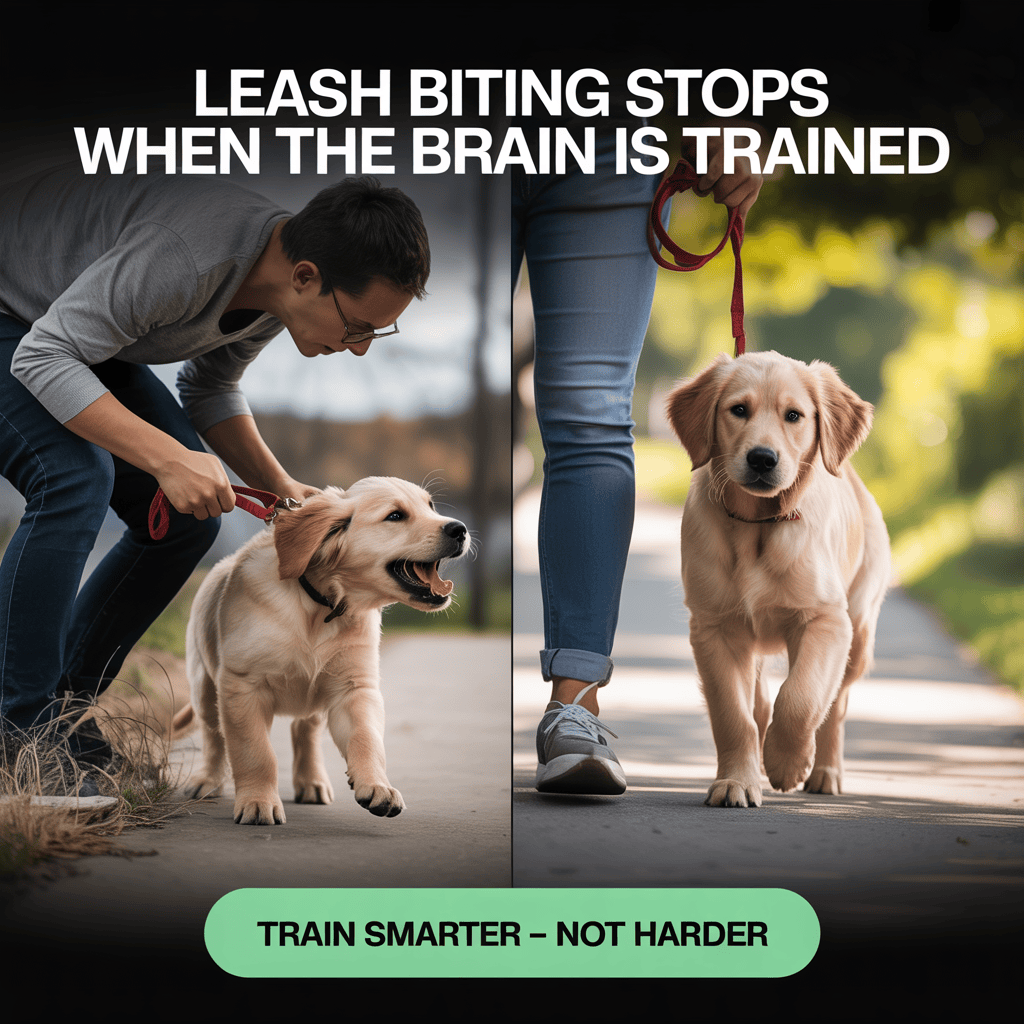
Tired of your puppy turning every walk into a chew session? Brain Training for Dogs by Adrienne Farricelli (CPDT-KA certified trainer) offers a science-backed, gentle solution to transform leash manners—fast!
🌟 Why This Program Works for Leash Biting (and More!)
✅ Unlocks Your Puppy’s “Hidden Intelligence” – Stops leash biting, chewing, jumping, and other frustrating behaviours
✅ Step-by-Step Games & Exercises – Fun, engaging training that builds impulse control
✅ Certified, Force-Free Methods – No yelling or punishment—just positive results
✅ 60-Day Money-Back Guarantee – Risk-free transformation!
👉 Click Here to Fix Leash Biting NOW! (Limited-time access!)
Don’t let leash battles ruin your walks—train smarter, not harder! 🦮
Conclusion
Learning how to stop leash biting is key to a fun walk with your puppy. By understanding the final thoughts on leash biting and using the tips from this guide, you can fix the problem. This will help you and your puppy grow closer.
Being consistent, using positive reinforcement, and being patient are important for wrap-up on leash training. Every puppy is different, so you might need to try a few things to find what works best. Keep working at it, and you’ll have stress-free walks with your well-behaved dog.
Start tackling leash biting early and give your puppy the right help and tools. This will stop bad habits from forming and make training easier. Enjoy the journey, celebrate your wins, and cherish the bond you’ll create with your puppy. Happy training!
FAQ
Why do puppies bite their leash?
Puppies might bite the leash because they’re bored or not trained well. They could also be frustrated or over-excited. Knowing why they do it helps you find the right way to stop them.
How can I stop my puppy from biting the leash?
To stop your puppy from biting the leash, reward them when they behave well. Give them chew toys and use tug toys as treats. Also, handle the leash correctly by keeping it loose and behind your dog.
Why is it important to address leash biting early on?
It’s vital to tackle leash biting early. This behaviour can become a bad habit if not stopped quickly. Early intervention makes training your puppy easier and prevents bad habits from forming.
How do I train my puppy to stop biting the leash?
Begin training in a calm place with little distraction. As your puppy gets better, make things harder. This helps them learn and apply what they’ve learned in different places and situations.
What are some additional tips for stopping my puppy from biting the leash?
Use a good-quality leash that’s not tempting to chew. Keep your puppy busy and happy to avoid boredom biting. If problems persist, getting help from a professional dog trainer might be the best step.



Jun88 là nhà cái giải trí trực tuyến uy tín nổi bật tại thị trường game đổi thưởng Việt Nam được người chơi tin tưởng và lựa chọn. Nhà cái sở hữu kho game và công nghệ bảo mật tiên tiến nên mang đến trải nghiệm giải trí an toàn – minh bạch. Bên cạnh đó, tỷ lệ thưởng hấp dẫn và giao diện thân thiện, Jun888 còn ghi điểm nhờ tốc độ giao dịch nhanh chóng, dịch vụ chăm sóc khách hàng chuyên nghiệp 24/7 và những ưu đãi hấp dẫn dành cho hội viên.
Jun88 là nền tảng giải trí trực tuyến thu hút đông đảo người dùng nhờ sở hữu hệ sinh thái trò chơi đa dạng cùng trải nghiệm ổn định. Nền tảng ứng dụng công nghệ hiện đại kết hợp các giải pháp bảo mật tiên tiến nhằm mang đến môi trường sử dụng an toàn và thuận tiện. Người chơi có thể lựa chọn nhiều hình thức giải trí như cá cược thể thao, casino trực tuyến, slot game cùng nhiều chuyên mục hấp dẫn khác. Ngoài ra, Jun 88 còn thường xuyên triển khai các chương trình ưu đãi dành cho thành viên và duy trì đội ngũ chăm sóc khách hàng hoạt động 24/7 để hỗ trợ nhanh chóng khi cần. Với những ưu điểm nổi bật đó, Jun88 là một lựa chọn phù hợp cho những ai đang tìm kiếm một nền tảng giải trí trực tuyến chất lượng và đáng trải nghiệm.
Good post. I study something more difficult on different blogs everyday. It’s going to always be stimulating to learn content material from other writers and observe a little bit one thing from their store. I’d prefer to use some with the content material on my blog whether you don’t mind. Natually I’ll give you a link in your web blog. Thanks for sharing.
Jun88 là thương hiệu cá cược trực tuyến uy tín tại châu Á, hoạt động chuyên nghiệp từ năm 2006. Nhà cái sở hữu hệ sinh thái đa dạng gồm cược thể thao, casino live, game bài, nổ hũ cùng nhiều ưu đãi hấp dẫn. Jun 88 chú trọng bảo mật, thanh toán nhanh chóng và chăm sóc khách hàng 24/7, mang đến trải nghiệm an toàn, tiện lợi cho người chơi.