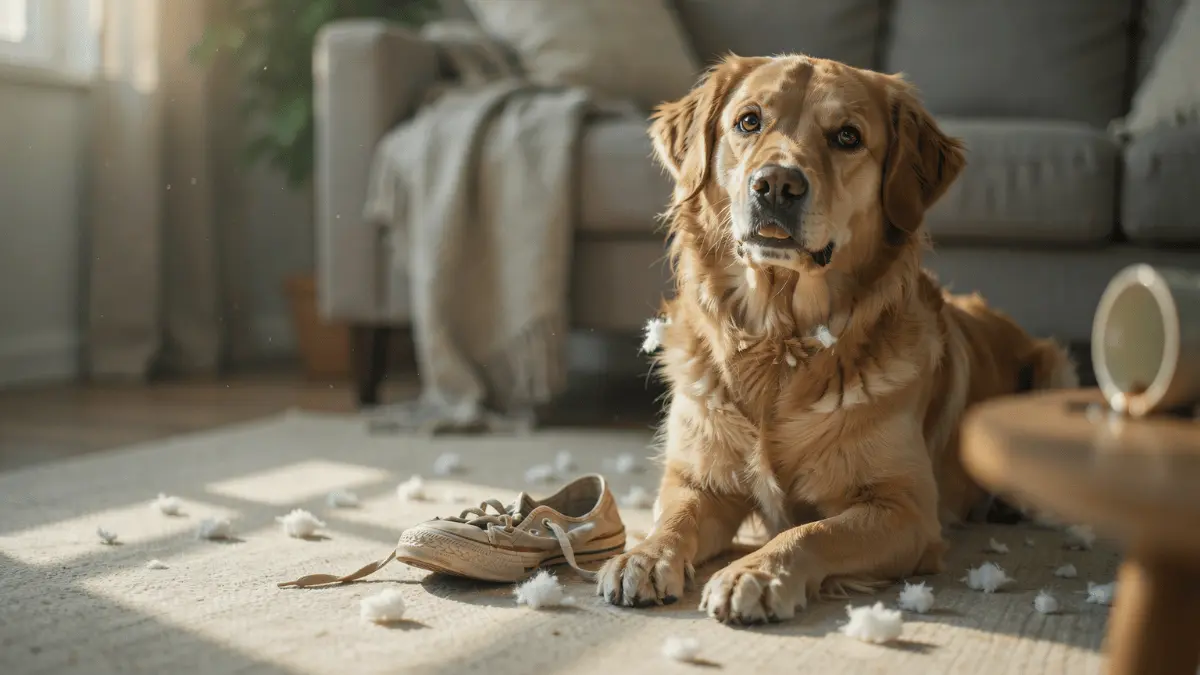
Ever wonder why your dog suddenly turns into a chewing, barking, command-ignoring tornado? You’re not alone — and it’s probably not stubbornness. A UK study found a strong link between behaviour problems and a lack of mental stimulation, affecting nearly one in three pets in family homes.
Here’s the truth: most dogs misbehave not because they’re being difficult, but because their brains aren’t getting enough exercise. A bored dog is a dog looking for trouble — and chewing the couch or barking at nothing is often just pent-up energy with no outlet.
The good news? There’s a simple fix. A focused routine of brain games and short training sessions provides your dog with the mental workout they crave. Pair that with high-value treats and a crate for safe structure, and you’ve got a recipe for calmer days and fewer surprises.
In this post, we’ll break down exactly why dogs misbehave — and the easy, practical steps you can start using today to turn things around.
Key Takeaways
- Mental stimulation is a major factor in behaviour problems; research supports this link.
- Short, consistent brain games and dog training sessions are more effective than long ones.
- Use high-value treats and a crate to create a predictable structure at home.
- Training a dog with simple obedience and tricks boosts confidence and reduces stress.
- Start small today: a few minutes a day leads to lasting improvements.
Understanding Why Your Dog Misbehaves
When a dog acts out, it is usually sending a simple message: it needs stimulation and consistent rules. Excessive barking, chewing, jumping, digging, leash pulling, whining, and hyperactivity are common signals that your pet lacks mental engagement.
Common Destructive Behaviours
Left alone in the house with nothing to do, a puppy or adult will often chew furniture or toys to ease boredom. Ignoring commands often happens because people reward the wrong action — even scolding can act like attention.
The Role of Human Reinforcement
People frequently teach unwanted patterns by accident. For example, jumping on people becomes a fast route to attention, so the behaviour repeats. Research in the United Kingdom links many behaviour problems to a lack of mental stimulation rather than only to physical exercise.
- Quick fixes backfire: giving attention or treats at the wrong time reinforces bad habits.
- Structured learning helps: a step-by-step plan replaces destructive acts with obedience and tricks.
- Understand perception: seeing the world from your pet’s view is the first step to better manners.
The Link Between Boredom and Behavioural Problems
When mental tasks are scarce, smart pets invent ways to keep busy—and those ways can damage your home. A lack of mental stimulation and poor enrichment often produces chewing, barking, and pacing. This happens even if you walk or play with your dog every day.
Real examples show the scale of this issue. Betsy, a Border Collie, learned names for and retrieved more than 345 objects. Stella uses a soundboard to communicate with her owner. These stories prove that many animals need far more to do than simple walks.
Without regular brain games and steady engagement, your puppy or adult will invent its own activities. Often, those activities become behaviour problems that stress people and damage things.
- Boredom drives destruction: intelligent pets need enrichment to stay calm.
- Engagement matters: short, daily games reduce anxiety and unwanted acts.
- Exercise isn’t enough: combine physical play with interactive challenges to prevent problems.
Implementing the Why Dogs Misbehave Brain Training Fix
Begin small: consistent, five-minute lessons reshape habits and provide real mental engagement. Start today by setting a predictable routine that fits your house and schedule.
The Science of Neuroplasticity
Harvard research shows the animal mind adapts with practice. Repetition and short tasks help the dog’s brain form new pathways so unwanted behaviours fade.
Positive Reinforcement Methods
Use rewards and clear cues to teach commands without fear. Adrienne Farricelli’s program—300 articles and 21 videos—uses high-value food treats and praise to speed learning.
Introduce puzzle games, simple tricks, and obstacle steps that let your puppy or adult solve problems. This builds confidence and reduces attention-seeking behaviours.
- Step-by-step: follow short modules to address crate work and impulse control.
- Make sure to reward correct responses with a treat and brief play.
- Get started with five-minute sessions and increase difficulty as skills improve.
“Consistent, fun practice rewires habits and strengthens the bond between you and your pet.”

Essential Tools for Successful Mental Stimulation
Simple items around the house can turn into powerful enrichment that supports better behaviour. Start with a few easy tools to add variety and challenge to daily life. Short sessions work best and keep your dog engaged.
DIY Enrichment at Home
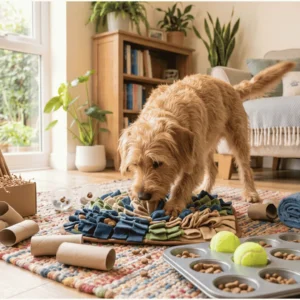
You can make toys from empty yoghurt pots, folded towel puzzles, or a muffin tin with treats hidden under tennis balls. These ideas slow down eating and invite problem-solving.
- Use a puzzle feeder or treat mat to mix food and fun.
- Hide treats around the home to get your pet using scent and focus.
- Stuff a durable toy with food to occupy your dog while you work.
- Turn walks into short obedience games to keep the dog’s brain sharp.
| Tool | Purpose | How to Use | Time (mins) |
|---|---|---|---|
| Puzzle feeder | Slow eating, stimulation | Fill with kibble or wet food | 10–20 |
| DIY toy (yoghurt pot) | Problem solving | Cut holes; add treats | 5–15 |
| Treat hunt | Scent work | Hide in rooms; cue search | 5–10 |
“A small set of tools and a few minutes a day will improve obedience and reduce common problems.”
Advanced Techniques for Long-Term Obedience
Advanced work reshapes attention and impulse control for lasting obedience. Start by adding controlled distractions to practice sessions so your dog learns to follow commands in real settings.
Teach toy names to challenge learning. Label two toys, reward correct choices, then add more items. This boosts focus and vocabulary while turning play into purposeful work.
Build complex tricks that require multi-step responses. Layering steps teaches patience and reduces reactive behaviour. Move slowly and only increase difficulty after your pet shows reliability.
- Use short, regular sessions to keep progress steady and avoid burnout.
- Include a crate as a predictable rest spot within your routine.
- Practice cues around other people and everyday sounds to generalise obedience.
“Consistent, progressive challenges keep a dog engaged and confident for life.”
🐶 Stop the Misbehaviour — Unlock Your Dog’s Hidden Intelligence!

If your dog barks excessively, ignores commands, chews everything in sight, jumps on guests, or seems impossible to control, the problem may not be stubbornness—it may be a lack of mental stimulation. Adrienne Farricelli’s Brain Training for Dogs focuses on developing your dog’s natural intelligence through fun, force-free games and exercises designed to improve obedience and reduce problem behaviours.
✅ What You’ll Get:
- Brain games that keep your dog mentally stimulated
- Force-free, positive training methods
- Step-by-step video lessons and demonstrations
- Solutions for barking, chewing, jumping, digging, pulling, and more
- Over 21 training games to boost obedience and focus
- Training created by a certified CPDT-KA professional dog trainer
⭐ Ready for a Calmer, Smarter, Better-Behaved Dog?
Discover the proven training system that has helped thousands of dog owners turn frustrating behaviours into obedience and confidence.
👉 Click Here to See How Brain Training for Dogs Can Transform Your Dog Starting Today! 🐾
Conclusion
Start small and stay consistent. Short mental games and clear rewards give your dog new skills. This simple way reduces common behaviour problems and builds calm routines.
Whether you have a puppy or an older pet, brief daily sessions and positive reinforcement improve focus and manners. Use puzzle play, name games, and predictable cues to enrich your pet’s day.
With steady training and patience, you will see better responses and a happier home. Begin today with five minutes of brain training and watch your relationship grow.
FAQ
What causes common destructive behaviour in your dog?
Destructive actions often come from unmet needs: insufficient exercise, little mental stimulation, separation stress, or inconsistent rules. When your pet lacks outlets for energy and problem-solving, they chew, dig, or rip items to self-soothe. Assess daily routine, enrichment, and how you respond to unwanted behaviour to pinpoint triggers.
How does human reinforcement influence your pet’s conduct?
You shape behaviour every time you react. If you laugh, give attention, or offer treats when your companion barks or jumps, you reward that action. Consistent, timely responses and clear rules teach what earns rewards. Use planned attention and ignore attention-seeking misbehaviour to shift habits.
Can boredom really lead to long-term behavioural problems?
Yes. Boredom reduces impulse control and increases stress hormones, which in turn fuel repetitive or destructive conduct. Regular mental challenges — puzzle feeders, scent games, short training sessions — keep learning pathways active and prevent escalation into chronic problems.
What is the basic science behind neuroplasticity for adult dogs?
Neuroplasticity means your dog’s brain can form new connections throughout life. Repeated, rewarding practice strengthens desired responses. Short, frequent training sessions create lasting changes in attention, self-control, and confidence by reinforcing neural pathways tied to good behaviour.
Which positive reinforcement methods work best for quick results?
Use high-value rewards (small pieces of cooked chicken, commercial soft treats, or a favourite toy) and deliver them immediately for correct responses. Pair treats with a consistent cue and fade food gradually toward praise and play. Keep sessions under five minutes and frequent to maximise retention.
How do games build confidence and reduce problem behaviour?
Games offer safe challenges and measurable success. Hide-and-seek, target touch, or scent discrimination give your dog achievable goals and predictable outcomes, which lowers anxiety and boosts independent problem-solving. Confident dogs are less likely to act out.
What essential tools improve mental stimulation at home?
Start with puzzle feeders, treat-dispensing toys, snuffle mats, and interactive balls. Add a sturdy chew toy and a rotation system so items stay novel. Crate training and scheduled rest help regulate arousal and make training windows more productive.
Can you create effective DIY enrichment without spending much?
Absolutely. Use cardboard boxes for scent searches, towel rolls to hide treats, muffin tins with tennis balls, or frozen kibble in a water bottle. Rotate challenges and vary difficulty to keep your companion engaged and learning.
What advanced techniques support long-term obedience?
Move beyond treats by introducing variable reinforcement, clear cues, impulse-control games (wait, leave it), and distraction training in increasingly realistic settings. Consider target training, shaping complex behaviours, and short, structured walks focused on engagement rather than distance.
How do you know if a behaviour problem needs a professional trainer or a veterinarian?
Consult a vet first for sudden or severe changes, medical causes, or self-injury. Seek a certified force-free trainer or a veterinary behaviourist if problems persist despite consistent enrichment and reinforcement, or if aggression and high anxiety are present.
How quickly will mental stimulation and consistent training change behaviour?
Improvement often appears within days for simple issues and in weeks for entrenched habits. Long-term change depends on consistency, exercise, and enrichment. Expect gradual progress and celebrate small wins while maintaining the plan.
How do you balance food-based rewards with a healthy diet?
Use tiny training treats, reserve a portion of daily kibble for training, or use low-calorie options like carrot pieces or freeze-dried liver. Adjust meal portions to avoid overeating and keep sessions frequent but brief.
What role do toys and play have in reducing separation problems?
Interactive toys and treat dispensers can occupy attention during short absences and teach calm, independent play. Pair departures with low-key routines and gradual desensitisation to reduce anxiety over time.
How can you get started today with a simple brain-based routine?
Begin with three 5-minute training or puzzle sessions daily: one for obedience cues, one for a scent or problem-solving game, and one for calm settling in a crate or mat. Track progress, rotate activities, and increase challenge as your companion succeeds.




This site has a great winning streak lately. I feel like my luck has improved since I switched to idarushoki. Keep it up!