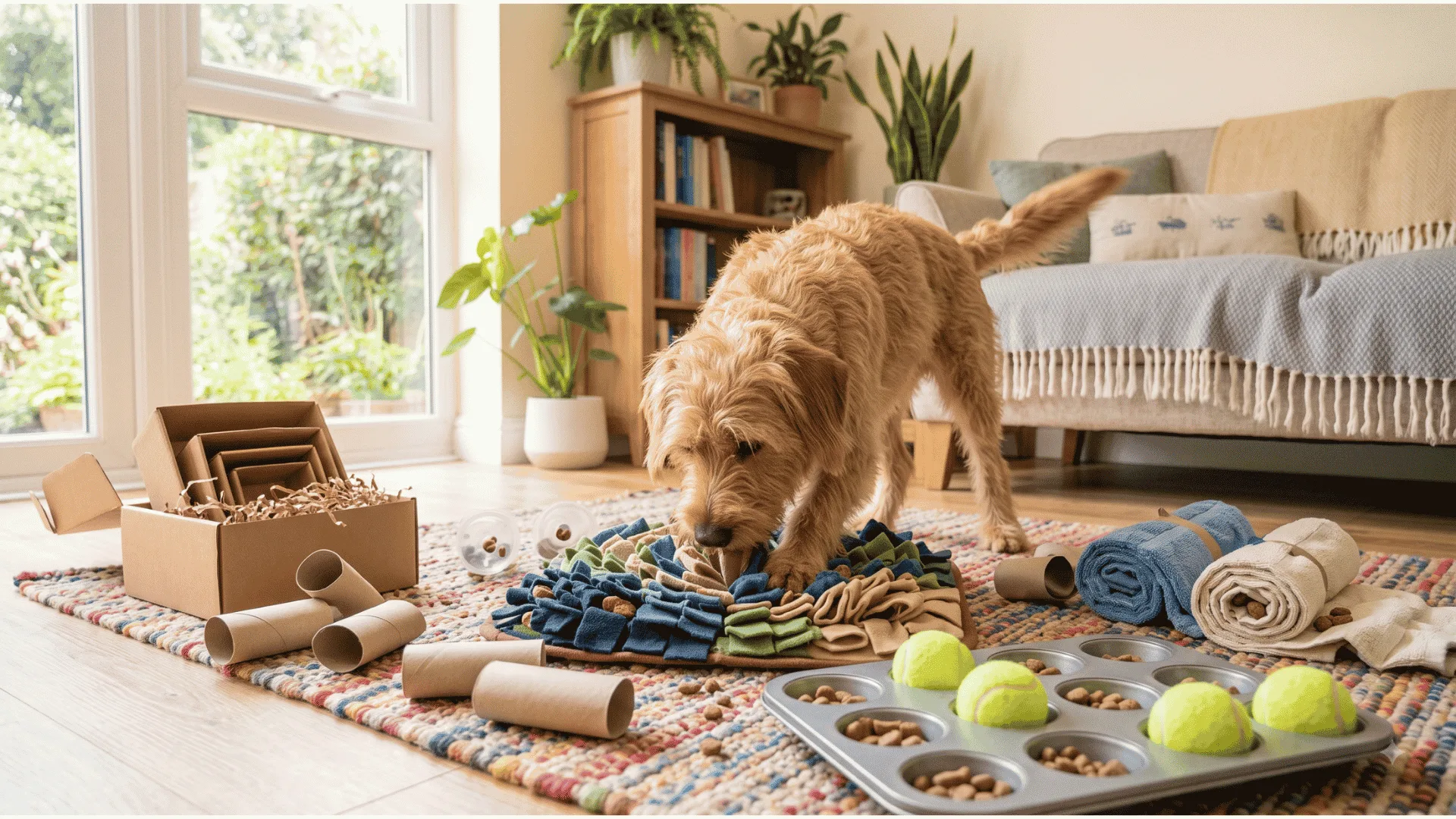
“The important thing is not to stop questioning.” — Albert Einstein. That idea fits playing at home: simple challenges can keep your dog curious, calm, and engaged.
These DIY dog enrichment toys turn towels, bottles, cups, socks, boxes, and containers into affordable indoor activities. You can make many for less than $5 with items already in your home, such as toilet paper rolls, yogurt cups, egg cartons, and shipping boxes.
A Certified Canine Enrichment Technician and lifelong DIYer tested dozens of options before choosing these beginner-friendly activities. Sniffing, foraging, licking, chewing, movement, and problem-solving offer problem-solving simulation when outdoor time feels limited.
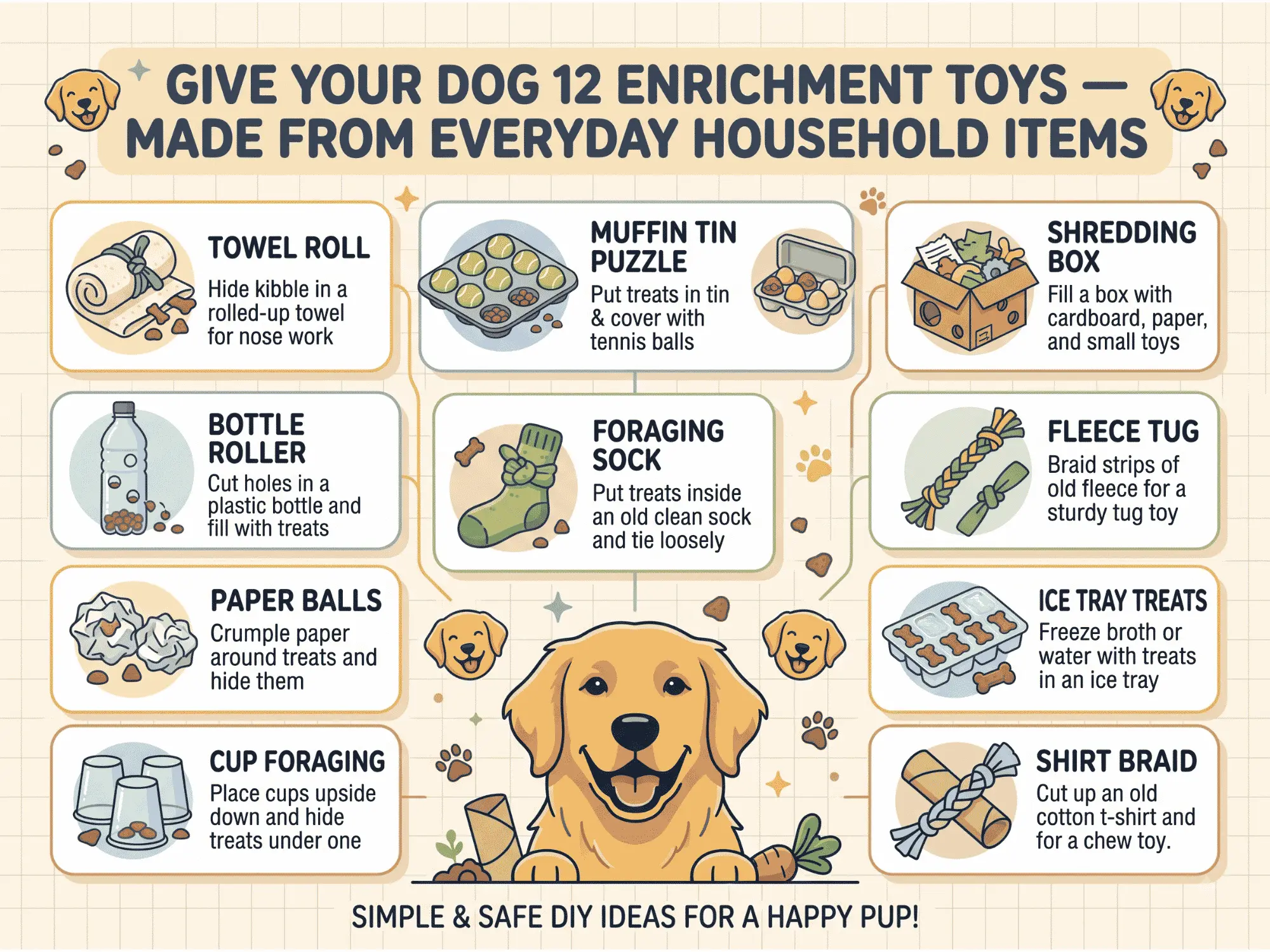
From a muffin tin puzzle to a tennis ball game, these DIY enrichment ideas make indoor time more fun. The printable guide, Give Your Dog 12 Enrichment Toys — Made From Everyday Household Items, gives busy owners fast, low-cost ways to get started.
Key Takeaways
- Use common household supplies.
- Many projects cost less than $5.
- Activities support focus and curiosity.
- Sniffing and foraging add variety.
- The printable guide saves planning time.
Why DIY Dog Enrichment Toys Keep Dogs Happily Engaged Indoors
Indoor play gives your dog more than a break from bad weather. Dogs need mental exercise as well as physical movement, especially when rain, snow, or heat limits outdoor time. A simple toy can turn a quiet hour at home into focused work.
Boredom may lead to frustration, loud barking, or destructive chewing. A food puzzle gives the brain a useful task. Searching, flipping, licking, and moving safe objects can build confidence while using extra energy. These enrichment ideas also add fun without demanding much space.
Sniffing offers a calm way to engage. Its natural rhythm may soothe the nervous system, making scent games helpful on rainy days or before a stressful vet visit. Short sessions can fit easily into daily life.
Louise from Red Pointy Dog Training also connects games with training. During tug, cues such as “drop it” and “wait” encourage focus and emotional control. Shared play strengthens your bond, whether you use a ball, a puzzle, or another simple game.
Prepare Household Items and Keep DIY Toys Safe
Safe play starts with a quick inspection of what you plan to use. Choose clean, dry household items, and remove anything with sharp edges, loose seams, stains, or food residue. A few simple tips can make indoor enrichment safer and more enjoyable.
Choose Dog-Safe Towels, Bottles, Cups, Socks, Boxes, and Containers
Useful supplies include empty toilet paper rolls, yogurt containers, egg cartons, and plastic berry containers. You can also use a sturdy towel, sock, box, or rubber mat. Avoid cracked plastic, thin bottles, and containers with small parts.
- Wash and dry each item before use.
- Check balls to ensure they cannot fit fully inside your dog’s mouth.
- Skip tape, bottle caps, loose rubber, and sharp cardboard pieces.
Supervise Play and Remove Choking Hazards
Let your dog play only while an adult watches closely. Cardboard dispensers may break apart, and some dogs may swallow the pieces. Stop the activity if fabric tears or plastic splits.
Water bottle puzzles are advanced and may frustrate puppies or inexperienced dogs. Use them only after careful assessment. Remove damaged materials at once, and store unfinished toys safely at home.
Scent and Foraging Toys That Encourage Natural Sniffing
Sniffing turns a quiet room into a search zone. It supports natural behavior, uses mental energy, and may help your dog settle. Try these simple enrichment ideas when outdoor time is limited.
Make a Tea Towel Treat Knot for Calm Indoor Sniffing
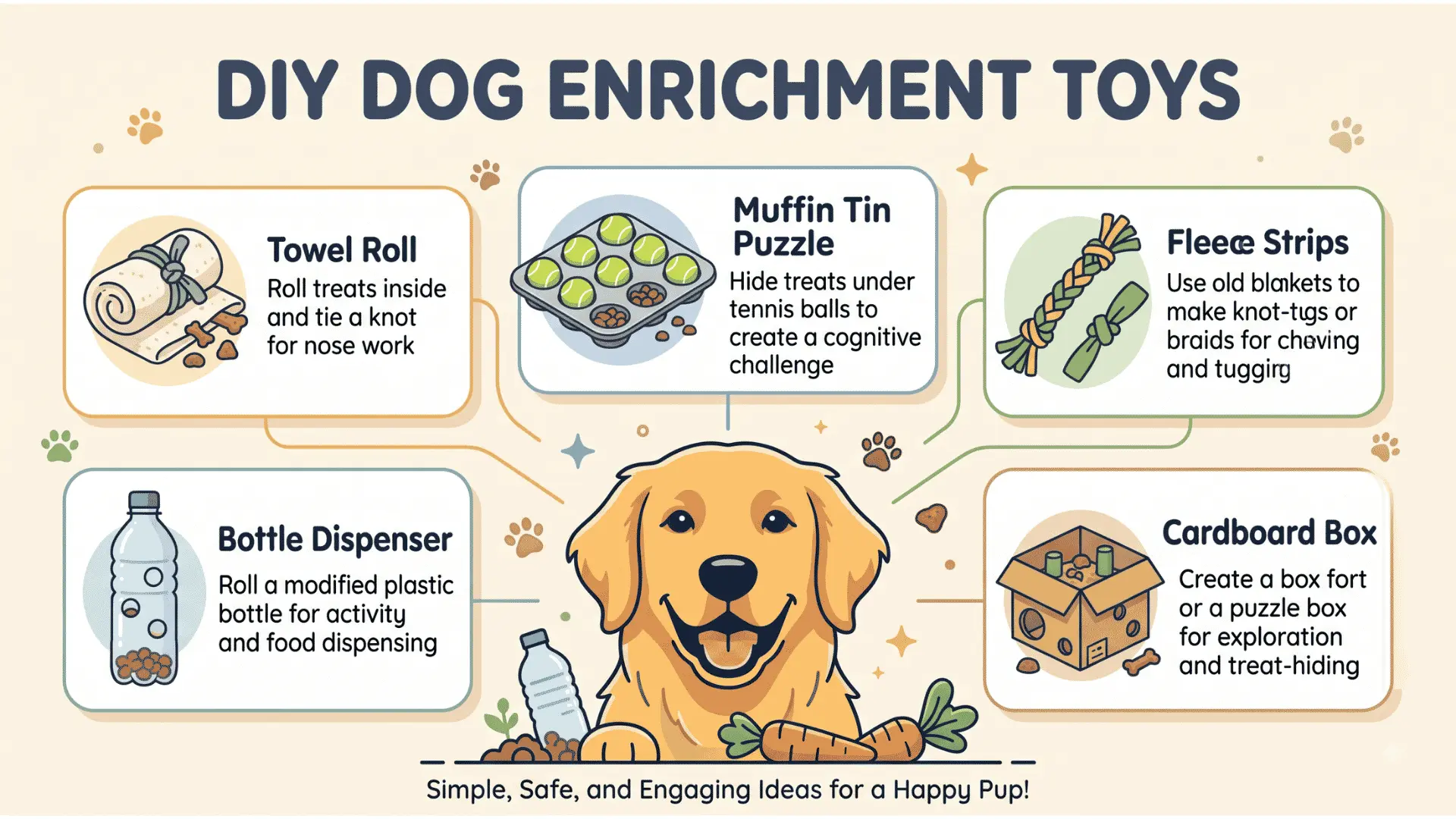
Place a few treats in the center of a clean towel. Fold it lengthwise, then tie a loose knot. Your dog can sniff, unroll, and forage at an easy pace. Taylor from Bindi’s Bucket List also inspired a rolled towel treat box that blends scent work with searching.
Create a Simple Snuffle Mat With Fabric Strips
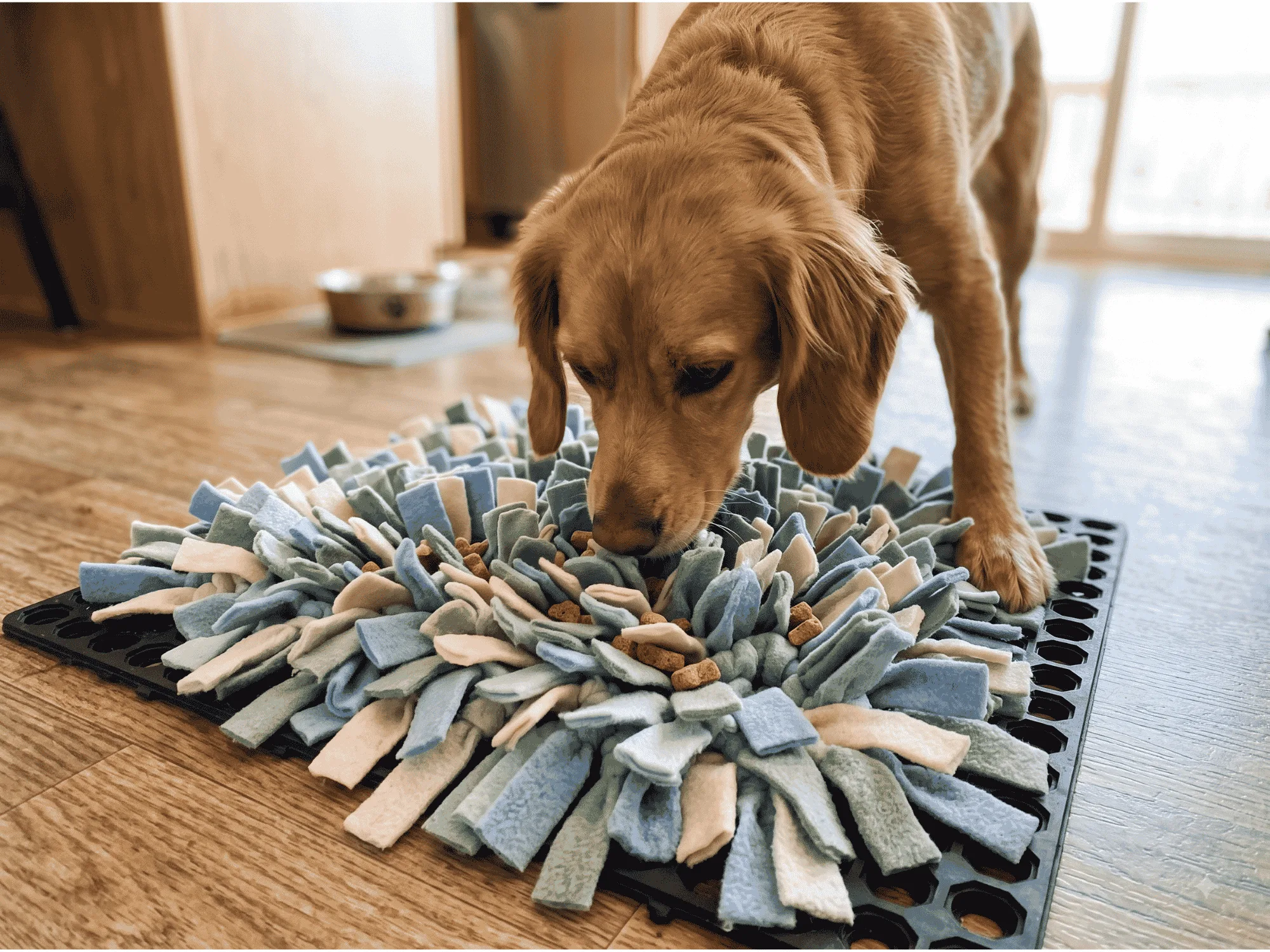
Thread six- to eight-inch fleece strips through the holes of a rubber sink mat, then tie them in place. The $4.22 project creates a soft snuffle mat where you can hide treats or kibble. Start with visible food and add challenge slowly.
Set Up a Shoebox Hide-and-Seek Game With Treats Inside
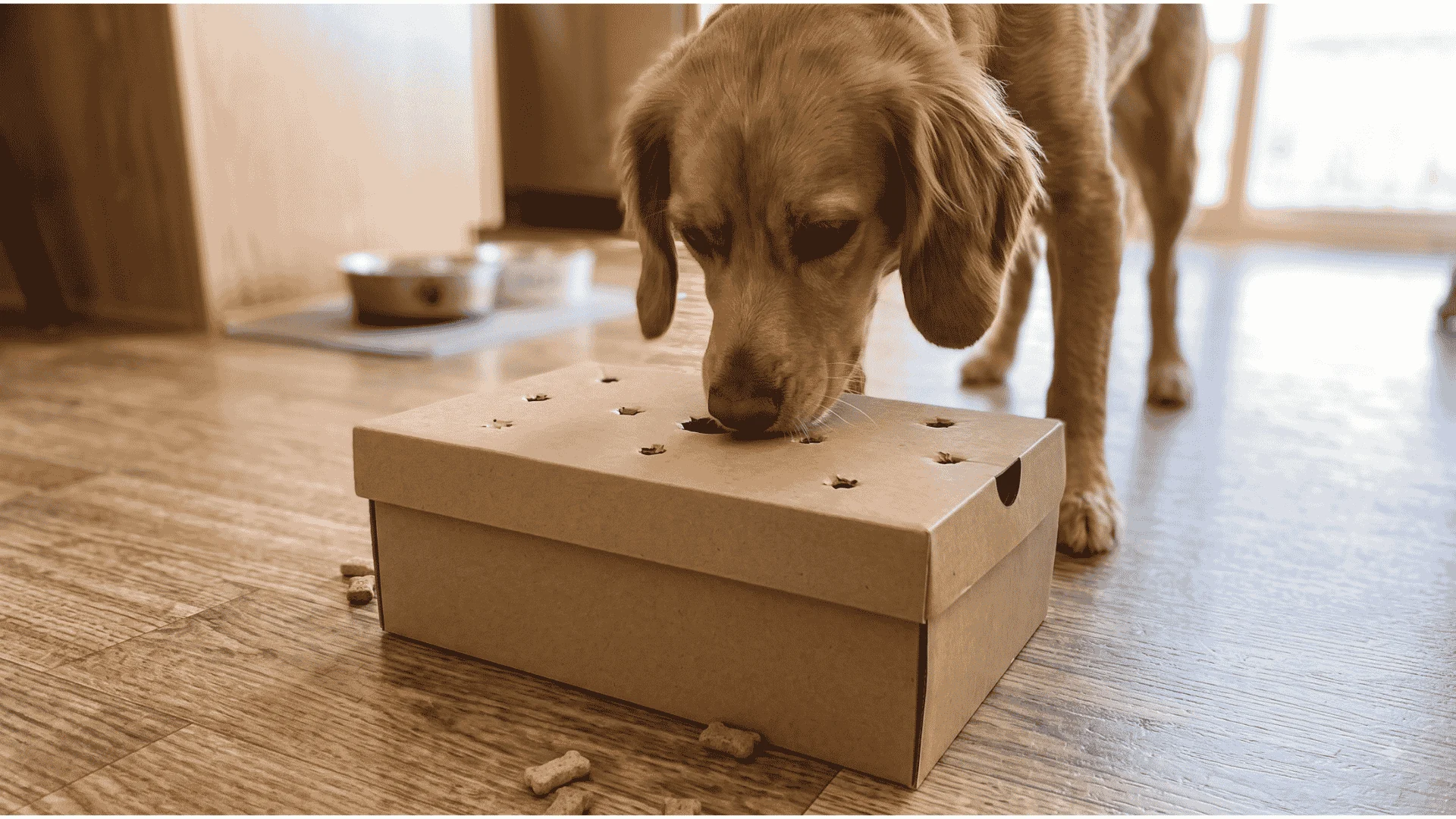
Bait one shoebox and poke holes in its lid. Let your dog find the scent, then add more boxes or spread them farther apart. Keep sessions short and supervise every game.
Food Puzzle Toys for Mental Stimulation and Problem Solving
Meal-based games turn a snack into a focused task. Your dog must think, move, and wait, which supports calm enrichment and useful problem-solving skills. Begin with an easy challenge, then increase the work as confidence grows.
Turn a Muffin Tin and Tennis Balls Into a Treat Puzzle
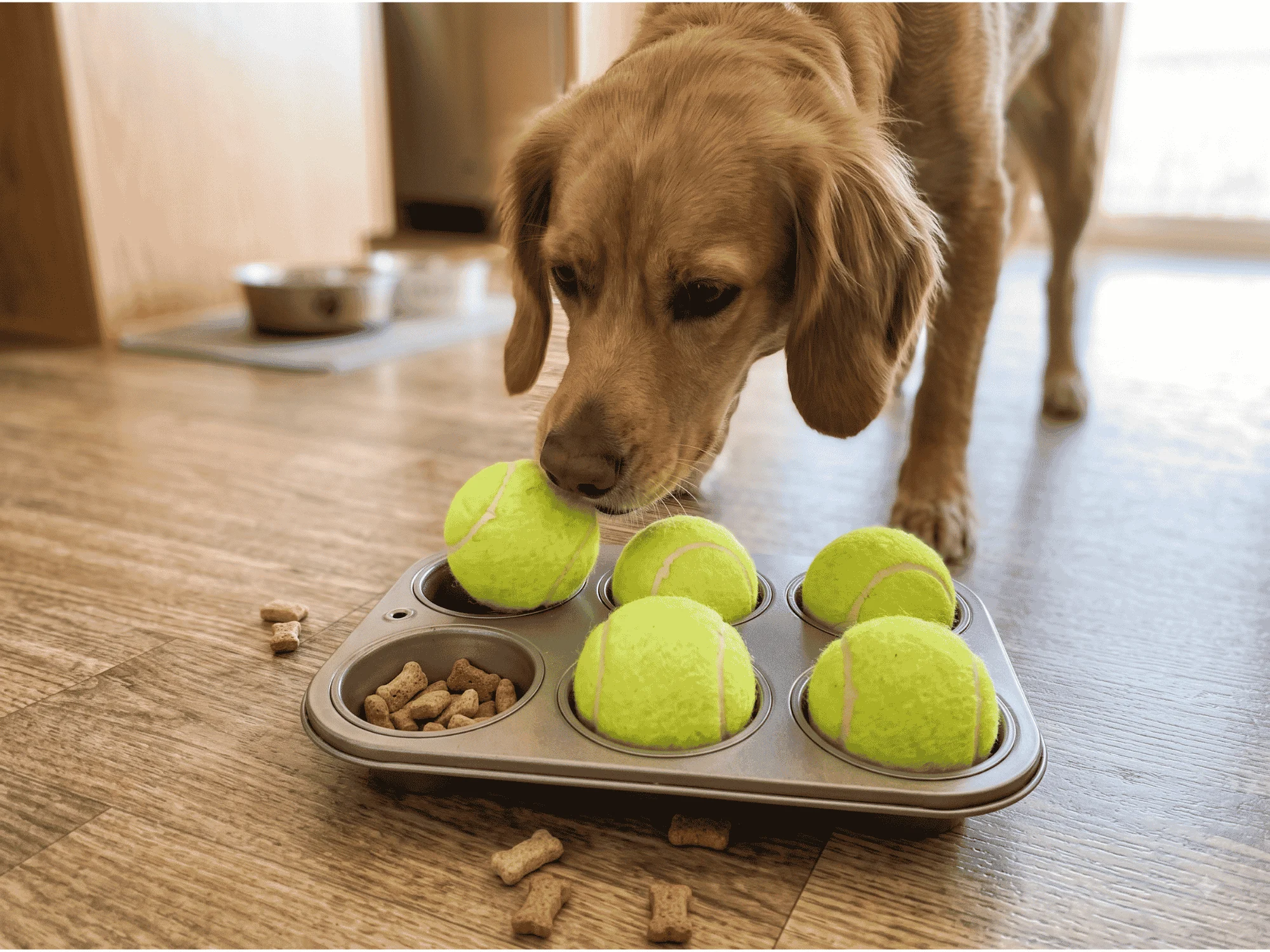
Place treats inside each cup of a six-cup muffin tin. Cover every cup with an appropriately sized tennis ball. Let your dog lift each ball to find the reward. Use one ball per cup, and check that no ball can fit fully in your dog’s mouth. This simple puzzle builds patience and brain engagement.
Build a Water Bottle Kibble Dispenser for Experienced Dogs
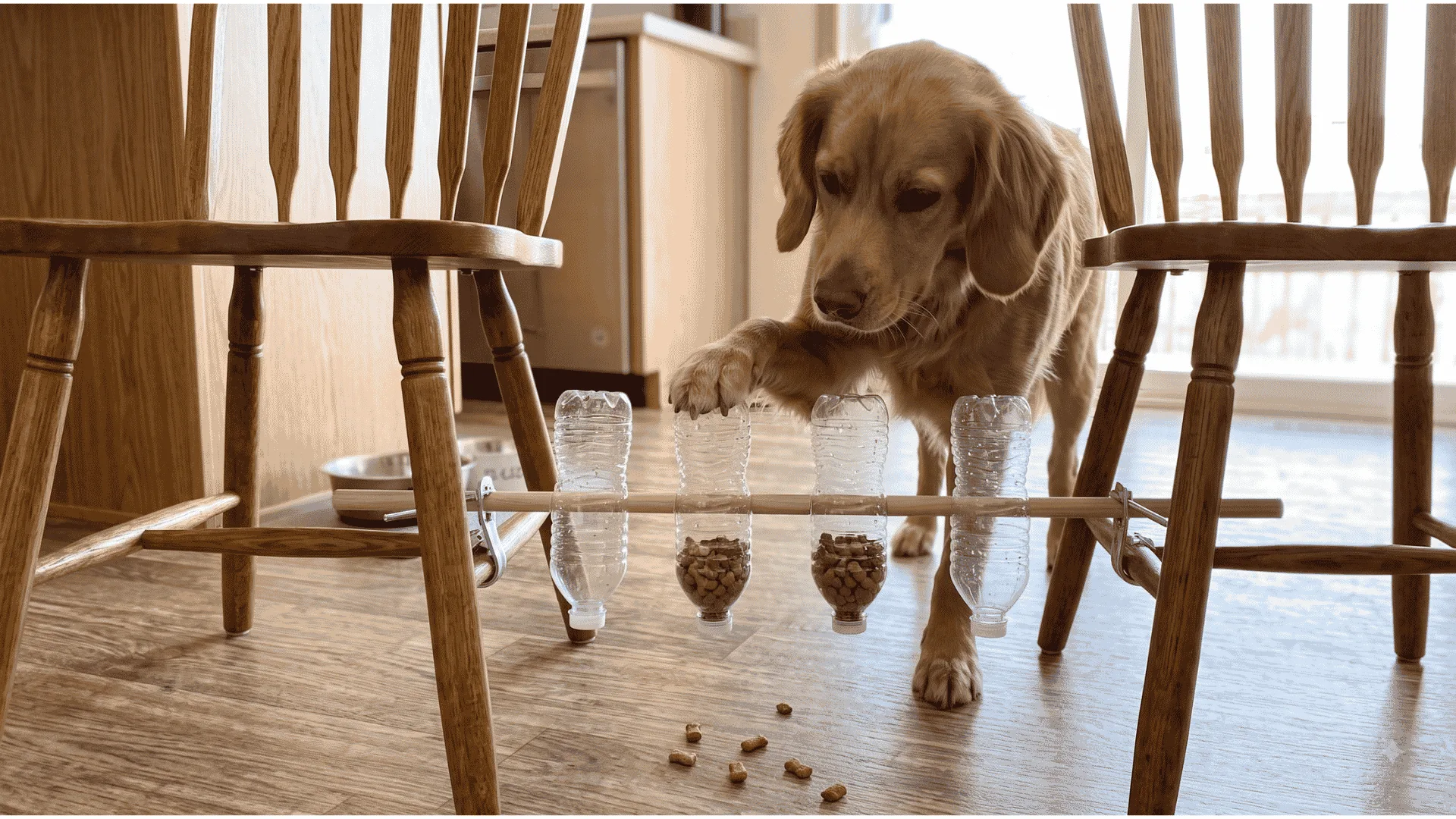
Caitlin from Sparkles and Sunshine Blog secures bottles between two dining chairs. Add a small handful of kibble to each bottle, then let experienced dogs roll them with their paws. Supervise closely and remove the toy if the plastic cracks or chewing begins.
Repurpose a Yogurt Cup Into a Slow Treat Dispenser
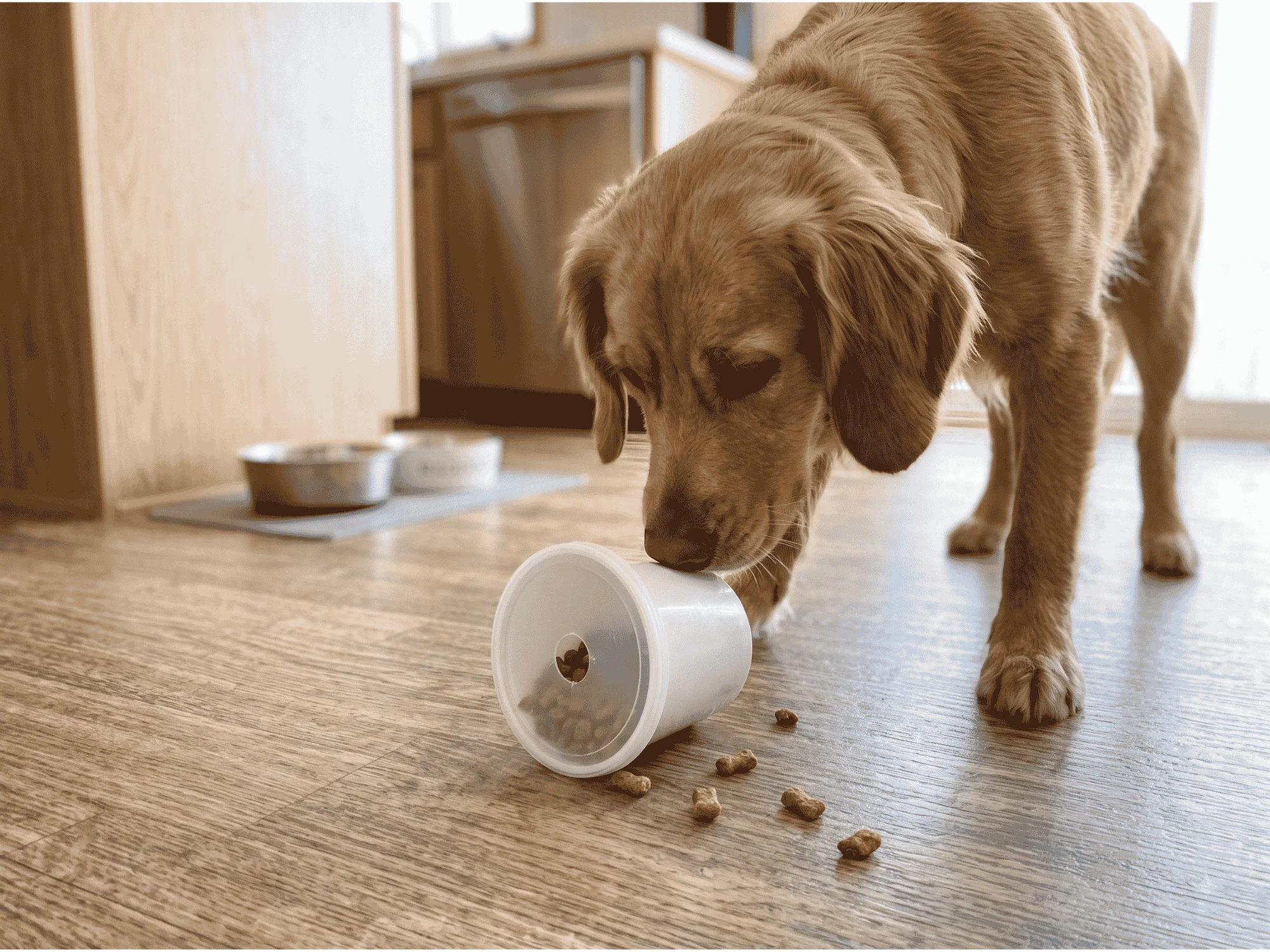
Cut a small hole in a clean yogurt cup. Add food, secure the lid with packing tape, and watch constantly during play. This under-$5 activity can slow fast eaters while building persistence.
Cardboard and Container Toys for Busy Indoor Foraging
Ordinary packaging can become a short, rewarding search mission at home. These DIY enrichment projects give your dog a safe way to explore scents, move objects, and work for food.
Pack a Cardboard Busy Box With Cups, Paper, and Kibble
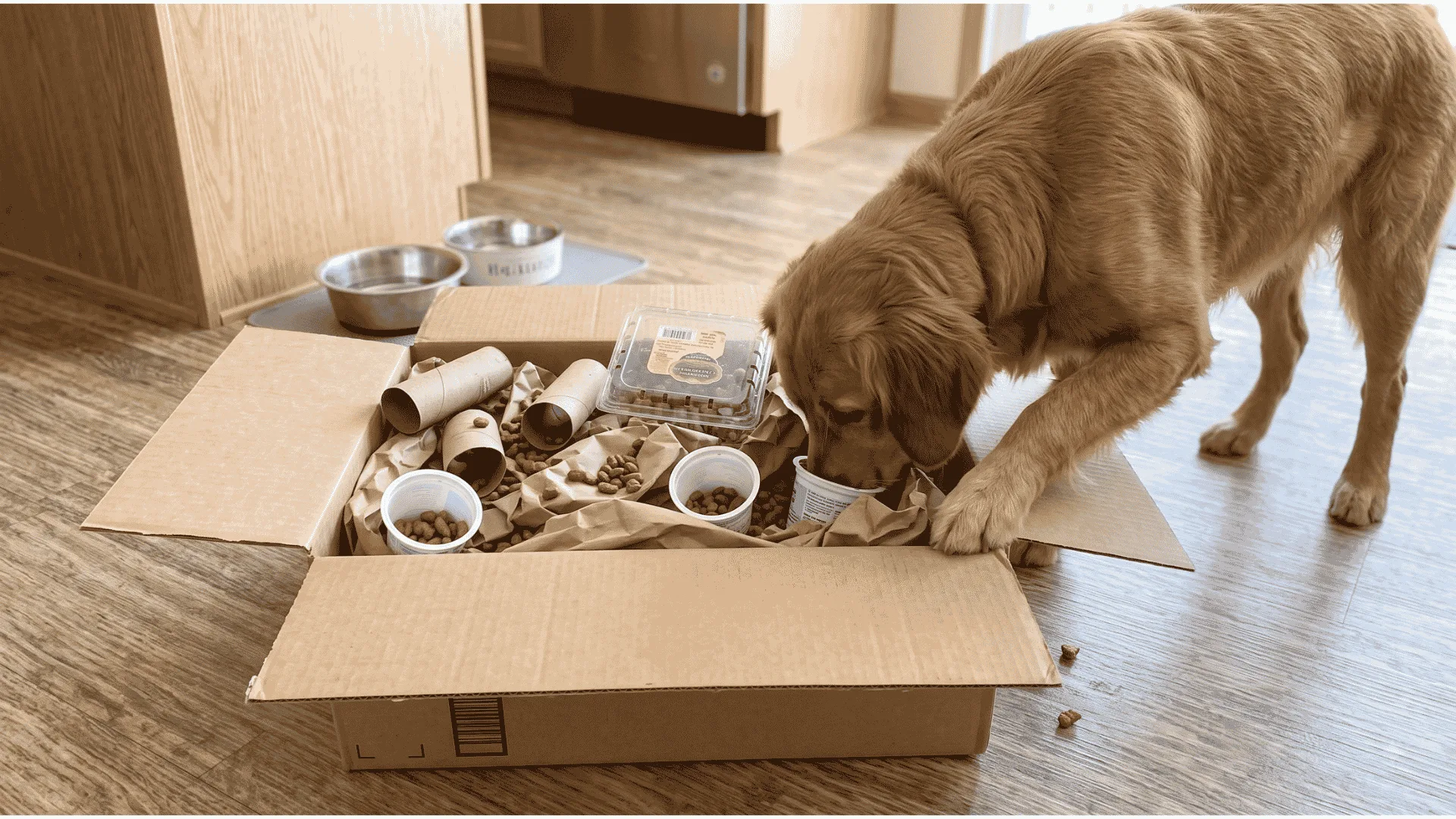
Fill a sturdy box with packing paper, empty toilet paper rolls, yogurt cups, and plastic berry containers. Add a small amount of kibble, then let your dog uncover the meal. Some owners use this busy box before trash day, making cleanup simple. Remove damaged containers afterward.
Make a Toilet Paper Roll Snake With a Towel and Treats
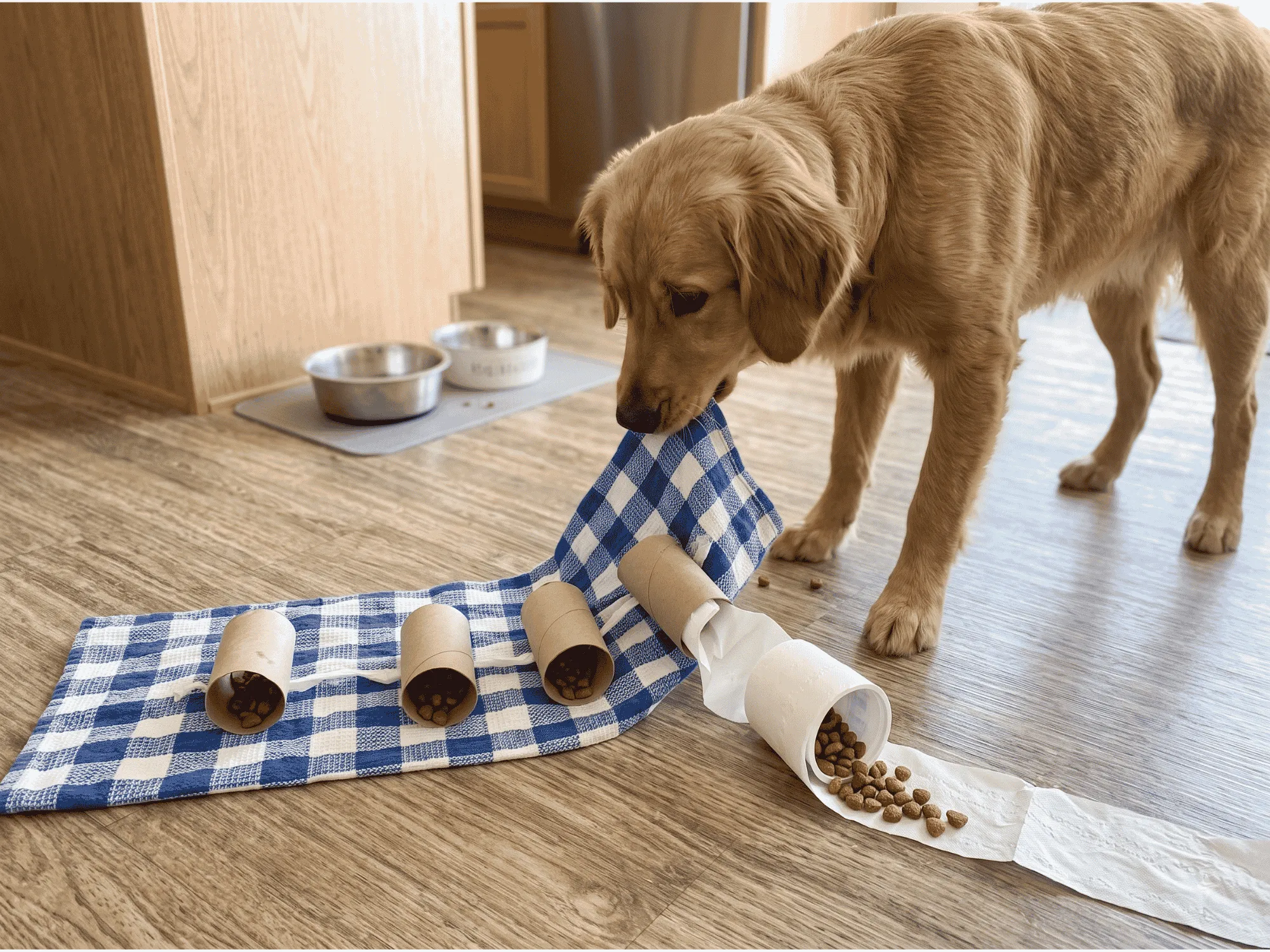
Thread three to five empty rolls onto a kitchen towel. Tuck a handful of treats inside, then loosely fold the ends. Supervise as your dog pulls and unrolls the puzzle. Stop if fabric tears or cardboard pieces enter the mouth.
Use a Treat-Filled Box as a Supervised Destruction Game
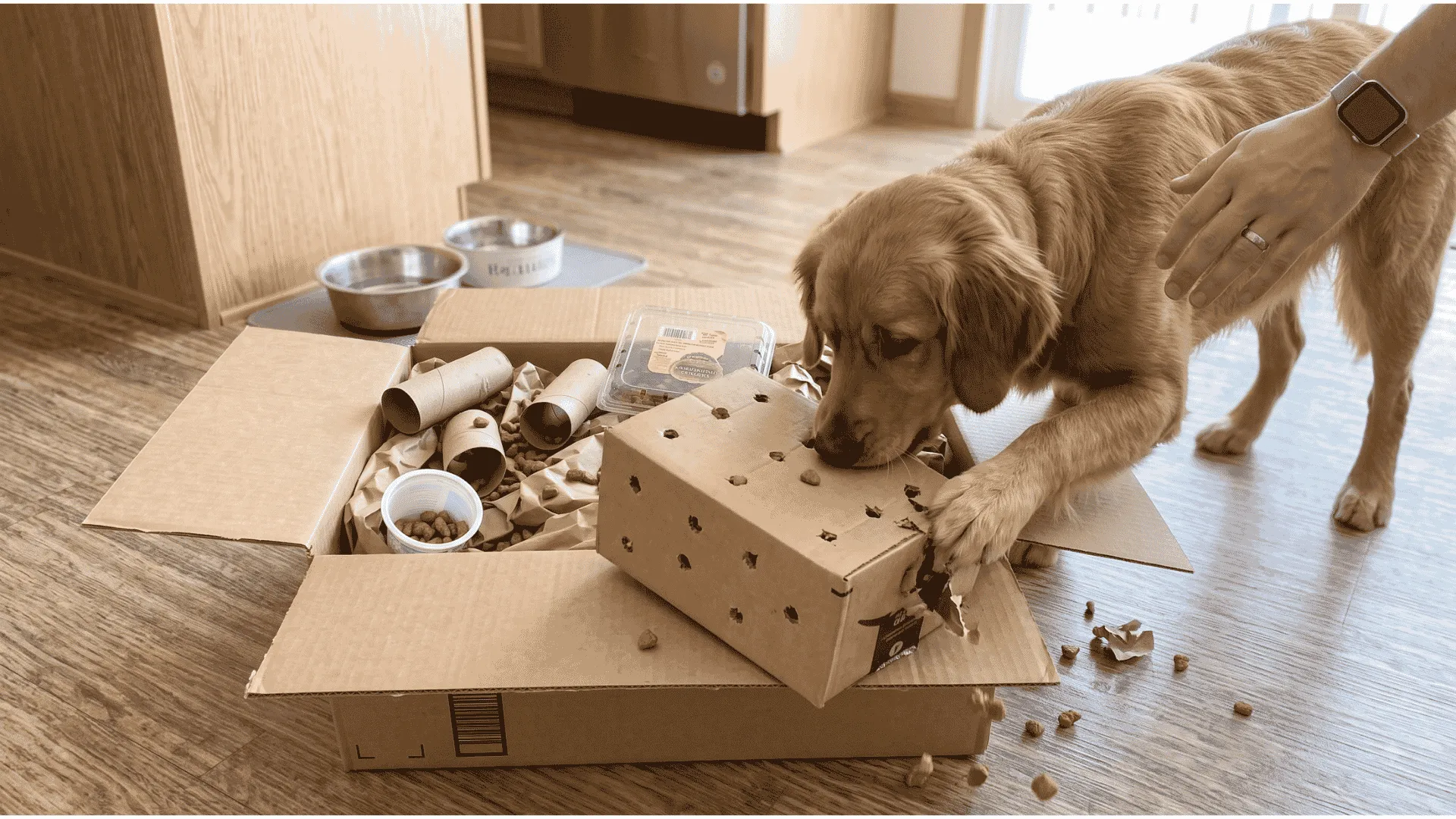
Poke holes slightly larger than each treat in a small box. Your pet can toss, tear, and nudge it to release food. This controlled destruction game reduces boredom through foraging. Cardboard is disposable enrichment, so remove loose pieces at once if swallowing begins.
Simple Play Toys That Add Movement and Training
Small movement games can turn a quiet room into an active learning space. Start with easy tasks, then add challenges as your pet challenges. Keep every session short, supervised, and fun.
Roll Treats Inside a Sock for a Gentle Puzzle Toy
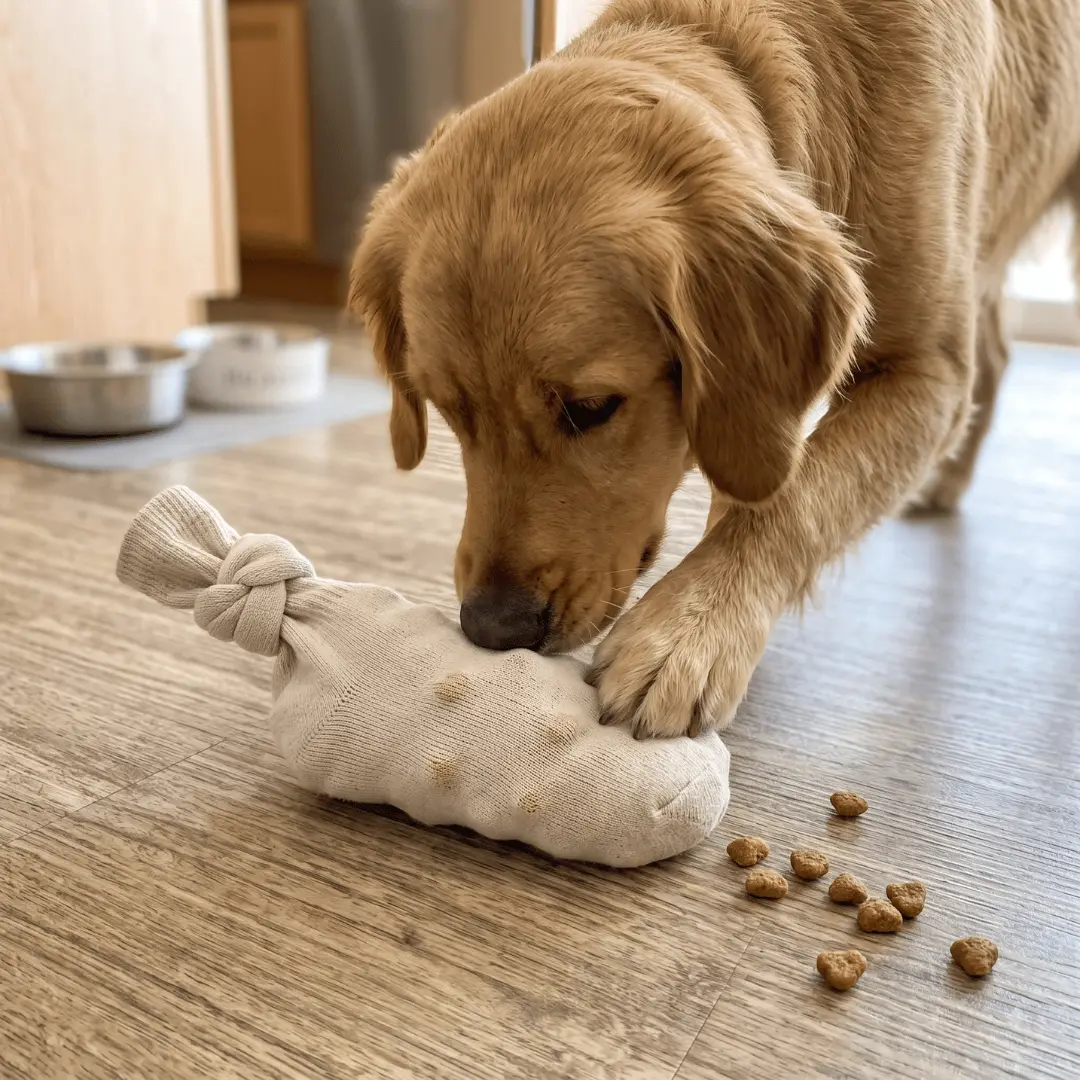
Place a few treats inside a clean sock and tie a loose knot. Roll it across a safe floor. Choose a thick sock for strong chewers, and use a smaller one for puppies. Remove it if the fabric tears.
Hide Treats Under Plastic Cups for an Indoor Shell Game
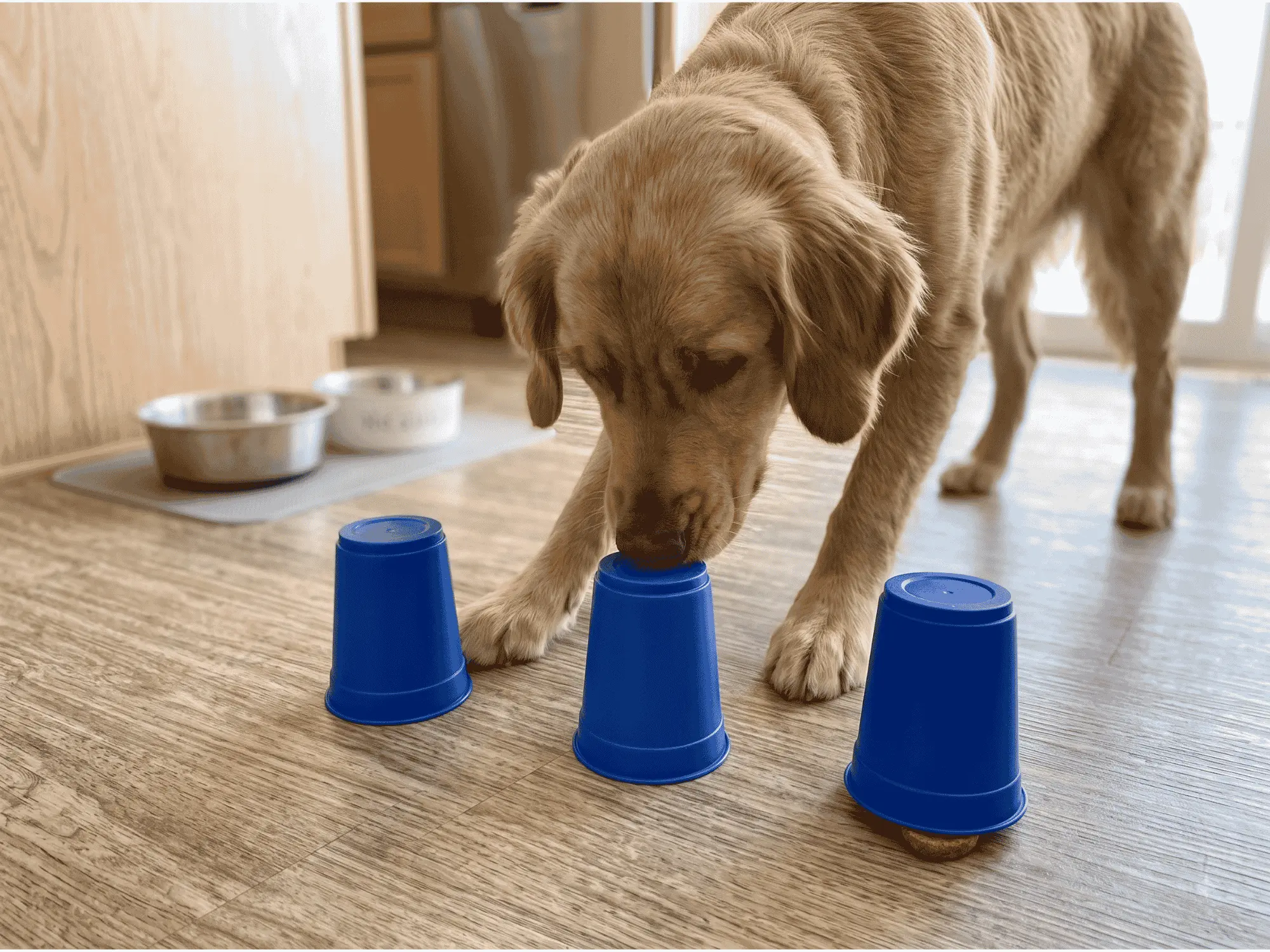
Place treats beneath two or three cups. Invite your dog to search with its nose or paw. Praise calm work, then reward the correct choice. Practice “wait” before starting and “drop it” after retrieval, following Louise from Red Pointy Dog Training.
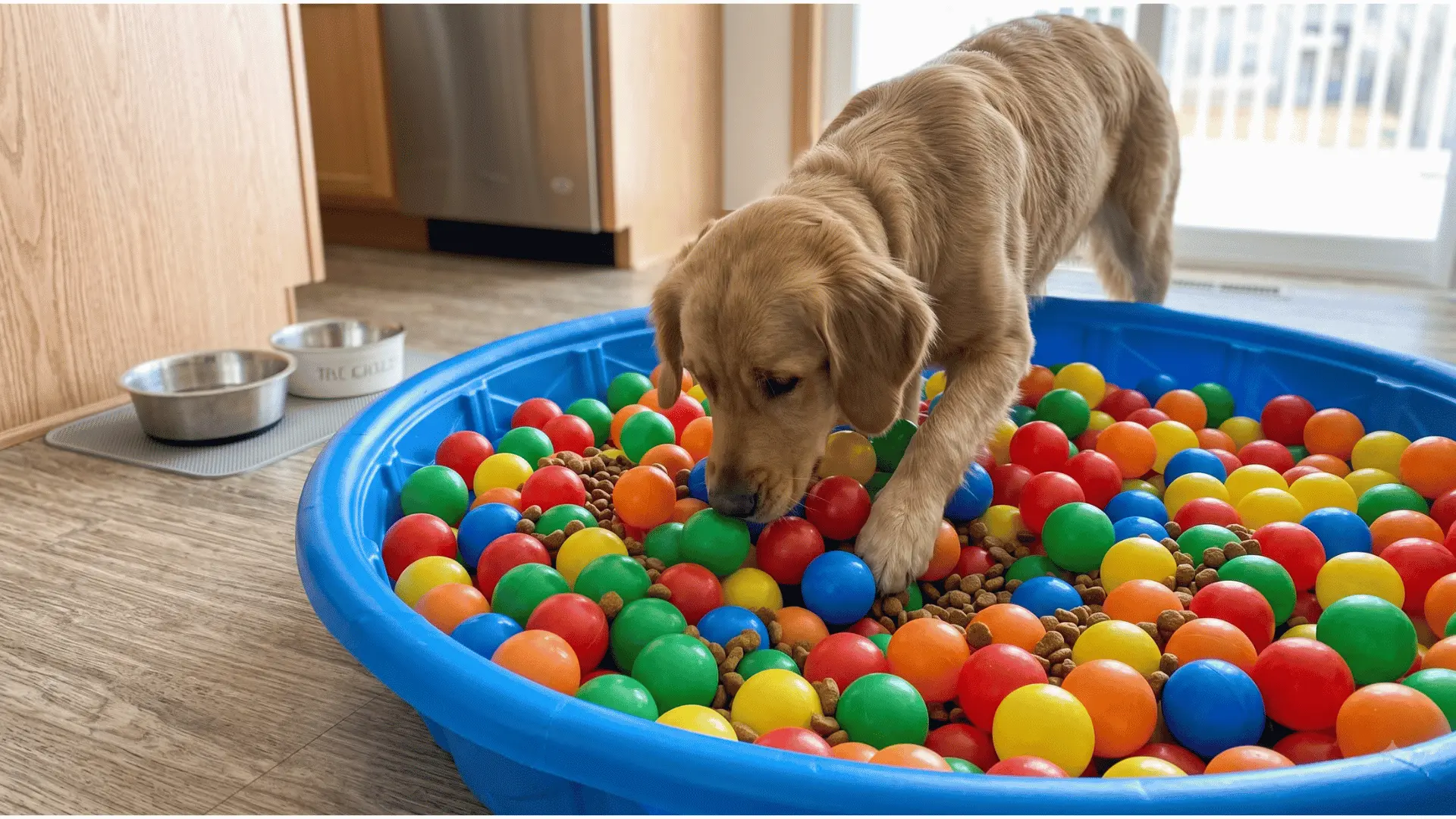
Build a Doggy Ball Pit With a Container, Balls, and Kibble
Fill a plastic kiddie pool with appropriately sized balls, then sprinkle kibble across the surface. This activity slows gulping while adding movement and mental stimulation. Nervous dogs should begin with only a few balls and add more slowly.
| Activity | Best starting setup | Safety check |
|---|---|---|
| Sock puzzle | Loose knot and few treats | Remove torn fabric |
| Cup game | Two cups and one reward | Use sturdy cups |
| Ball pit | Small pool and few balls | Match ball size to your pet |
Frozen and Lickable Enrichment Ideas for Extra Engagement
Cold, crunchy layers can turn a simple snack into a slow, sensory activity. Licking, chewing, and gnawing help your dog focus while using extra energy. These actions may also support digestion, relaxation, and better sleep.
For this DIY enrichment activity, wash a large carrot and hollow out the center. Fill it with your dog’s favorite wet food, then freeze it thoroughly. The cold texture, soft filling, and crisp crunch create varied sensory engagement.
Stuff and Freeze a Carrot With Wet Food
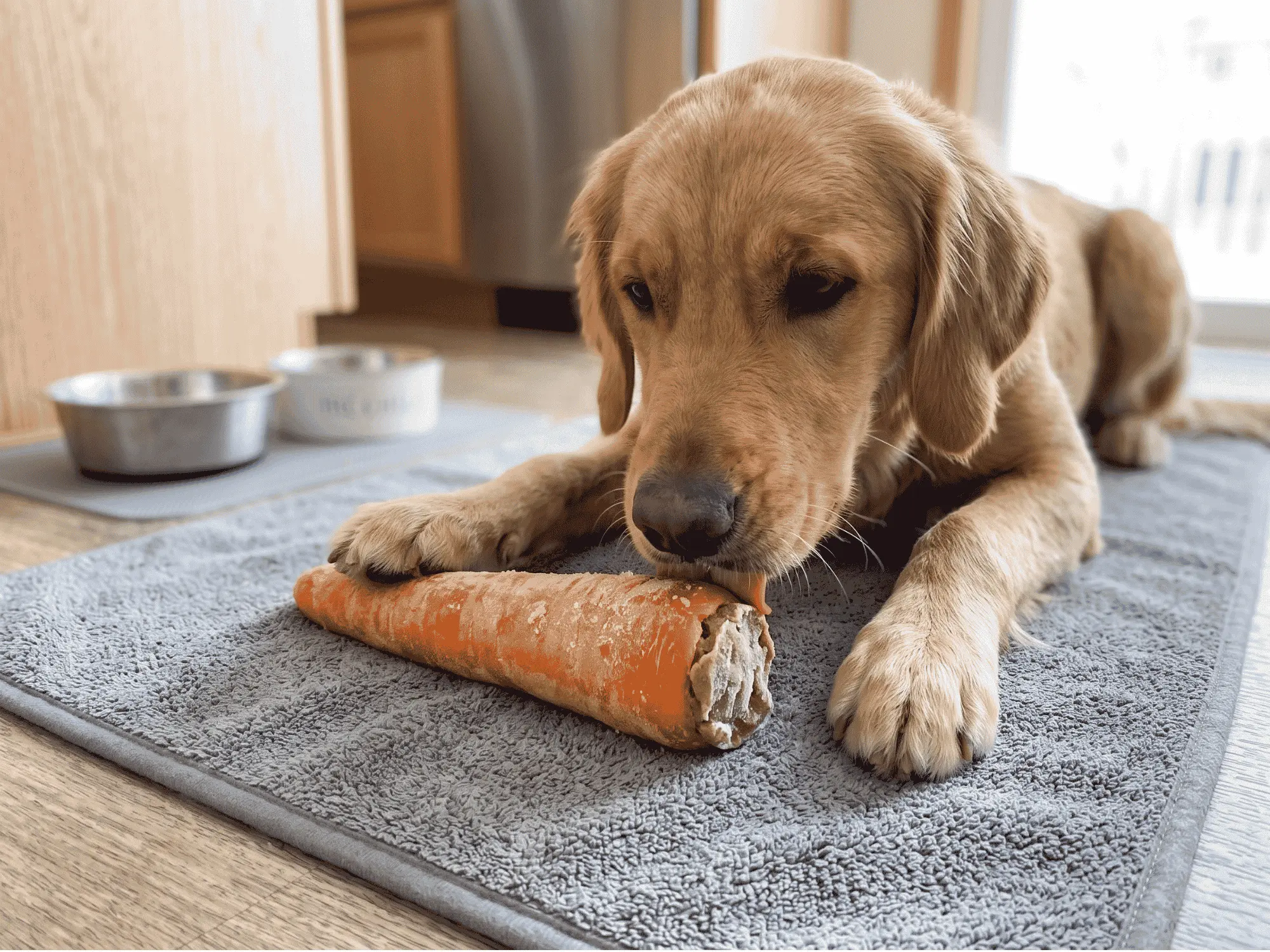
This idea comes from @dogs.made.simple on TikTok. Serve the frozen carrot on a clean towel or washable mat, since melting food can make a mess. Choose a size that suits your pet, and watch for hard chewing or broken pieces. Skip this toy if your pet has dental problems or struggles with cold food.
- Offer carrots as an occasional treat because they contain natural sugars.
- Keep portions small and count the filling within the daily meal.
- Remove the toy when it becomes too small to handle safely.
| Feature | Benefit | Safety tip |
|---|---|---|
| Freezing | Slows eating | Freeze until firm |
| Licking | Promotes calm focus | Use a small portion |
| Crunching | Adds sensory variety | Supervise each session |
Adjust the Difficulty for Your Dog’s Size, Skills, and Energy
The best challenge feels rewarding, not confusing. Watch your pet’s pace, then change the setup to match its confidence, size, and energy. Good enrichment builds focus while keeping frustration low.
Make Each Activity Easier or More Challenging
Start with visible treats and open spaces. Leave muffin cups uncovered, use fewer balls, and place rewards where your dog can find them fast. A small dog may prefer a six-cup muffin tin. Miniature tennis balls can suit Toy breeds only if they remain safely larger than the throat.
Raise the challenge by covering every cup, baiting just one box, tying several towel knots, or spreading shoeboxes across the room. Set a snuffle mat with six- to eight-inch fleece strips. Change fabric density as skills improve. Let your dog approach a ball pit slowly, with short training sessions that protect confidence.
- Use visible food for beginners.
- Add distance for active pets.
- Remove plastic if it cracks.
| Experience | Setup | Progression |
|---|---|---|
| New learner | Open cups and nearby treats | Add light cover |
| Steady learner | Several boxes in one room | Bait fewer boxes |
| Confident learner | Dense mat and towel knots | Spread searches farther |
Turn DIY Enrichment Into an Affordable Daily Routine
A simple weekly rhythm helps you fit enrichment into busy home life. Use sniffing before quiet time, a food puzzle at dinner, and a movement game when your dog needs to release energy.
Keep a clean storage bin with boxes, towels, yogurt cups, paper rolls, and safe bottles. Sort items after each use, and replace worn pieces quickly. This system makes setup fast and keeps useful supplies ready.
- Serve part of dinner as kibble instead of adding extra calories.
- Use a busy box before trash day, then discard damaged cardboard and containers.
- Practice “wait” before play and “drop it” when the session ends.
- Change the activity often to keep daily enrichment fresh.
The first source includes 10 low-cost games, with many costing less than $5. That makes these ideas practical for families who want fun without buying another toy. A short session can also support training and strengthen your bond.
For an easier way to plan meals, games, and household materials, explore the printable pack. It gives busy owners quick DIY enrichment ideas, clear steps, and less daily guesswork.
Conclusion
Your home holds plenty of tools for creative play. Towels, muffin tins, tennis balls, cardboard, cups, socks, containers, and carrots can become useful DIY enrichment activities without costly purchases.
Supervise each session, choose materials that fit your pet’s size, and remove broken pieces at once. Sniffing, foraging, licking, chewing, movement, problem-solving, and problem-solving balance to daily life. Start with one towel knot, muffin tin puzzle, or cardboard search game. Then adjust the challenge as confidence grows.
Give your dog a fresh way to focus, relax, and connect with you. Get the printable digital guide, “Give Your Dog 12 Enrichment Toys — Made From Everyday Household Items,” for fast, affordable ideas that help busy owners create safer indoor fun for dogs.
FAQ
Which household items work best for these activities?
Start with clean towels, cardboard boxes, paper cups, plastic containers, tennis balls, and muffin tins. Choose sturdy items without sharp edges, loose parts, or harmful coatings.
How do you keep homemade toys safe?
Watch your pet during every session. Remove any item that breaks, splinters, or becomes small enough to swallow. Avoid strings, toxic materials, and containers with rough edges.
What treats work well for puzzle games?
Use small pieces of kibble, carrots, or approved training treats. Keep portions within your pet’s daily food plan. You can also use part of a regular meal to prevent extra calories.
How can you make a muffin tin puzzle harder?
Place treats in several cups and cover them with tennis balls. For an easier start, leave some cups open. Later, add more balls or use smaller food pieces to challenge your pet’s brain.
Is a snuffle mat suitable for every pet?
It can suit many pets, but you should supervise the first sessions. Use short fabric strips and check that they stay firmly attached. Stop play if your pet pulls, chews, or swallows the material.
How do you adjust a game for a puppy or senior pet?
Use larger treats, open containers, and simple hiding spots for beginners. Older pets may prefer gentle movement and soft materials. Increase the challenge slowly as skills and confidence grow.
Can frozen treats provide longer-lasting activity?
Yes. Fill a carrot or a safe rubber item with approved food, then freeze it. Offer it on an easy-to-clean surface and watch for cracks, choking risks, or signs of tooth discomfort.
How often should you offer indoor activity?
Try several short sessions throughout the day instead of one long session. Rotate games to keep interest high, support calm behavior, and strengthen the bond between you and your pet.
What should you do if your pet loses interest?
Make the game easier and use a favorite reward. Add scent by rubbing a treat on a towel or box. Keep each session brief, then try a different activity after your pet has rested.
Which warning signs mean you should stop playing?
End the session if you notice frantic chewing, coughing, vomiting, limping, stress, or repeated attempts to swallow items. Check the play area and remove damaged materials before trying again.



https://aivengo.media/blog/
best online casinos 2026 casino rubin Еѕalec
golden euro casino no deposit bonus code blackjack do you hit on 14 Bonus dobrodoslice za nove igralce bet365 app ios
free online poker with friends titan online casino
API key management represents a critical vulnerability vector for users active on Avalanche security exchange security platforms when integrating third-party trading bots and portfolio trackers. Granting withdrawal permissions to external applications opens a direct back-door for attackers to execute malicious trades across low-liquidity market pairs. Restricting API access strictly to read-only functions or disabling unused integrations eliminates major risk exposure points across your trading infrastructure. Security audits of active connection tokens should be performed monthly to detect and revoke compromised credentials before financial damage occurs. Proper API hygiene prevents automated bots from draining your portfolio balances through orchestrated market manipulation schemes.
https://telegra.ph/Avalanche-Security-Network-Consensus-Flaws-10-07
bresplaДЌne casino igre governor of poker full game download free Igralnica, kjer se igra za pravi denar book of ra game free play
pokerstars casino bonus bet365 registration bonus
slovenia casino riviera
online casino list casino pravila igre
casino online free spins casino admiral kozina slowenien Bonus ob registraciji v casinu book of ra simulator
best online casino offers no deposit casino spletne igre
https://www.xen-factory.com/index.php?members/xbetbestcode41.197434/#about
https://www.trackyserver.com/profile/285303
hopa casino free spins no deposit all slots online casino Igralni Avtomati V Igralnici blackjack vs baccarat
casinolistings games free slots book of ra online casino real money
kako odpreti spletno kazino
Whitelisting withdrawal addresses provides an essential safety barrier on Avalanche security exchange security by restricting asset transfers exclusively to pre-approved cold storage destinations. Implementing mandatory time delays for adding new destination addresses gives users a crucial window to detect unauthorized logins and freeze compromised accounts. Attackers who bypass authentication barriers find themselves completely blocked from transferring stolen funds without completing the lengthy whitelist verification cycle. Combining address locking with hardware wallet integration creates a formidable defense perimeter against even the most sophisticated account takeover attempts. Proactive defense configurations transform vulnerable trading accounts into highly resilient fortresses against modern cyber threats.
https://telegra.ph/TON-Security-Hardware-Wallet-Vulnerabilities-10-07
kadıköy petek temizleme firması Evimiz özellikle salon ve çocuk odasında yeterince ısınmıyordu. Temizlik sonrası sıcaklık farkı hissedilir şekilde arttı. https://guise.glifo.work/?p=5743
casino bled slovenia bwin poker no deposit bonus
slots free game casino igre casino download Spletni casino z igralnimi avtomati hotel & casino resort admiral
sign up casino bonus platinum reels no deposit bonus
взгляните на сайте здесь [url=https://tripscn79.info/]трипскан официальный[/url]
casino 20 euro no deposit 5 euro no deposit bonus Igranje za pravi denar na spletu 365 live casino
kako na bet 365 hopa casino slovenia
besplatne casino igre merkur germany
содержание [url=https://tripscn79.info]трип скан вход[/url]
Navigating liquidity onboarding on Avalanche security exchange security platforms should strictly follow a get-in, trade, and get-out methodology without lingering balances. Treating centralized trading venues as public restrooms rather than long-term savings vaults minimizes your exposure to sudden platform halts and unexpected withdrawal freezes. Unsecured creditor status during corporate bankruptcies means everyday depositors receive pennies on the dollar years after a collapse occurs. Historical precedents from major exchange failures demonstrate that no custodial platform is immune to fractional reserve mismanagement and reckless capital commingling. Operational security in crypto demands treating every centralized exchange as an untrusted third party waiting to fail.
https://telegra.ph/Polkadot-Security-Network-Consensus-Flaws-10-07
Перейти на сайт [url=https://tripscn79.co/]трипскан ссылка[/url]
live casino its bogo spletno kazino slovenija
online casino be slovenia live casino Hell Spin igralnica Slovenija bet at home casino bonus
kako deluje wagering casino casino besplatne igre automati
best online blackjack igralni avtomati brezplaДЌno https://pulmo-panjan.si spletna igralnica casino si
bet365 no deposit bonus code 2026 iw casino no deposit bonus
nataЕЎa bled casino
Чегем купить закладку Марки LSD 170мкг Приход от солей
Касли купить закладку Амфетамин Сульфат белый Купить Кокаин, Мефедрон, Марихуану, МДМА Москва Кунцево купить закладку Марихуана [Amnesia Haze]
Хотьково купить закладку Кокаин HQ Кондопога купить Мефедрон купить Лучший эйфоретик
vegas world play online casino games club player casino no deposit bonus codes
casino igre besplatno zamfir casino slovenia Welcome bonus v casinu casino game bombay free
spletni casino forum casino online free book
play blackjack online free tarzan casino slot game free https://marlenesanscartier.com casino free spin no account
bonus funds bet 365 bet365 bingo bonus code no deposit
olybet promo kods 2026
Москва Выхино-Жулебино купить наркотики Павловск купить закладку Мескалин
Горнозаводск купить закладку Гашиш [Euro Cube] Купить Марихуану, Кокаин, Бошки, Гашиш Шелехов купить Гашиш [AB]
Богородск купить Amphetamine Самара купить Мефедрон (миф)
Ищете вскрытие замков? Посетите spb-open24.ru – работаем в Санкт-Петербурге и Ленинградской области аккуратно и без повреждений, а мастер приезжает очень быстро. Чтобы вызвать специалиста, просто позвоните по телефону на сайте. Изучите виды замков, которые мы вскрываем, и расценки на эту услугу. Оплата принимается исключительно после завершения всех работ.
нажмите [url=https://tripscn79.co]сайт трипскан[/url]
casino slovenia lipica latest casino bonus
free royal poker free spins for house of fun gift exchange Bizzo casino za slovenske igralce hit casino kranjska gora restaurant
best casino slot games free chip zodiac casino 1
Продолжение [url=https://tripscn79.info]трип скан официальный[/url]
bled nagradna igra casino 888 casino live chat https://inlpta.si bet 365 how do i use bet credits
free casino bonus no deposit 2026 vavada casino bonus code
kongo casino slovenija
Тамбовская область купить закладку гидропонику Курильск купить закладку Кристаллы соль
Орехово-Зуево купить Мефедрон [мелкие камни/мука] HQ Купить Кокаин, Марихуану, Бошки, Мефедрон Москва Отрадное купить Гашиш [Soft Hash]
Москва Дегунино Восточное купить закладку Euro HQ Hash (ЧЕРНЫЙ) Киржач купить Ecstasy: Yellow Homer 200mg
нажмите, чтобы подробнее [url=https://tripsn79.info]tripscan сайт[/url]
kadıköy kombi bakımı ve petek temizleme Yıllardır temizlenmeyen peteklerimizi temizlettik. Sonuçtan oldukça memnun kaldık. http://wptest.alex-dune.de/?p=74
подробнее [url=https://trips79.info]трип скан официальный сайт[/url]
william hill live casino casino slot free
book of ra game download for pc verde casino no deposit bonus Spletni casino za Slovenijo bet 365 aplikacija za iso ki deluje
joker casino bonus 300 shield free slot mashine
пояснения [url=https://trips79.info]трип скан[/url]
другие [url=https://trips79.info]tripscan[/url]
интернет [url=https://tripsn79.co/]трипскан 79[/url]
online casino marketing strategy best online casino for blackjack https://inlpta.si book of ra novomatic
book of ra games free casinos in slovenia online
Does the €20 trick work in Vegas
Пересвет купить закладку LSD-25 (HQ) 250мкг купить клад Москва Бибирево
Мышкин купить закладку Ecstasy Rolls Royce Купить Кокаин, Марихуану, Бошки, Мефедрон Родники купить Мефедрон [Cristalius 2.0]
Дубаи купить закладку Метадон VHQ Саратовская область купить MDMA Pills
diamond casino online no deposit sign up bonus
casino video igre online casino slots real money Najboljsi casino bonusi v Sloveniji brez depozita no deposit bonus 5 euro
igre casino slot e stave stavna lista danes
free deuces wild video poker games casino bonus brez depozita estonija https://queen-b.si bit games casino
casino bled poker turnirji governor of poker 1 download full version free
casino games with free bonus
Москва Крылатское купить закладку LSD 220 mkg Грайворон купить закладку Мефедрон (миф)
Красноармейск купить Ecstasy: Pink Heart 200mg Купить Марихуану, Кокаин, Бошки, Гашиш Ряжск купить Ecstasy: Red Stars 280 mg
Новосиль купить закладку Красноярск купить закладку Амфетамин (фен)
Кейс батл CS 2 на CASEWAY — это честная битва за скины между игроками. Каждый игрок открывает одинаковые кейсы, а победителю достаётся всё содержимое. Ищете pvp-батлы кейсов cs2? Создайте свой батл или присоединяйтесь к чужому на caseway.net/case-battle/cs2 за пару кликов. Режимы 1v1, 2v2 и 3v3 дают возможность играть соло или командой — до шести участников в одной битве.
mr green free spins cabaret online casino https://houndsontheprairie.com bet365 mobile app download android
casino dice game sol casino bonus code
free chip online casino no deposit 100
free spins on sign up casino zodiac casino mobile
Еѕrebanje eurojackpot ura igranje spletnih igr za denar Igre v online casinu slovenski casino online
live casino ljubkjana party poker free
Мамадыш купить HQ Гашиш Козловка купить закладку Амфетамин (фен)
Москва Басманный купить Амфетамин (фен) Купить Кокаин, Марихуану, Бошки, Мефедрон Лесозаводск купить закладку Лирика 300мг (Прегабалин)
Верхнеуральск купить закладку Триптамины Валь Ди Фасса купить закладку MQ Cocaine Mexico
[url=https://github.com/aidatingchat-bot]https://github.com/aidatingchat-bot[/url] You’ve already scrolled through every app on your phone twice. Your group [url=https://github.com/spicy-ai-chat-bot]https://github.com/spicy-ai-chat-bot[/url] chat is quiet.